
Amazon's Q4 Success: What Faster Deliveries and Network Optimization Mean for Trucking Professionals
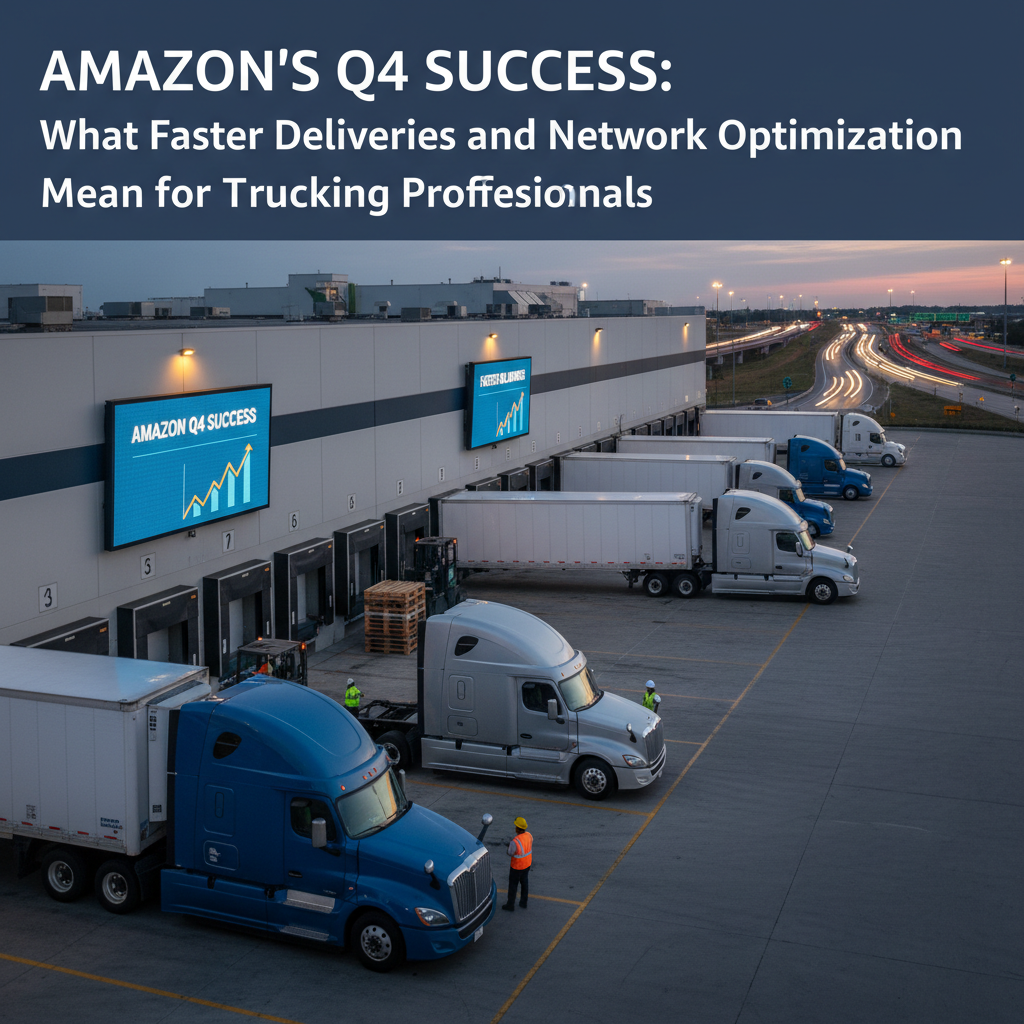
Amazon, a titan in e-commerce and a significant player in the freight landscape, recently announced its fourth-quarter financial results, revealing substantial gains driven by optimized fulfillment operations and accelerated last-mile delivery. For CDL truck drivers, owner-operators, and fleet managers across North America, these developments are not just corporate news; they offer critical insights into the evolving demands of the supply chain, potential freight opportunities, and the future trajectory of logistics.
Understanding Amazon's Q4 Performance: A Deeper Dive
During the fourth quarter, Amazon reported impressive net sales of $213.4 billion, a robust 14% increase year-over-year. A significant portion of this, $127.1 billion, originated from its North American operations, underscoring the immense scale of its domestic freight movements. While revenue surpassed Wall Street expectations, earnings per share slightly missed projections, primarily due to higher-than-anticipated capital expenditure forecasts for the upcoming year.
Amazon CEO Andy Jassy highlighted the e-commerce segment's enhanced capability to deliver essential goods to a wider customer base as a primary growth engine. He proudly stated, “For the third year in a row, globally, in 2025, we achieved both our fastest-ever delivery speeds for Prime members, while also reducing our cost to serve.” This dual achievement of speed and efficiency is a testament to Amazon's continuous investment in its logistics infrastructure and operational strategies.
The 'Need for Speed': Regionalization and Inventory Placement
At the heart of Amazon's accelerated delivery speeds is its strategy of 'regionalization' and intelligent inventory placement. This involves strategically distributing inventory closer to customers, significantly reducing the distance goods need to travel. Chief Financial Officer Brian Wachter elaborated on this, explaining that regionalization has improved local inventory placement, leading to faster deliveries at lower costs. This approach minimizes package handling across the network, streamlining the entire fulfillment process.
For professional truck drivers, this means a potential shift in freight patterns. Instead of long-haul movements from a few mega-warehouses, there's an increasing demand for shorter, regional hauls between smaller distribution centers and last-mile hubs. This could translate into more consistent, shorter-distance work for regional carriers and owner-operators, potentially offering better home time and more predictable routes. For fleet managers, it necessitates adapting routing strategies, optimizing for shorter hauls, and potentially investing in a more decentralized fleet structure.
In 2025 alone, Prime members in the U.S. received over 8 billion items the same or next day, a remarkable 30% increase year-over-year. Groceries and everyday essentials accounted for roughly half of this volume, highlighting the growing demand for rapid delivery of consumer staples. Same-day delivery, Amazon’s fastest-growing option, was utilized by nearly 100 million U.S. customers, signaling a strong consumer preference for immediate gratification.
Capital Expenditures: A Glimpse into Future Freight Demands
Despite strong quarterly performance, Amazon's shares experienced a dip in after-hours trading due to its ambitious capital expenditure forecast. The company plans to invest approximately $200 billion across its operations in 2026, a substantial increase from the $131 billion spent in 2025. This aggressive investment strategy underscores Amazon's commitment to expanding its infrastructure capacity across various segments.
The bulk of this spending is earmarked for data centers, fulfillment operations, delivery infrastructure, and automation. For the trucking industry, this translates into significant future freight demand. The construction and equipping of new fulfillment centers and data centers will require massive movements of building materials, machinery, and technology components. Once operational, these new facilities will generate a continuous flow of inbound and outbound freight, creating sustained opportunities for trucking companies of all sizes.
Fleet managers should view this as a clear signal to prepare for increased volume. This might involve expanding fleet capacity, upgrading equipment, and ensuring a robust driver recruitment and retention strategy. Understanding where these new facilities are being built can help carriers strategically position their assets and pursue new contracts.
Operational Efficiency and Cost Reduction: Lessons for Trucking
Amazon's ability to achieve faster delivery speeds while simultaneously reducing its 'cost to serve' offers valuable lessons for the trucking sector. Their focus on optimizing inventory placement and streamlining package handling directly impacts the efficiency of their entire supply chain, including the transportation leg.
For trucking companies, this emphasizes the importance of continuous operational refinement. Investing in advanced route optimization software, real-time tracking systems, and efficient loading/unloading processes can significantly reduce fuel consumption, minimize empty miles, and improve overall fleet utilization. These efficiencies not only boost profitability but also enhance a carrier's attractiveness to shippers like Amazon, who prioritize reliable and cost-effective logistics partners.
Driver training in efficient driving techniques, such as progressive shifting and reduced idling, also plays a crucial role in cost reduction. Fleet managers can implement incentive programs for drivers who consistently demonstrate fuel-efficient driving habits, aligning individual performance with company-wide cost-saving goals.
The 'Amazon Effect' on Truck Driver Lifestyles and Opportunities
For CDL truck drivers, the 'Amazon Effect' is multifaceted. The shift towards regionalization and faster last-mile delivery could mean more dedicated routes that allow drivers to be home more frequently, a significant factor in driver job satisfaction and retention. While long-haul freight will always be necessary, the growth in regional and local deliveries offers alternative career paths for drivers seeking a better work-life balance.
However, it also means adapting to potentially tighter delivery windows and increased pressure for on-time performance. Drivers working with Amazon's network, either directly or through third-party logistics providers, must be adept at navigating complex delivery schedules and utilizing technology for efficient route execution. The rise of same-day delivery necessitates a highly responsive and agile driving force.
Furthermore, the increased investment in automation within fulfillment centers might change the nature of interactions at loading docks. Drivers may encounter more automated systems for loading and unloading, potentially reducing wait times but also requiring familiarity with new procedures. Training and adaptability will be key for drivers operating within these evolving logistics environments.
Future Outlook: What to Expect in 2026 and Beyond
Amazon's forecast for the first quarter of 2026 projects net sales between $173.5 billion and $178.5 billion, representing 11% to 15% year-over-year growth. Operating income is expected to be between $16.5 billion and $21.5 billion, even with an estimated $1 billion in higher costs related to satellite operations (Amazon Leo) and continued investment in 'quick-commerce' offerings and aggressive international pricing.
This sustained growth trajectory, coupled with massive capital investments, paints a clear picture for the trucking industry: demand for freight services linked to e-commerce will remain robust and likely intensify. Fleet managers should view these projections as a call to action, strategizing for growth, technological adoption, and workforce development.
Actionable Takeaways for Trucking Professionals:
- Embrace Regionalization: For fleet managers, consider expanding your regional freight capabilities. For drivers, explore regional and dedicated routes that align with Amazon’s decentralized network.
- Invest in Efficiency: Leverage technology for route optimization, real-time tracking, and efficient communication. Focus on reducing operational costs to remain competitive.
- Driver Training and Retention: Prioritize training for efficient driving practices and adaptation to new logistics technologies. Offer competitive compensation and benefits, including better home time options, to attract and retain skilled CDL drivers.
- Monitor Infrastructure Development: Keep an eye on Amazon's new fulfillment center and data center locations. These represent potential new freight lanes and contract opportunities.
- Adapt to Speed Demands: Prepare for tighter delivery windows and the increasing prevalence of same-day and next-day delivery requirements. This may involve optimizing scheduling and driver availability.
Amazon's Q4 results are more than just financial figures; they are a powerful indicator of the current and future state of logistics. For CDL truck drivers and fleet managers, understanding these trends and proactively adapting to them will be crucial for navigating the evolving freight landscape and capitalizing on the opportunities presented by the e-commerce giant's continued expansion.
Helpful Resources for CDL Drivers
Comments (0)
Sign in to join the conversation
Sign In to CommentNo comments yet. Be the first to share your thoughts!
Explore More
Driver Resources
Educational guides on CDL licensing, salary expectations, and route planning tips.
Browse CDL Jobs
Find your next driving opportunity. Search by location, route type, and CDL class.
CDL Salary Guide
Understand how pay varies by experience, route type, and location in the trucking industry.