
Autonomous Trucking Bridge to Revolutionize Freight Flow at BNSF and Fort Worth Alliance: What Drivers and Fleets Need to Know
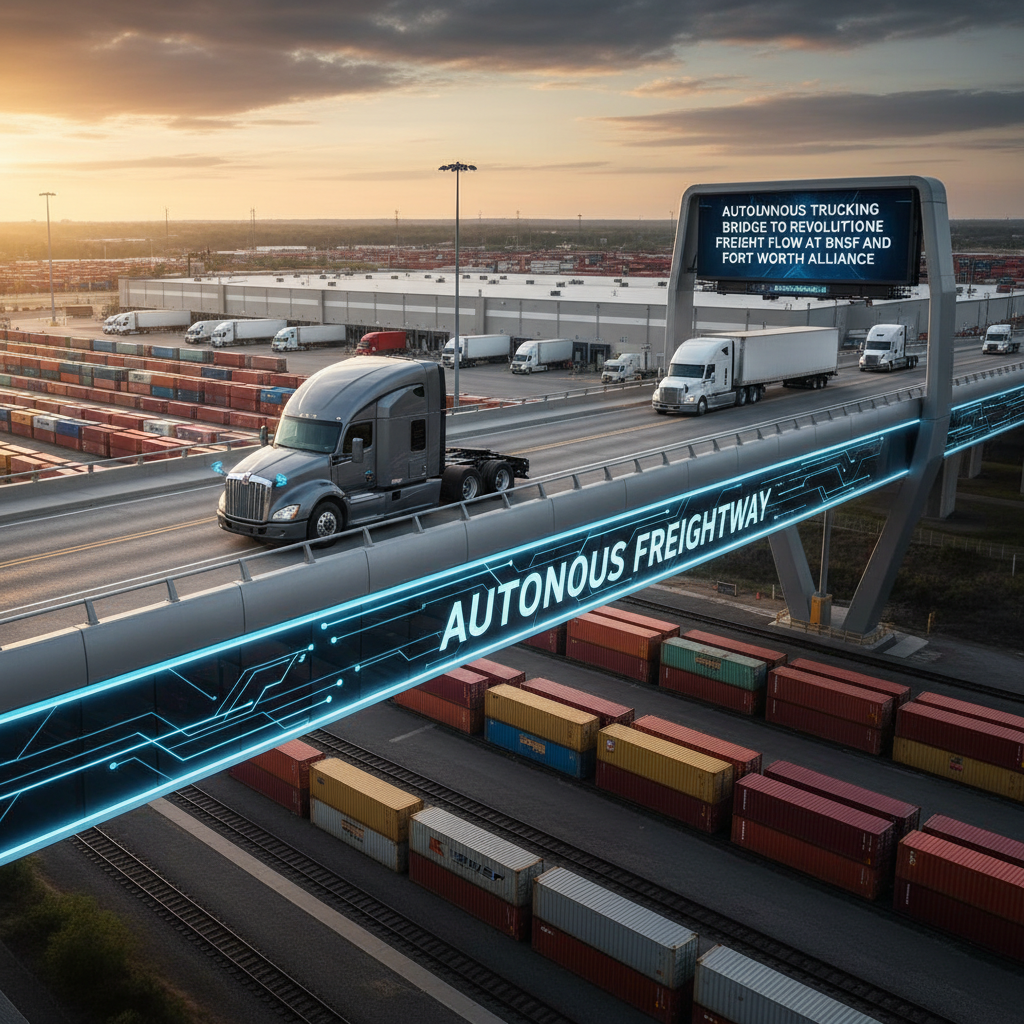
The landscape of freight transportation is constantly evolving, and a groundbreaking development in Fort Worth, Texas, is poised to significantly impact how goods move through one of the nation's busiest logistics hubs. A new, dedicated autonomous trucking bridge, a $20 million infrastructure project, is slated for completion by the end of 2026. This innovative 'freight flow accelerator' will connect a major BNSF intermodal facility directly with the sprawling Alliance warehouses, promising a substantial improvement in efficiency and a notable reduction in public road congestion. For CDL truck drivers and fleet managers, understanding the implications of this project is crucial for future planning, operational strategies, and career development.
At its core, this project is designed to create a closed-loop system for freight movement between two critical points within the AllianceTexas development. The three-lane bridge will span over FM 156, a local roadway, and will be exclusively dedicated to semi-trucks transporting cargo. Crucially, this includes autonomous semi-trucks, which have already been operating within the Alliance warehouses since November 2025. This dedicated infrastructure signifies a growing trend towards integrating advanced automation into the logistics supply chain, a trend that will undoubtedly shape the trucking industry for decades to come.
Understanding the AllianceTexas Ecosystem: A Hub of Innovation
To fully grasp the significance of this autonomous trucking bridge, it's essential to understand the context of the AllianceTexas development. This massive 27,000-acre master-planned community is not just a collection of warehouses; it's a dynamic economic engine encompassing industrial, office, retail, residential, and aviation components. Located strategically in North Fort Worth, it boasts unparalleled connectivity, including direct access to Interstate 35W, two Class I rail lines (BNSF and Union Pacific), and the Fort Worth Alliance Airport, the world's first industrial airport. This multimodal transportation hub has attracted numerous Fortune 500 companies and global logistics providers, making it a critical node in the national and international supply chain.
The BNSF intermodal facility at Alliance is a cornerstone of this ecosystem. Intermodal transport, the movement of freight in an intermodal container or vehicle, using multiple modes of transport without any handling of the freight itself when changing modes, is a highly efficient way to move goods across long distances. Trucks play a vital role in the 'first mile' and 'last mile' segments of intermodal transport, moving containers to and from rail yards. The sheer volume of freight processed through the BNSF facility and distributed to the surrounding Alliance warehouses necessitates robust and efficient trucking operations. This is where the autonomous trucking bridge steps in, aiming to streamline this critical transfer point.
The Promise of Enhanced Freight Flow and Reduced Congestion
The primary stated goal of the autonomous trucking bridge is to "significantly improve freight flow while reducing truck traffic on public roads." For fleet managers, this translates directly into operational efficiencies. Imagine a scenario where trucks no longer have to navigate public roads, contend with traffic lights, or face potential delays from non-commercial vehicles when moving between the intermodal yard and nearby distribution centers. This dedicated bridge creates a direct, uninterrupted conduit for cargo, promising faster turnaround times, reduced fuel consumption, and less wear and tear on equipment.
For CDL drivers, while the bridge itself will be closed to regular traffic and primarily serve autonomous vehicles or dedicated shuttles, the downstream effects are significant. A reduction in congestion on public roads surrounding the Alliance complex means potentially smoother commutes to and from the area, less time spent idling in traffic, and a more predictable schedule. Furthermore, the overall efficiency gains within the logistics hub could lead to more optimized routes and improved working conditions for drivers handling freight outside of this specific autonomous loop. The project underscores a broader industry push to make freight movement more predictable and less susceptible to external variables.
Autonomous Trucking: Integration and Implications
The fact that this bridge is designed to accommodate autonomous semi-trucks, which have already been operating within the Alliance warehouses since November 2025, highlights a crucial aspect of the future of trucking. This isn't just about a bridge; it's about integrating advanced autonomous vehicle technology into the existing logistics infrastructure. For many drivers, the concept of autonomous trucks raises questions and concerns about job security and the evolving nature of their profession.
It's important to understand that current autonomous trucking applications, particularly in controlled environments like the Alliance development, often focus on 'middle-mile' or 'hub-to-hub' operations. This typically involves autonomous trucks handling repetitive, predictable routes between fixed points, such as warehouses or intermodal facilities. Human drivers are still essential for the 'first mile' and 'last mile' segments, navigating complex urban environments, backing into docks, and interacting with customers. The autonomous bridge at Alliance is a prime example of this hub-to-hub application, creating a dedicated, controlled environment where autonomous technology can operate safely and efficiently.
For CDL drivers, this means a potential shift in job roles and responsibilities. While some short-haul, repetitive routes might eventually see increased automation, the demand for skilled drivers capable of handling complex maneuvers, long-haul routes, specialized cargo, and customer interactions will remain strong. Fleet managers, on the other hand, will need to consider how to integrate autonomous solutions into their existing operations, evaluate the return on investment, and potentially invest in training for their workforce to manage and interact with these new technologies.
Economic Impact and Regional Development
The $20 million investment in this autonomous trucking bridge is part of the larger vision for the AllianceTexas development, which has been a significant economic driver for North Texas for decades. Projects like this reinforce the region's status as a premier logistics and distribution hub. The improved efficiency and connectivity will likely attract even more businesses to the area, creating additional job opportunities across various sectors, including logistics, warehousing, maintenance, and technology development.
For local economies, enhanced freight flow means goods can move more quickly and cost-effectively, benefiting consumers and businesses alike. Reduced congestion on public roads also translates to less wear and tear on infrastructure, lower emissions from idling trucks, and improved quality of life for residents. This project serves as a testament to the ongoing investment in infrastructure that supports the trucking industry, recognizing its vital role in the national economy.
Actionable Takeaways for CDL Drivers and Fleet Managers
For CDL Drivers:
- Stay Informed and Adaptable: The trucking industry is undergoing rapid technological change. Keep abreast of developments in autonomous vehicles, telematics, and other innovations. Understanding these trends will help you anticipate future job requirements and opportunities.
- Focus on Specialized Skills: While autonomous trucks may handle some repetitive tasks, human drivers excel at complex maneuvers, problem-solving, customer service, and navigating challenging environments. Hone these skills to remain highly valuable in the evolving job market.
- Consider Training and Certification: As technology advances, new training programs may emerge for drivers to operate alongside or manage autonomous systems. Proactively seeking such certifications could open new career paths.
- Embrace Efficiency: The goal of projects like the autonomous bridge is efficiency. Drivers who understand and contribute to efficient operations – through careful route planning, adherence to schedules, and proactive communication – will always be in demand.
For Fleet Managers:
- Evaluate Integration Opportunities: Assess where autonomous solutions, even in controlled environments, could benefit your fleet. Could dedicated shuttles or autonomous yard trucks improve efficiency in specific parts of your operation?
- Invest in Infrastructure and Technology: Beyond the physical bridge, consider the data infrastructure, charging stations, and maintenance facilities required to support advanced trucking technologies.
- Workforce Planning and Training: Develop strategies for your existing workforce. How will autonomous technology impact their roles? What training will be necessary to upskill drivers and technicians to work with these systems?
- Strategic Partnerships: Collaborate with technology providers, logistics partners, and even local governments to stay at the forefront of innovation. Engaging in pilot programs or industry consortiums can provide valuable insights.
- Data-Driven Decision Making: Leverage the data generated by advanced telematics and autonomous systems to optimize routes, reduce costs, and improve safety across your fleet.
The Road Ahead: A Glimpse into the Future
The autonomous trucking bridge at AllianceTexas is more than just a piece of infrastructure; it's a tangible symbol of the future of freight logistics. It represents a commitment to leveraging technology to solve complex transportation challenges, enhance efficiency, and support economic growth. While the widespread deployment of fully autonomous trucks on public highways is still some time away, projects like this demonstrate the incremental steps being taken to integrate these technologies into specific, controlled environments.
For CDL drivers, this future means a continued demand for their expertise, albeit with an evolving skill set. For fleet managers, it presents opportunities for unprecedented efficiency gains and a competitive edge for those willing to embrace innovation. The trucking industry has always been resilient and adaptable, and this latest development in Fort Worth is another chapter in its ongoing evolution. By staying informed, embracing new technologies, and focusing on core competencies, both drivers and fleets can navigate this exciting new era successfully, ensuring that the wheels of commerce continue to turn efficiently and safely.
Helpful Resources for CDL Drivers
Comments (0)
Sign in to join the conversation
Sign In to CommentNo comments yet. Be the first to share your thoughts!
Explore More
Driver Resources
Educational guides on CDL licensing, salary expectations, and route planning tips.
Browse CDL Jobs
Find your next driving opportunity. Search by location, route type, and CDL class.
CDL Salary Guide
Understand how pay varies by experience, route type, and location in the trucking industry.