
Caterpillar's Strategic Move: How the Monarch Tractor Acquisition Signals a Shift Towards Autonomous Electric Heavy Equipment
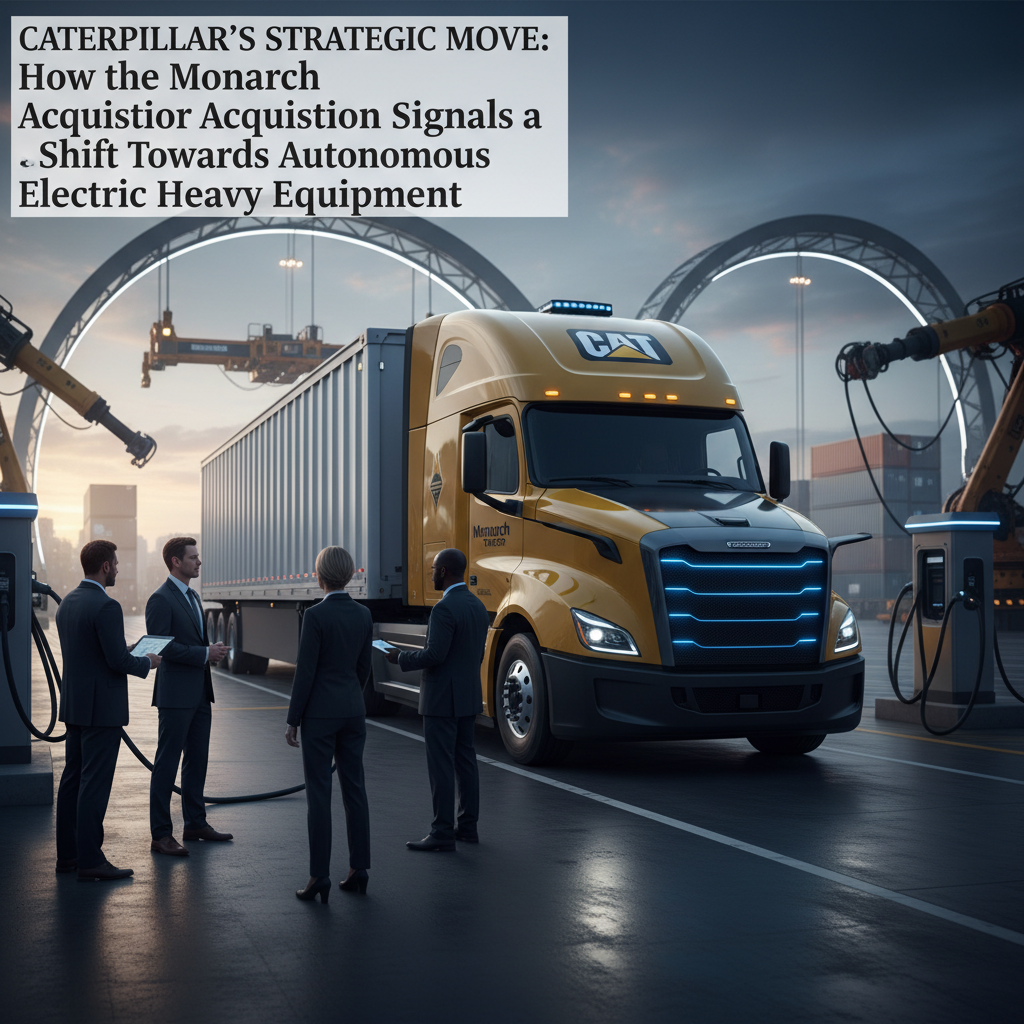
The trucking industry, ever-evolving, is constantly impacted by advancements in heavy equipment technology, even those originating from seemingly disparate sectors like agriculture. A significant development recently unfolded that warrants the attention of every CDL truck driver and fleet manager: Caterpillar Inc., a titan in the heavy machinery world, has acquired Monarch Tractor, a pioneering startup focused on autonomous electric tractors. This strategic move, while centered on agricultural machinery, carries profound implications for the future of logistics, construction, and potentially, long-haul trucking, signaling a broader industry trend towards electrification and automation.
For years, the discussion around autonomous vehicles and electric powertrains has been a staple in trucking circles. While much of the focus has been on Class 8 trucks, the underlying technologies and the business strategies driving their adoption are universal across heavy equipment. Caterpillar's acquisition of Monarch Tractor is not just about farming; it's about consolidating expertise in electric propulsion and advanced autonomous systems that could easily translate to other heavy-duty applications, including the very trucks that transport goods across the nation.
Understanding the Monarch Tractor Acquisition: A Deeper Look
Monarch Tractor, at its peak, was lauded as an innovator, drawing comparisons to Tesla for its ambitious vision of electrifying and automating the agricultural sector. The company developed self-driving electric tractors designed to reduce emissions and optimize farm operations through precision agriculture. However, like many climate tech startups, Monarch faced considerable challenges in scaling its manufacturing and commercializing its cutting-edge solutions. These hurdles ultimately led to staff layoffs and a strategic pivot towards licensing its technology rather than direct manufacturing.
Caterpillar's move to acquire Monarch's technology, rather than the entire manufacturing operation, is a shrewd business decision. It allows Caterpillar to absorb valuable intellectual property, including proprietary software, sensor arrays, and electric drivetrain designs, without inheriting the complexities of a struggling manufacturing startup. This acquisition underscores Caterpillar's commitment to staying at the forefront of technological innovation in heavy equipment, recognizing that the future is increasingly electric and autonomous. For fleet managers, this signals that major players are investing heavily in these areas, and the trickle-down effect to road-going vehicles is inevitable.
The Broader Implications for Trucking and Logistics
While Monarch's initial focus was agriculture, the core technologies it developed – electric powertrains, advanced sensor fusion, AI-driven navigation, and remote operation capabilities – are directly transferable to other heavy-duty applications. Consider the potential impact on construction sites, ports, and intermodal yards, where Caterpillar equipment is ubiquitous. Autonomous electric loaders, excavators, and indeed, yard trucks, could become standard, streamlining operations, reducing fuel costs, and enhancing safety. This directly affects the ecosystem in which CDL drivers operate, from picking up loads at automated facilities to delivering materials to increasingly smart construction sites.
For CDL drivers, this trend means a potential shift in the nature of work. While autonomous long-haul trucks are still some years away from widespread adoption, the automation of tasks within logistics hubs, warehouses, and even port operations could change how loads are prepared and received. Drivers might find themselves interacting with more automated systems for loading, unloading, and yard management. Understanding these technologies, even at a basic level, will become increasingly valuable. Fleet managers, on the other hand, need to start evaluating how these technologies can be integrated into their existing operations to improve efficiency, reduce operational costs, and address labor shortages.
Electrification: Beyond the Farm and into the Fleet
Monarch Tractor's electric powertrain technology is a key asset in this acquisition. The trucking industry is already seeing a strong push towards electrification, driven by environmental regulations, corporate sustainability goals, and the promise of lower operating costs. Caterpillar's investment in Monarch's electric expertise reinforces the notion that electric heavy equipment is not a niche market but the future standard. This includes electric Class 8 trucks, which are slowly but surely gaining traction.
For truck drivers, electric trucks mean a different driving experience – quieter cabs, instant torque, and potentially less maintenance on certain components. However, it also introduces new challenges, such as charging infrastructure, range anxiety, and battery weight. Fleet managers must grapple with significant upfront investment costs, the need for robust charging networks, and the training required for technicians to maintain these advanced vehicles. Caterpillar's move indicates that the technological hurdles for heavy-duty electric applications are being actively tackled by industry leaders, accelerating the pace of innovation.
Autonomous Technology: From Fields to Freight Yards
The autonomous capabilities developed by Monarch are perhaps the most intriguing aspect for the trucking sector. While a self-driving tractor navigating a field is different from a semi-truck on a highway, the underlying principles of perception, planning, and control are remarkably similar. Caterpillar can leverage Monarch's expertise in sensor integration, AI algorithms for path planning, and obstacle detection to enhance its existing autonomous offerings in mining and construction, and potentially expand them into other areas.
For CDL drivers, the rise of autonomous technology means a potential evolution of their roles. Rather than being replaced, many foresee a future where drivers become
Helpful Resources for CDL Drivers
Comments (0)
Sign in to join the conversation
Sign In to CommentNo comments yet. Be the first to share your thoughts!
Explore More
Driver Resources
Educational guides on CDL licensing, salary expectations, and route planning tips.
Browse CDL Jobs
Find your next driving opportunity. Search by location, route type, and CDL class.
CDL Salary Guide
Understand how pay varies by experience, route type, and location in the trucking industry.