
DOT Crackdown: Over 550 CDL Schools Face Closure Amidst Safety Concerns and Training Deficiencies
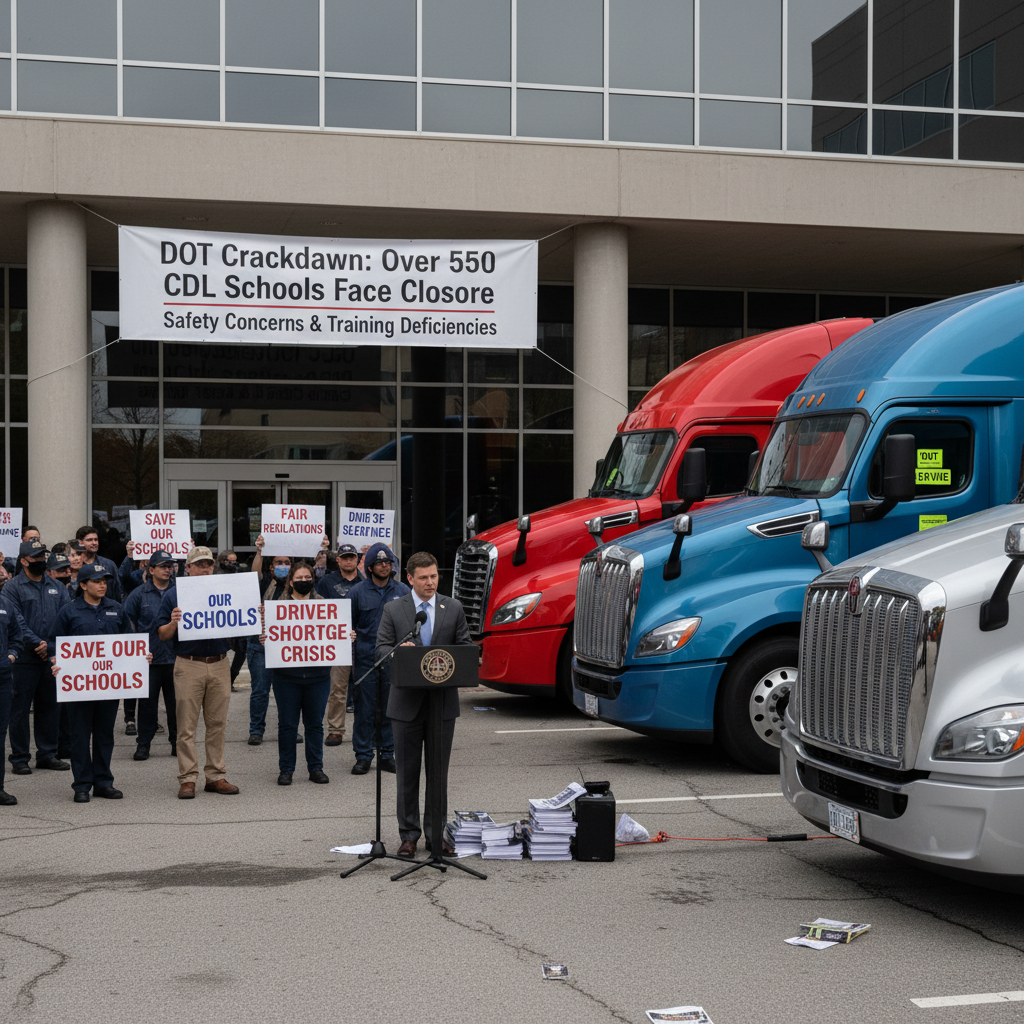
The U.S. Department of Transportation (USDOT) has announced a significant and far-reaching initiative to enhance safety standards across the commercial trucking industry, a move that will directly impact hundreds of commercial driving schools nationwide. In a decisive action, the USDOT is moving to close over 550 active commercial driving license (CDL) schools after extensive investigations uncovered widespread issues, including unqualified instructors, inadequate student testing protocols, and other critical safety failures. This announcement, made on February 18, 2026, marks an escalation in federal efforts to ensure that every professional driver on American roads is properly trained and fully qualified.
This latest crackdown is not an isolated incident but rather a continuation of a broader federal push to address alarming trends in commercial driver safety and training integrity. The USDOT's intensified scrutiny comes in the wake of several high-profile fatal crashes, some of which have been linked to drivers whose qualifications or immigration status were questionable. These incidents have underscored the urgent need for stricter oversight of CDL training programs, prompting federal officials to take a firm stand against what they term 'CDL mills' – institutions that prioritize speed and profit over comprehensive, safety-focused education.
For CDL truck drivers, this development signals a renewed commitment from federal regulators to uphold the integrity of their profession. It means that the CDL credential will carry even greater weight, as it will be increasingly difficult for inadequately trained individuals to obtain one. For fleet managers, this initiative presents both challenges and opportunities: a potential tightening of the driver supply in the short term, but also the promise of a more skilled, safer, and ultimately more reliable pool of drivers in the long run. Understanding the nuances of this federal action is crucial for all stakeholders in the trucking ecosystem.
The Impetus Behind the Crackdown: Safety First
At the core of the USDOT's aggressive stance is an unwavering focus on public safety. The agency's investigations, which included 1,426 site visits completed in December, revealed a troubling pattern of deficiencies among the targeted schools. These shortcomings ranged from employing instructors who lacked the necessary qualifications to failing to adequately assess students' driving skills or provide crucial training on hazardous materials handling. In some instances, schools were found to be using inappropriate equipment for driver instruction, further compromising the quality of education.
Secretary Sean Duffy emphasized the gravity of the situation, stating, "American families should have confidence that our school bus and truck drivers are following every letter of the law and that starts with receiving proper training before getting behind the wheel." This sentiment reflects a growing concern within the government about the potential for poorly trained drivers to contribute to accidents, thereby endangering not only themselves but also the motoring public.
One particularly tragic event that galvanized this federal response was a fatal crash in Florida in August, caused by a truck driver who, according to Secretary Duffy, was not authorized to be in the U.S. and made an illegal U-turn. Subsequent fatal crashes, including one in Indiana that claimed four lives, have only intensified the pressure on regulators to act decisively. These incidents serve as stark reminders of the catastrophic consequences that can arise from lapses in driver qualification and training.
Unpacking the Deficiencies: What Went Wrong?
The USDOT's inspectors identified a range of critical deficiencies that led to the decision to close these 550+ schools. These issues are not merely administrative oversights but fundamental failures that undermine the very purpose of CDL training: to produce competent and safe commercial drivers. Understanding these specific failings is crucial for both aspiring drivers seeking quality education and established schools looking to maintain compliance.
Unqualified Instructors: A recurring problem was the employment of instructors who did not meet the necessary federal or state qualifications. Effective CDL training requires experienced professionals who can impart not only technical driving skills but also critical judgment, safety protocols, and regulatory knowledge. Instructors who lack these credentials cannot adequately prepare students for the complexities of commercial driving.
Inadequate Testing and Skill Assessment: Many schools were found to be deficient in their student testing processes. This included failing to conduct thorough practical driving tests, neglecting to assess students' ability to handle various road conditions, or not evaluating their proficiency in essential maneuvers. A CDL is a license to operate heavy machinery, and without rigorous testing, there's no guarantee that a driver possesses the foundational skills for safe operation.
Lack of Hazardous Materials Training: For drivers transporting hazardous materials, specialized training is not just a recommendation but a legal requirement. Inspectors discovered that some schools were either not offering this vital training or were doing so inadequately, putting both the drivers and the public at immense risk should an incident occur.
Using Wrong Equipment for Training: The type of vehicle used for training is paramount. If a school is using equipment that does not accurately simulate real-world commercial vehicles or is not up to safety standards, students will not gain the necessary experience to operate actual trucks or buses safely. This could range from using outdated vehicles to those that don't meet the class of CDL being sought.
Broader Compliance Issues: Beyond these specific training deficiencies, many schools exhibited a general lack of adherence to federal and state regulations governing CDL training. This could include issues with record-keeping, curriculum standards, facility requirements, and other operational aspects that contribute to a school's overall quality and legitimacy.
It's also important to note that this action follows a previous effort last fall to decertify up to 7,500 schools, many of which were defunct operations. This latest move, however, specifically targets active schools that were found to have significant shortcomings during the 1,426 site visits. Furthermore, 109 schools preemptively withdrew from the registry upon learning that inspections were planned, an implicit acknowledgment of their own non-compliance.
Impact on CDL Drivers: Navigating the Landscape
For current and aspiring CDL truck drivers, this crackdown has several implications. First and foremost, it reinforces the value of a CDL obtained through legitimate, high-quality training. Drivers who have invested in proper education can take pride in their credentials, knowing that the industry is moving towards a higher standard of professionalism.
Choosing a Reputable School: For individuals considering a career in trucking, the USDOT's actions underscore the critical importance of selecting a reputable CDL training school. Aspiring drivers should conduct thorough research, look for schools with strong track records, positive reviews, and clear accreditation. Inquire about instructor qualifications, curriculum details, and the types of equipment used for training. Don't be swayed by promises of quick, cheap licenses without verifying the quality of education.
Maintaining Professional Standards: For existing CDL holders, this initiative serves as a reminder of the ongoing responsibility to maintain high professional standards. The push for better training at the entry-level will likely translate into increased scrutiny of driver performance and safety records throughout their careers. Continuous learning, adherence to safety regulations, and a commitment to professional development will become even more vital.
Understanding the 'CDL Mill' Threat: Drivers should be aware of the concept of 'CDL mills' and actively avoid any institution that appears to cut corners. These operations not only jeopardize a driver's career by providing inadequate training but also contribute to a negative perception of the entire trucking industry. A CDL from a 'mill' might get you a license, but it won't prepare you for the road, nor will it likely stand up to scrutiny from reputable employers.
Implications for Fleet Managers: Strategic Adjustments and Opportunities
Fleet managers and trucking companies are on the front lines of this change. While the immediate impact might include a temporary reduction in the available pool of new drivers, the long-term benefits of a better-trained workforce are substantial.
Recruitment and Hiring Strategies: Fleet managers will need to adjust their recruitment and hiring strategies. The emphasis will shift even more towards verifying the quality of a candidate's training background. Partnering with accredited, high-quality CDL schools will become a competitive advantage. Companies might consider establishing preferred school lists or even investing in their own in-house training programs to ensure a consistent standard of driver education.
Driver Qualification and Onboarding: Enhanced scrutiny of CDL schools means that fleet managers must also enhance their internal driver qualification processes. This includes not just checking for a valid CDL but also thoroughly vetting a driver's training history, conducting comprehensive road tests, and providing robust onboarding and mentorship programs. The goal is to bridge any potential gaps in foundational training and ensure new hires are fully prepared for the demands of the job.
Safety Culture and Compliance: The USDOT's crackdown reinforces the importance of a strong safety culture within trucking companies. Fleet managers should review and update their safety policies, training programs, and compliance measures. This includes ensuring that drivers are continually educated on the latest regulations, best practices, and hazardous materials handling. A proactive approach to safety not only protects drivers and the public but also mitigates regulatory risks and improves operational efficiency.
Addressing the Driver Shortage: While the closure of schools might exacerbate the existing driver shortage in the short term, it also presents an opportunity to advocate for and support quality training initiatives. Fleet managers can work with industry associations and policymakers to promote programs that attract new talent to the industry and provide them with the best possible education. Investing in driver retention strategies also becomes paramount, as keeping experienced, well-trained drivers is more critical than ever.
Financial and Operational Impact: In the short term, some fleets might experience increased recruitment costs or longer hiring cycles. However, the long-term benefits of having safer, more competent drivers include reduced accident rates, lower insurance premiums, less equipment damage, and improved operational efficiency. These benefits can significantly outweigh the initial challenges.
The Road Ahead: A Call for Industry-Wide Collaboration
Secretary Duffy's message, "We’re putting the brakes on CDL mills. Unqualified drivers DO NOT BELONG on our roads, and we’re holding the industry to a higher standard! The buck stops HERE," clearly indicates a sustained commitment from the federal government to elevate the standards of commercial driver training. This is not a one-time event but rather an ongoing effort to ensure the safety and professionalism of the trucking industry.
For the trucking industry as a whole, this moment calls for collaboration. CDL schools, trucking companies, industry associations, and government agencies must work together to establish and maintain rigorous training standards. This includes sharing best practices, developing innovative training methodologies, and advocating for policies that support quality education and responsible driver development.
Ultimately, the goal is to foster an environment where every CDL holder is a highly skilled, safety-conscious professional. This not only protects lives but also enhances the reputation and economic vitality of the entire trucking sector. By embracing these changes and actively participating in the evolution of driver training, the industry can ensure a safer, more efficient, and more respected future for commercial transportation in America.
Helpful Resources for CDL Drivers
Comments (0)
Sign in to join the conversation
Sign In to CommentNo comments yet. Be the first to share your thoughts!
Explore More
Driver Resources
Educational guides on CDL licensing, salary expectations, and route planning tips.
Browse CDL Jobs
Find your next driving opportunity. Search by location, route type, and CDL class.
CDL Salary Guide
Understand how pay varies by experience, route type, and location in the trucking industry.