
Driving Forward: Navigating Advanced Fleet Technology and Digital Innovations for CDL Drivers and Fleet Managers
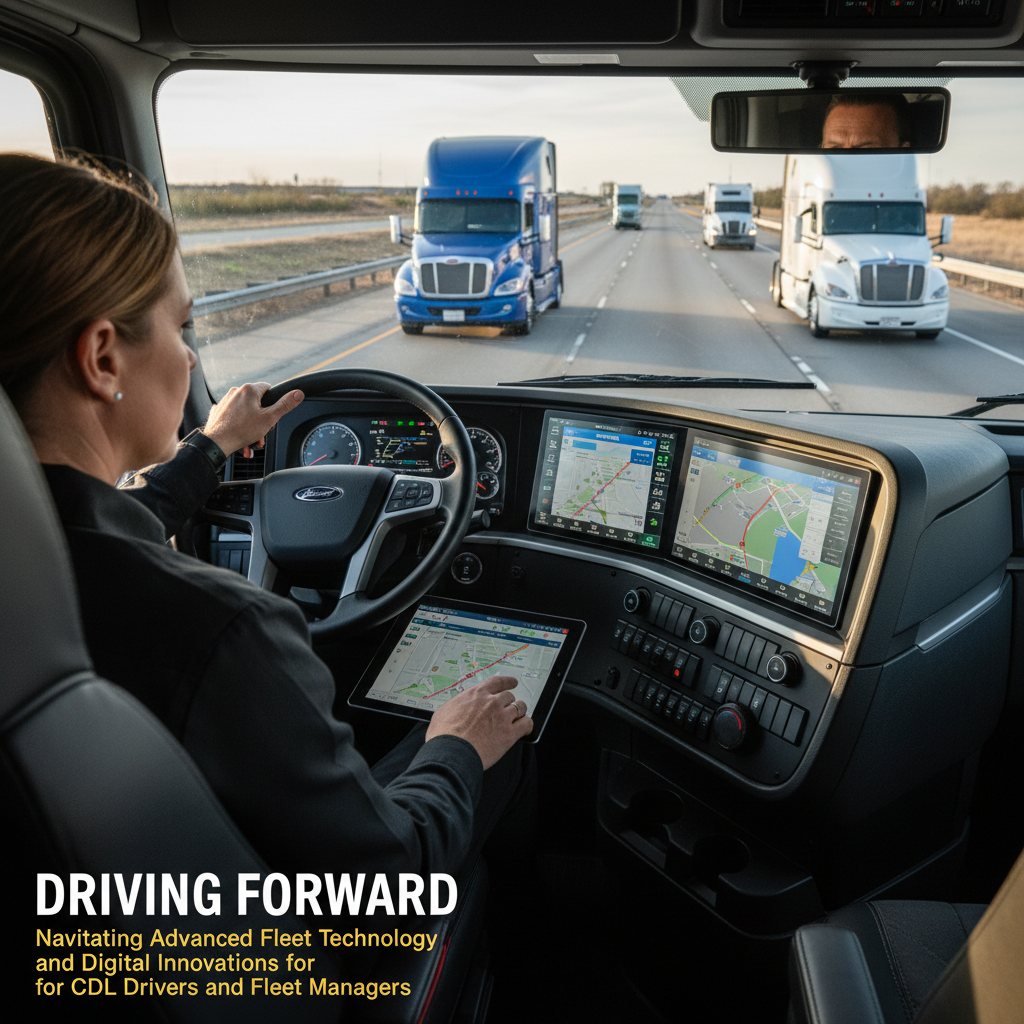
The trucking industry is in the midst of a technological revolution, a seismic shift driven by advanced fleet technology and digital innovations that are reshaping how commercial vehicles operate, how freight moves, and how CDL drivers and fleet managers perform their daily tasks. From sophisticated powertrains and AI-driven analytics to interconnected vehicle systems and cutting-edge safety features, the array of solutions available today promises unprecedented levels of visibility, efficiency, cost reduction, and improved uptime. For CDL drivers, this means safer roads, more comfortable cabs, and streamlined workflows. For fleet managers, it translates to optimized operations, better decision-making, and a stronger competitive edge. The central challenge is no longer the availability of these technologies, but rather discerning which solutions genuinely deliver tangible benefits for specific fleet applications, duty cycles, and real-world operating conditions. Fleets that master this integration will undoubtedly achieve more efficient, safer, and highly competitive operations, leading to higher uptime, reduced cost per mile, superior safety performance, and ultimately, robust financial outcomes. This strategic adoption will position them to secure more business and thrive in an increasingly demanding and dynamic market landscape.
The Digital Transformation of the Trucking Industry: Are You Ready?
The digital revolution, spearheaded by artificial intelligence (AI) and advanced data analytics, is permeating nearly every sector, and commercial transportation is certainly no exception. AI, automation, and connected-vehicle systems are rapidly transitioning from experimental concepts to integral components of daily fleet operations. This technological surge, often accompanied by pervasive 'everything is AI' claims, prompts a crucial question for fleet leaders, including savvy CDL drivers who are often the first to interact with these systems: 'What innovations are truly practical and available today, and more importantly, how can I effectively leverage them to enhance my operation?' The answer lies in the strategic application of data.
In the modern fleet sector, data has become an invaluable asset. AI's remarkable capacity to analyze vast datasets – not only from an individual fleet's vehicles but also from thousands of similar vehicles operating with identical engines and duty cycles – empowers it to predict potential failures long before they manifest. Consider the transformative impact: one progressive fleet recently reported the ability to predict mechanical failures a full eight days in advance. This foresight allows them to proactively schedule a quick service intervention, addressing issues before they escalate into costly breakdowns and requiring emergency towing. Such predictive capabilities are a game-changer, minimizing unexpected downtime, optimizing maintenance schedules, and ensuring that trucks remain on the road, generating revenue, rather than languishing in the repair shop. For CDL drivers, this means fewer unexpected breakdowns on the road, less time waiting for repairs, and a more reliable vehicle to operate.
Beyond reactive repairs, the synergy of data and AI processing is enabling forward-thinking fleets to evolve beyond rigid, fixed service intervals. The industry is moving towards dynamic, condition-based maintenance strategies, where vehicles are serviced precisely when their condition dictates, rather than adhering to an arbitrary schedule dictated by a spreadsheet or a calendar. For high-intensity applications, this might mean pulling a vehicle in for maintenance slightly earlier to preempt potential failures and avert significant downtime. Conversely, for lighter-duty assets, it allows vehicles to remain in service longer, avoiding unnecessary and premature maintenance costs. The cumulative effect of this intelligent approach is significantly higher uptime, enhanced productivity across the fleet, and a substantial reduction in overall operating expenses. Predictive maintenance is no longer a theoretical concept; it is a tangible reality delivering measurable benefits today. Fleets and CDL drivers who grasp and implement these tools will undoubtedly secure a significant competitive advantage.
However, a practical question arises: how do these advanced tools integrate with mixed fleets that include older equipment not fully equipped with connected technology? This is a common scenario in the real world, not just in a perfectly optimized, new fleet environment. The answer often involves a phased approach, leveraging telematics retrofits, and focusing on data aggregation from various sources. Even older vehicles can contribute valuable data points through manual input or less sophisticated sensors, which, when combined with AI analysis, can still yield predictive insights. The key is to start somewhere, gather data, and continuously refine the strategy.
From Fixed Replacement Cycles to Smarter Asset Management
AI-driven analytics are also fundamentally altering how fleets approach asset replacement, moving beyond the traditional paradigm of retiring vehicles based solely on age or mileage. Modern fleets are increasingly evaluating real-world performance metrics to make informed capital allocation decisions. Questions like: 'Which assets are experiencing more frequent breakdowns?' 'Which vehicles are incurring disproportionately high maintenance costs?' and 'Which trucks consistently deliver strong uptime and fuel efficiency?' are now being answered with precision thanks to data-driven insights. This analytical capability empowers fleets to strategically replace underperforming vehicles sooner, while simultaneously extending the operational life of high-performing assets. The direct outcomes are optimized capital allocation, enhanced fleet reliability, and superior financial performance across the entire operation. This pivotal shift necessitates the adoption of new tools, the collection of richer data streams, and a fundamental change in mindset regarding asset management. For fleet managers, this means a more robust ROI on their significant equipment investments. For CDL drivers, it means operating newer, more reliable, and more efficient equipment, which directly impacts their productivity and job satisfaction.
Safety, Technology, and the Path to Enhanced Driver Well-being
Safety remains, unequivocally, one of the paramount priorities for all fleet operators and, by extension, for every CDL driver. The integration of advanced driver assistance systems (ADAS) is rapidly becoming a standard feature in modern commercial vehicles, moving beyond mere compliance to become a cornerstone of proactive safety strategies. These sophisticated systems, including technologies like automatic emergency braking (AEB), adaptive cruise control (ACC), lane departure warning (LDW), and blind-spot monitoring (BSM), are not just about preventing accidents; they are about creating a safer, less fatiguing driving environment for CDL professionals. For drivers, ADAS acts as an extra set of eyes and an intelligent co-pilot, mitigating risks posed by human error, fatigue, and challenging road conditions. For fleet managers, these systems translate into fewer accidents, reduced insurance premiums, lower repair costs, and, most importantly, the protection of their most valuable assets: their drivers.
The evolution of safety technology extends beyond ADAS. Driver-facing cameras, often integrated with AI, are providing valuable insights into driver behavior, identifying potential risks like distracted driving or fatigue. While some drivers initially view these as intrusive, their primary purpose is to enhance safety and provide coaching opportunities, ultimately protecting both the driver and the company. Telematics systems, beyond their maintenance benefits, also play a crucial role in monitoring driving patterns, identifying harsh braking or acceleration events, and contributing to overall safety scores. This data can be used for targeted training, rewarding safe driving habits, and fostering a culture of safety throughout the fleet.
Looking ahead, these safety advancements are laying the critical groundwork for the eventual integration of higher levels of automation in commercial trucking. While fully autonomous trucks are still some years away from widespread deployment, the current generation of ADAS technologies are vital stepping stones, refining the sensors, algorithms, and decision-making processes that will underpin future autonomous operations. As these technologies mature, they promise to further enhance safety, improve efficiency, and potentially address the persistent driver shortage by making the profession more appealing and less strenuous. For CDL drivers, understanding and adapting to these technologies is not just about compliance; it's about staying competitive and leveraging tools that make their demanding job safer and more manageable.
Connected Vehicles: The Nervous System of Modern Fleets
The concept of a 'connected vehicle' is no longer futuristic; it's a present-day reality that forms the nervous system of modern, technologically advanced fleets. Connected vehicles are essentially mobile data centers, continuously transmitting and receiving information about their location, speed, engine performance, fuel consumption, driver behavior, and even the condition of their cargo. This constant flow of data, facilitated by telematics and IoT (Internet of Things) devices, provides fleet managers with unprecedented real-time visibility into their operations.
For fleet managers, this means the ability to monitor routes, track delivery progress, identify potential delays, and reroute vehicles dynamically to avoid traffic or adverse weather conditions. It allows for proactive communication with customers regarding estimated arrival times and provides crucial data for optimizing logistics and supply chain efficiency. For CDL drivers, connected vehicle technology can translate into more efficient routing, less idle time, accurate navigation, and immediate access to support in case of emergencies or breakdowns. It can also enable features like electronic logging devices (ELDs) that seamlessly record hours of service, reducing administrative burdens and ensuring compliance.
Furthermore, connected vehicles facilitate remote diagnostics, allowing technicians to identify and often resolve minor issues without the truck needing to return to the shop. This reduces downtime and allows for more strategic scheduling of maintenance. The data collected from connected vehicles also feeds into the AI-driven analytics discussed earlier, creating a powerful feedback loop that continuously refines predictive maintenance models, optimizes fuel efficiency, and enhances safety protocols. The integration of connected vehicle technology is not just about having more data; it's about intelligently utilizing that data to create a more responsive, efficient, and resilient trucking operation.
Optimizing Fuel Efficiency Through Digital Insights
Fuel is consistently one of the largest operating expenses for any trucking fleet. Even marginal improvements in fuel efficiency can translate into substantial savings over time. Digital innovations are providing powerful tools for fleets and CDL drivers to achieve these improvements. Telematics systems, for instance, can monitor fuel consumption in real-time, identifying inefficiencies related to excessive idling, harsh acceleration, or improper gear selection. This data can then be used to provide targeted coaching to drivers, helping them adopt more fuel-efficient driving habits.
AI-powered route optimization software takes this a step further, analyzing traffic patterns, road conditions, and elevation changes to recommend the most fuel-efficient routes. This not only saves on fuel but also reduces wear and tear on vehicles and minimizes delivery times. Predictive analytics can also be applied to engine performance data to ensure that engines are operating at peak efficiency, identifying issues that might lead to increased fuel consumption before they become significant problems. For CDL drivers, this means being equipped with the best routes and receiving feedback that helps them refine their driving style to be more economical, directly contributing to the fleet's profitability and environmental footprint. For fleet managers, it's about maximizing every gallon, reducing operational costs, and enhancing the fleet's overall sustainability profile.
The Human Element: Empowering CDL Drivers in a Tech-Driven World
While the proliferation of advanced technology often evokes discussions about automation replacing human jobs, in the trucking industry, the focus is increasingly on how these innovations empower CDL drivers. Far from being replaced, drivers are becoming more sophisticated operators, leveraging technology to enhance their skills, improve their safety, and streamline their work. Modern truck cabs are evolving into highly advanced mobile offices, equipped with intuitive interfaces, advanced navigation, and communication systems that make a driver's job more manageable and less stressful.
Training is paramount in this evolving landscape. Fleets must invest in comprehensive training programs to ensure that CDL drivers are not only comfortable but proficient in utilizing new technologies, from understanding ADAS warnings to interpreting telematics data. This investment in driver education fosters a sense of empowerment, making drivers active participants in the fleet's technological adoption rather than passive recipients. Furthermore, technology can enhance driver well-being by providing better communication tools, access to entertainment, and even health monitoring features, contributing to higher job satisfaction and retention.
For fleet managers, understanding the driver's perspective on new technologies is crucial for successful implementation. Involving drivers in the selection and testing phases can lead to better adoption rates and provide valuable real-world feedback. A collaborative approach ensures that technology serves to augment the driver's capabilities, making their job safer, more efficient, and ultimately, more rewarding. The goal is to create a symbiotic relationship where technology and human expertise combine to achieve optimal operational outcomes.
Making the Business Case: A Strategic Imperative for Fleet Managers
For fleet managers, the decision to invest in advanced technology is a strategic one, requiring a clear business case that demonstrates a tangible return on investment (ROI). This involves moving beyond the initial sticker price and evaluating the long-term benefits across multiple operational facets. The business case for technology adoption typically hinges on several key areas:
- Cost Reduction: This includes savings from improved fuel efficiency, reduced maintenance costs through predictive analytics, lower insurance premiums due to enhanced safety, and optimized operational expenses through better route planning and asset utilization.
- Increased Uptime and Productivity: Minimizing breakdowns, optimizing maintenance schedules, and streamlining operations directly contribute to more time on the road and higher revenue generation per vehicle.
- Enhanced Safety and Compliance: Investing in ADAS and driver monitoring systems reduces accident rates, protects drivers, minimizes liability, and ensures adherence to regulatory requirements, avoiding costly fines.
- Competitive Advantage: Fleets that leverage technology to offer superior service, faster delivery times, and greater reliability will attract and retain more customers, gaining a significant edge in a competitive market.
- Driver Recruitment and Retention: Modern, technologically advanced trucks and efficient operations make a fleet more attractive to CDL drivers, helping to combat the industry's persistent driver shortage.
Developing a robust business case requires meticulous data analysis, pilot programs to test technologies in real-world scenarios, and a clear understanding of the fleet's specific needs and challenges. It's about identifying the pain points that technology can effectively address and then quantifying the benefits. For example, a fleet struggling with high maintenance costs might prioritize predictive maintenance solutions, while one facing high accident rates might focus on ADAS implementation. The key is to align technology investments with strategic business objectives.
The Road Ahead: Continuous Innovation and Adaptation
The rapid pace of technological innovation in the trucking industry shows no signs of slowing. From advancements in electric and hydrogen powertrains to further developments in AI, IoT, and autonomous capabilities, the future promises even more transformative changes. For CDL drivers and fleet managers, continuous learning and adaptation will be crucial. Staying informed about emerging technologies, understanding their potential impact, and being open to new ways of working will be essential for success.
Participation in industry events, engaging with technology providers, and fostering a culture of innovation within the fleet are vital steps. The goal is not just to adopt technology for technology's sake, but to strategically integrate solutions that genuinely improve safety, efficiency, profitability, and the overall quality of life for CDL drivers. By embracing these advancements thoughtfully and proactively, the trucking industry can navigate the complexities of the modern world, ensuring a robust, resilient, and technologically empowered future for all its stakeholders.
Helpful Resources for CDL Drivers
Comments (0)
Sign in to join the conversation
Sign In to CommentNo comments yet. Be the first to share your thoughts!
Explore More
Driver Resources
Educational guides on CDL licensing, salary expectations, and route planning tips.
Browse CDL Jobs
Find your next driving opportunity. Search by location, route type, and CDL class.
CDL Salary Guide
Understand how pay varies by experience, route type, and location in the trucking industry.