Driving Growth: How Logistics Sales & Marketing Innovations Impact Truckers and Fleets
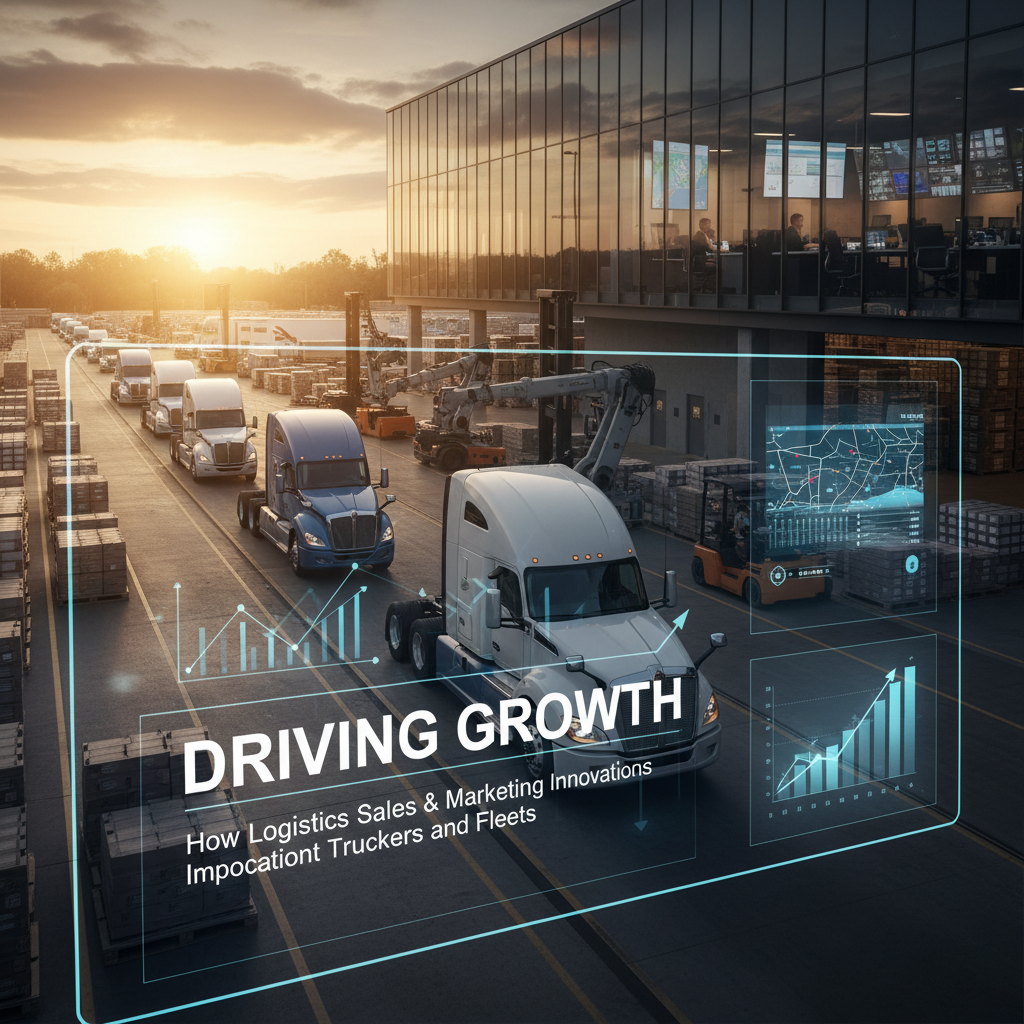
In the dynamic world of trucking and logistics, every mile driven, every load delivered, and every customer interaction contributes to the industry's pulse. While the focus for many CDL truck drivers is on the road ahead and for fleet managers on operational efficiency, there's a crucial, often unseen, engine driving the opportunities and stability within the sector: the strategic efforts of sales and marketing professionals. These individuals, supported by organizations like the Transportation Marketing & Sales Association (TMSA), are constantly working to connect shippers with carriers, optimize supply chains, and ultimately, ensure there's freight to haul and business to grow.
The logistics landscape is in perpetual motion, shaped by evolving customer expectations, rapid technological advancements, and an ever-present pressure to deliver measurable growth. For CDL drivers, this translates to consistent freight volumes, competitive rates, and access to modern equipment. For fleet managers, it means a robust pipeline of business, stronger client relationships, and the resources to invest in their operations and their people. Understanding the innovations and strategies employed by the sales and marketing teams in logistics can provide valuable insights for both drivers looking for stable work and managers aiming to expand their fleet's reach.
The Evolving Role of Sales and Marketing in Logistics: What It Means for You
The traditional image of a salesperson might not immediately conjure thoughts of a truck driver's daily grind, but their efforts are intrinsically linked. Sales and marketing teams are the bridge between the services trucking companies offer and the needs of businesses requiring freight transportation. They are responsible for identifying new markets, securing contracts, and communicating the value proposition of a carrier – whether that's on-time delivery, specialized equipment, or a stellar safety record. When these teams excel, it directly impacts the bottom line, which in turn influences driver pay, equipment upgrades, and overall job security.
For fleet managers, a strong sales and marketing arm is indispensable. It's not just about filling trucks; it's about strategic growth, diversifying client portfolios, and building resilient revenue streams. These professionals are the ones analyzing market trends, understanding shipper demands, and crafting compelling narratives that differentiate one trucking company from another. Their success directly enables fleet managers to plan for expansion, recruit top talent, and invest in advanced telematics or driver comfort amenities.
TMSA ELEVATE: A Catalyst for Industry Advancement
Organizations like the Transportation Marketing & Sales Association (TMSA) play a pivotal role in elevating the skills and strategies of these critical sales and marketing professionals. TMSA, as the only organization exclusively dedicated to advancing sales and marketing in the logistics industry, provides a platform for individuals and teams to sharpen their strategic thinking, build essential skills, and connect with peers facing similar challenges. Their annual conference, TMSA ELEVATE, is a prime example of how the industry invests in its growth engines.
While ELEVATE is geared towards sales and marketing leaders and practitioners, the innovations discussed and the strategies developed there have a ripple effect throughout the entire supply chain, ultimately benefiting every CDL driver and fleet manager. When sales teams learn to better articulate a carrier's capabilities, it leads to more appropriate freight matching. When marketing teams effectively communicate a company's commitment to safety or sustainability, it attracts shippers who value those attributes, potentially leading to higher-paying, more consistent routes.
A New Structure for Growth: Tailored Learning, Actionable Outcomes
Recognizing the evolving needs of the logistics sector, TMSA has restructured its educational and networking approach, particularly at events like ELEVATE. This new five-track model is designed around the real roles that drive growth within logistics organizations: Company Leader, Sales Leader, Marketing Leader, Sales Practitioner, and Marketing Practitioner. This targeted approach ensures that professionals receive highly relevant, role-specific insights, rather than generic information.
For CDL drivers, this means that the companies they work for are employing sales and marketing teams that are increasingly sophisticated and specialized. A sales leader focusing on pipeline development and team performance will be more effective at securing consistent, high-value freight. A marketing practitioner diving into execution and measurable outcomes will be better at promoting the company's strengths, attracting desirable clients, and building a strong brand reputation that supports recruitment and retention efforts.
Fleet managers can appreciate the value of this structured learning. When their sales and marketing counterparts are equipped with the latest strategies for organizational growth and commercial strategy, it directly translates into a more stable and prosperous business environment for the entire fleet. Imagine a sales team that understands how to leverage your fleet's specific capabilities – be it reefer units, flatbeds, or hazmat certifications – to win contracts that maximize equipment utilization and driver earnings.
Beyond Broad Sessions: Deep Dives and Peer Connection
ELEVATE's layered program combines shared industry insights with role-specific application. Attendees participate in keynote speeches addressing overarching industry trends, challenges, and opportunities, which are relevant across all roles. From there, they delve into focused track sessions, connecting with peers who share similar responsibilities and day-to-day challenges. This structure fosters a deeper understanding and allows for practical application of learned strategies.
For example, company leaders might engage in discussions about organizational growth and overarching commercial strategy – decisions that directly influence the size of the fleet, the types of lanes pursued, and the investment in driver programs. Sales leaders might focus on advanced techniques for pipeline development, performance metrics, and effective team leadership, leading to more robust freight acquisition. Marketing practitioners could explore execution strategies, messaging optimization, and methods for achieving measurable outcomes, enhancing the company's visibility and reputation.
This emphasis on practical, actionable takeaways means that the strategies developed are not just theoretical. They are designed to be implemented immediately, leading to tangible improvements in how logistics services are sold and promoted. For drivers, this could mean more efficient route planning due to better freight consolidation or a more consistent flow of loads. For fleet managers, it means a more effective sales pipeline, reducing the pressure to find freight and allowing more focus on operational excellence and driver support.
The Importance of a Dedicated Community for Growth
Jennifer Karpus-Romain, Executive Director of TMSA, emphasizes the importance of a dedicated community for professionals driving revenue, building brand visibility, and strengthening customer relationships. She notes that sales and marketing roles in logistics are growing in complexity, making professional development and peer connection more critical than ever.
This sentiment resonates deeply within the trucking industry. Just as CDL drivers benefit from a community of fellow professionals to share road insights and best practices, and fleet managers rely on networks to discuss operational challenges and solutions, sales and marketing professionals thrive in an environment where they can exchange ideas and learn from collective experiences. When these professionals are well-supported and continuously developing their skills, the entire ecosystem benefits.
For CDL drivers, this translates to working for companies that are at the forefront of securing profitable and consistent freight. A company with a strong, well-connected sales and marketing team is more likely to navigate market fluctuations effectively, ensuring steady work and competitive compensation for its drivers. They are also better equipped to communicate the value of their drivers' professionalism and dedication to clients, fostering stronger, long-term relationships.
Fleet managers gain a significant advantage when their sales and marketing counterparts are part of such a community. It means they are exposed to cutting-edge strategies for customer acquisition and retention, market intelligence, and brand building. This directly supports the fleet's ability to attract premium freight, optimize lane utilization, and ultimately, grow its revenue and profitability. A company that invests in its sales and marketing talent is investing in its future, and by extension, in the future of its drivers and fleet operations.
Year-Round Support for Continuous Advancement
TMSA's commitment extends beyond a single annual event. Through year-round programming, research, and community engagement, the association supports professionals at all stages of their careers, from those building foundational skills to executives shaping organizational strategy. This continuous learning environment ensures that the logistics industry's commercial efforts remain agile and effective.
For CDL drivers, this means that the companies they drive for are consistently striving to improve their market position and secure more advantageous contracts. It fosters an environment of innovation that can lead to better routes, more predictable schedules, and an overall more stable work environment. When the company's sales and marketing strategies are sharp, it minimizes downtime and maximizes earning potential for drivers.
For fleet managers, this ongoing support for sales and marketing professionals provides a continuous stream of insights and best practices that can be leveraged to enhance their own strategic planning. It ensures that the company remains competitive, adapts to new market demands, and is always looking for opportunities to expand its service offerings. This proactive approach to business development is crucial for long-term fleet sustainability and growth, allowing managers to focus on optimizing their operations and supporting their driving teams with confidence.
The Bottom Line for Truckers and Fleets
The efforts of logistics sales and marketing professionals, though often behind the scenes, are fundamental to the success and stability of the trucking industry. Their ability to adapt, innovate, and connect shippers with reliable carriers directly impacts the opportunities available to CDL drivers and the growth potential for fleet managers. By understanding and appreciating the strategic work done by these teams, both drivers and managers can gain a clearer perspective on the forces shaping their daily work and the broader industry future.
Investing in robust sales and marketing strategies, as exemplified by organizations like TMSA, is not just about increasing revenue; it's about building a more resilient, efficient, and prosperous trucking industry for everyone involved. For drivers, this means more consistent freight, better pay, and a stronger company to work for. For fleet managers, it means a healthier bottom line, greater capacity for investment, and the ability to attract and retain the best driving talent. The 'new structure for growth' in logistics sales and marketing is, in essence, a new structure for opportunity and stability on the road ahead.
Helpful Resources for CDL Drivers
Comments (0)
Sign in to join the conversation
Sign In to CommentNo comments yet. Be the first to share your thoughts!
Explore More
Driver Resources
Educational guides on CDL licensing, salary expectations, and route planning tips.
Browse CDL Jobs
Find your next driving opportunity. Search by location, route type, and CDL class.
CDL Salary Guide
Understand how pay varies by experience, route type, and location in the trucking industry.