Driving Growth: How Logistics Sales & Marketing Shape the Trucking Industry for CDL Professionals and Fleet Managers
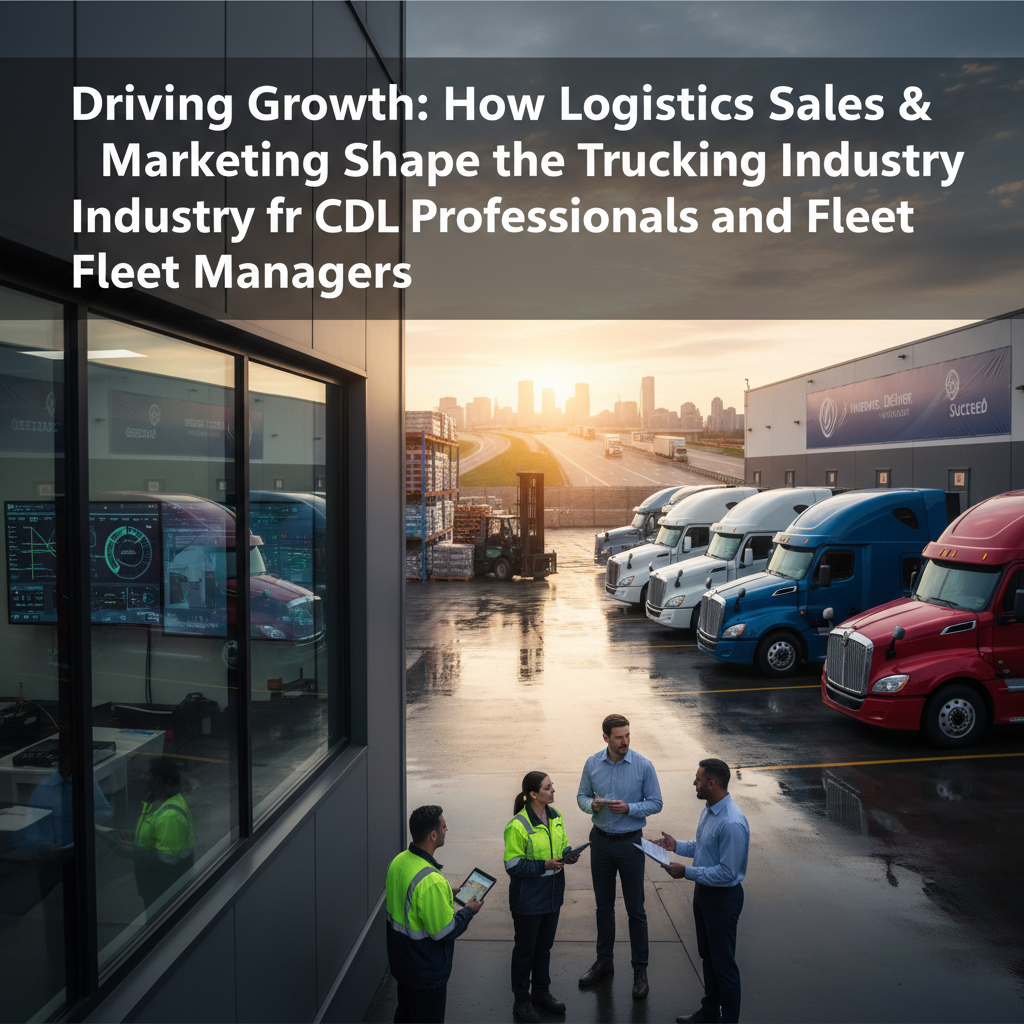
The wheels of commerce in the trucking industry are constantly turning, driven not only by the dedicated CDL professionals behind the wheel but also by the strategic efforts of sales and marketing teams within logistics companies. While truck drivers and fleet managers might not directly engage in sales pitches or marketing campaigns, their daily operations, job opportunities, and the overall stability of their companies are profoundly influenced by the effectiveness of these commercial functions. Understanding how these pieces fit together is crucial for every professional in the supply chain, from owner-operators to large fleet executives.
At its core, the logistics industry is about moving goods efficiently and reliably. But before a truck can even hit the road, there's a complex process of securing freight, building client relationships, and communicating value. This is where sales and marketing come into play. Organizations like the Transportation Marketing & Sales Association (TMSA) exist to elevate the professionals responsible for these critical tasks. Their annual ELEVATE conference, for instance, is a prime example of how the industry is investing in sharpening the skills of those who bring in the business that keeps trucks running and drivers employed.
The Unseen Impact: How Sales & Marketing Drive Trucking Opportunities
For CDL truck drivers, the direct link to sales and marketing might seem distant. However, consider this: without successful sales teams securing contracts, there's no freight to haul. Without effective marketing, potential clients might not even know about a carrier's services, leading to fewer loads and potentially less consistent work for drivers. A robust sales pipeline translates directly into steady routes, competitive pay, and job security for truck drivers.
Moreover, the type of freight secured often dictates the nature of a driver's work. Sales teams specializing in high-value, long-haul, or specialized freight can create opportunities for drivers seeking specific types of runs or those with particular endorsements. Marketing efforts that highlight a company's commitment to safety, on-time delivery, or innovative technology can attract clients who value these attributes, often leading to better equipment, more organized operations, and ultimately, a more positive work environment for drivers.
For fleet managers, the connection is even more tangible. The volume and type of freight secured directly impact fleet utilization, resource allocation, and profitability. A strong sales and marketing strategy ensures a consistent flow of business, allowing fleet managers to optimize routes, manage driver schedules effectively, and make informed decisions about equipment acquisition and maintenance. When sales are thriving, fleet managers have the resources to invest in newer trucks, advanced telematics, and better driver amenities, all of which contribute to driver satisfaction and retention.
Evolving Strategies in a Dynamic Industry
The logistics landscape is anything but static. Customer expectations are constantly rising, technology is rapidly reshaping how business is done, and the pressure to deliver measurable growth is intensifying. This evolution means that sales and marketing professionals in logistics must continuously adapt and innovate. Organizations like TMSA are responding to these changes by restructuring their educational offerings to better serve the diverse roles within commercial teams.
For example, TMSA's ELEVATE conference has moved to a five-track model, catering to company leaders, sales leaders, marketing leaders, sales practitioners, and marketing practitioners. While these roles might sound far removed from the cab of a truck, their enhanced skills directly benefit the entire trucking ecosystem. When company leaders develop stronger commercial strategies, it means more stable business for the fleet. When sales leaders improve pipeline development, it means more consistent loads. When marketing practitioners effectively communicate a company's value, it attracts more clients and, by extension, more work for drivers.
This structured approach ensures that every commercial professional, regardless of their specific role, has access to targeted learning and networking opportunities. It moves beyond generic sessions to provide role-specific applications, making every learning moment more relevant and every takeaway more actionable. This translates into more effective business development for carriers, which directly supports the operational needs of fleet managers and the employment stability of CDL drivers.
The Role of Technology and Data in Commercial Success
Modern logistics sales and marketing are increasingly data-driven and technology-enabled. Customer Relationship Management (CRM) systems, marketing automation platforms, and advanced analytics are now standard tools. For drivers and fleet managers, understanding this technological shift is important. When sales teams use data to identify optimal lanes or customer needs, it can lead to more efficient route planning and better load matching. When marketing teams leverage digital channels, they can attract a broader range of clients, potentially diversifying freight options.
Fleet managers, in particular, can benefit from a close collaboration with their company's commercial teams. Sharing insights on fleet capacity, driver availability, and operational capabilities can help sales teams secure realistic and profitable contracts. Conversely, understanding the sales pipeline can help fleet managers anticipate future demand, allocate resources proactively, and even influence driver recruitment strategies. For instance, if sales are consistently landing specialized freight contracts, the fleet manager might prioritize hiring drivers with specific endorsements or investing in specialized equipment.
Building a Stronger Future Together
The success of a trucking company is a collective effort. While CDL drivers are the backbone, transporting goods across the nation, and fleet managers are the central nervous system, optimizing operations, the sales and marketing teams are the lifeblood, bringing in the business that sustains it all. When these commercial functions are strong, well-supported, and continuously evolving, the entire organization thrives.
For CDL drivers, this means more consistent work, better pay, and opportunities to work for companies that are growing and investing in their future. For fleet managers, it means having the resources and stability to optimize their operations, maintain a modern fleet, and attract and retain top driving talent. It allows for strategic planning rather than reactive problem-solving, leading to a more efficient and profitable fleet.
Actionable Takeaways for CDL Professionals and Fleet Managers:
-
For CDL Drivers: While your primary focus is on safe and efficient driving, understanding the health of your company's sales and marketing efforts can provide insight into your job security and future opportunities. A company that actively promotes its services and secures new business is likely to offer more stable and varied work. Consider asking about company growth and new client acquisitions during job interviews.
-
For Fleet Managers: Foster strong communication channels with your sales and marketing departments. Share real-time data on fleet capacity, driver availability, and operational challenges. This collaboration ensures that sales teams are selling services your fleet can realistically and profitably deliver, preventing over-commitment and optimizing resource utilization. Conversely, understanding the sales pipeline can help you anticipate future freight demands and plan your fleet and driver resources accordingly.
-
Encourage Professional Development: Whether you're a driver or a manager, advocate for continuous learning within your organization. Just as drivers undergo safety training and managers learn new operational strategies, supporting the professional development of sales and marketing teams ultimately benefits everyone. Stronger commercial teams mean a stronger company for all.
-
Embrace Technology: Recognize that technology is transforming all aspects of logistics, including sales and marketing. Understanding how data analytics and digital tools are used to secure freight can help you appreciate the broader strategic context of your role and contribute to a more data-driven culture within your company.
-
Focus on Customer Satisfaction: Ultimately, sales and marketing bring in the customers, but it's the drivers and fleet managers who deliver on the promise. Exceptional service, on-time delivery, and professional conduct by drivers reinforce the sales message and build long-term customer loyalty. This creates a virtuous cycle where satisfied customers lead to repeat business, which in turn provides more consistent work for drivers and greater stability for the fleet.
The trucking industry is a complex, interconnected ecosystem. While the roar of a truck engine and the hum of a dispatch office might seem like the primary sounds, the strategic conversations happening in sales and marketing departments are equally vital. By recognizing and appreciating the critical role these commercial functions play, every CDL professional and fleet manager can better understand the forces shaping their careers and contribute to the overall success and growth of their organizations. The future of trucking is not just about moving goods; it's about intelligently securing the opportunities to do so, and that starts with effective sales and marketing.
Helpful Resources for CDL Drivers
Comments (0)
Sign in to join the conversation
Sign In to CommentNo comments yet. Be the first to share your thoughts!
Explore More
Driver Resources
Educational guides on CDL licensing, salary expectations, and route planning tips.
Browse CDL Jobs
Find your next driving opportunity. Search by location, route type, and CDL class.
CDL Salary Guide
Understand how pay varies by experience, route type, and location in the trucking industry.