FedEx Accelerates into Same-Day Delivery: What It Means for CDL Drivers and Fleet Managers
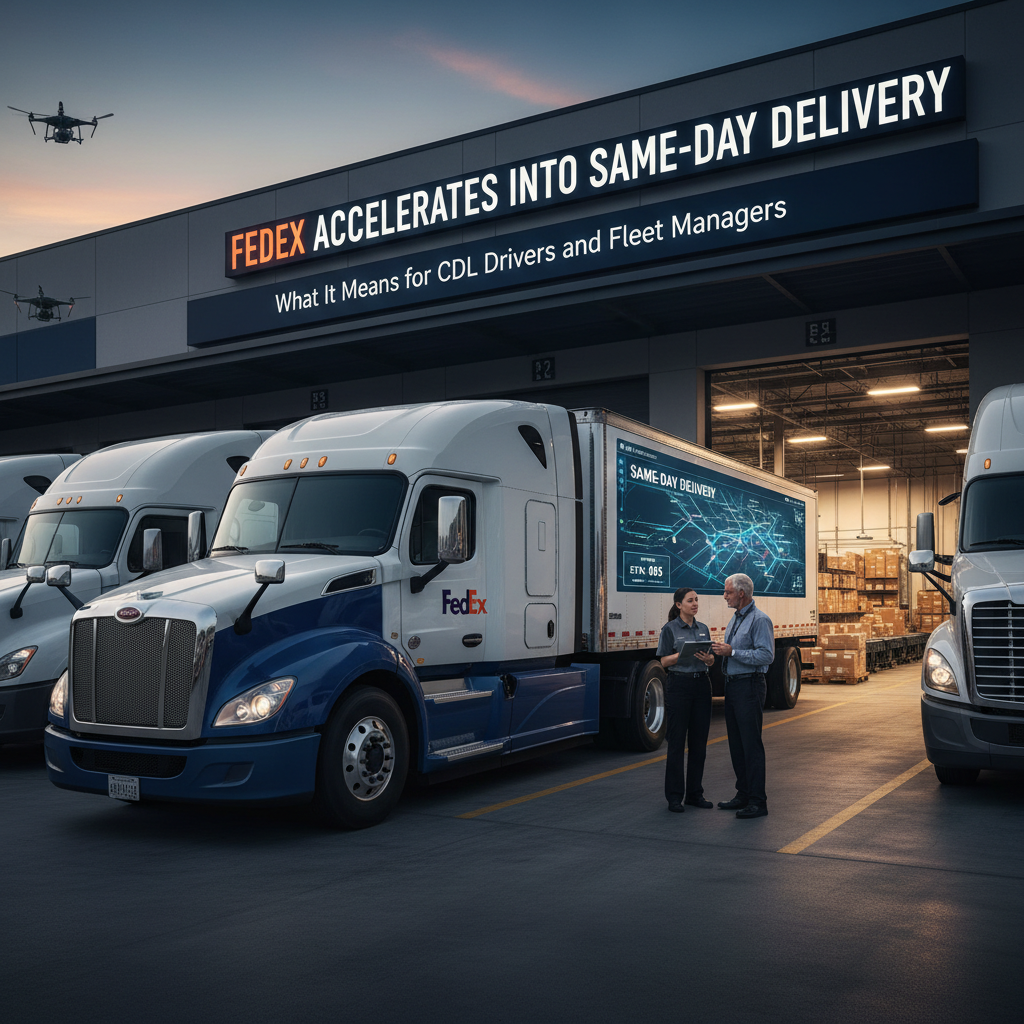
The landscape of parcel delivery is undergoing a rapid transformation, driven by escalating consumer expectations for speed and convenience. In a significant move that echoes the competitive pressures from e-commerce giants like Amazon and retail powerhouses such as Walmart, FedEx has announced its strategic entry into the burgeoning same-day local delivery market. This isn't just another service offering; it's a calculated pivot designed to recapture market share and redefine the last-mile logistics paradigm. For CDL truck drivers and fleet managers, this development signals both new opportunities and potential shifts in operational strategies, demanding a closer look at how this will impact the industry.
Traditionally, FedEx, much like its long-standing rival UPS, has built its empire on a robust, global, end-to-end logistics network, excelling in long-haul and regional parcel movements. However, the economics of delivering a single package from a local store to a customer's doorstep using their established infrastructure proved challenging. Recognizing this, FedEx is retrenching from directly executing these hyper-local, last-mile deliveries with their own assets. Instead, they are embracing a partnership model, collaborating with OneRail, a technology platform specializing in sourcing final-mile couriers. This strategic alliance allows FedEx to leverage a vast network of independent carriers, effectively creating a 'virtual fleet' for same-day services.
Understanding the 'FedEx SameDay Local' Initiative
The core of FedEx's new offering, dubbed 'FedEx SameDay Local,' is to provide merchants with a white-labeled, same-day delivery solution directly from local stores. This means that while the delivery is facilitated through FedEx's ecosystem, the customer experience remains branded to the retailer, allowing them to maintain control over their customer relationship and data. This approach is a direct response to the rising consumer demand for flexible and immediate delivery options, offering choices like two-hour or end-of-day delivery directly at the checkout.
OneRail's role is pivotal in this new model. Their integrated technology system connects FedEx customers to a national network of over 1,000 delivery providers. This platform acts as a sophisticated orchestrator, matching orders with appropriate vehicles and drivers, dispatching quickly, and providing real-time tracking with predictive estimated times of arrival (ETAs) and proof of delivery. OneRail boasts access to a staggering 12 million on-demand car and truck drivers, highlighting the scale and flexibility this partnership brings to FedEx. This is a significant departure from the traditional hub-and-spoke model, embracing a more agile, decentralized approach for ultra-local deliveries.
The Competitive Landscape and FedEx's Strategic Play
The move by FedEx is a clear effort to compete more effectively in a space increasingly dominated by players like Amazon, Walmart, DoorDash, and Instacart, all of whom have invested heavily in rapid local delivery capabilities. It also brings FedEx into closer alignment with UPS, which already offers same-day services through its Roadie subsidiary and Delivery Solutions platform, a model similar to OneRail. Parcel consultant Nate Skiver notes that this strategy could enable FedEx to claw back volume from existing large customers – such as Best Buy, Walgreens, Dick's, GameStop, and PetSmart – who require flexible, fast delivery options. The key, as Skiver emphasizes, will be competitive pricing, as retailers will only switch if the economics make sense.
From a strategic perspective, FedEx is aiming to gain small parcel volume in a segment where its traditional asset-heavy model was less efficient. By outsourcing the actual 'house call' to a network of independent couriers, FedEx can offer a service that is both scalable and cost-effective, avoiding the significant capital expenditure and operational complexities of building out its own last-mile fleet for same-day services. This allows FedEx to focus on its strengths in linehaul and regional distribution while still participating in the lucrative and growing same-day market.
Implications for CDL Truck Drivers: New Opportunities and Shifting Demands
For CDL truck drivers, particularly those involved in linehaul, regional, or dedicated fleet operations, this development presents a nuanced picture. While the actual same-day deliveries will largely be handled by smaller vehicles and independent contractors within the OneRail network, the increased volume in the same-day segment will inevitably create ripple effects throughout the broader FedEx supply chain.
- Increased Volume in First and Middle Mile: As more retailers opt for FedEx SameDay Local, the demand for inventory replenishment to local stores and distribution centers will likely increase. This means more freight moving from larger warehouses to smaller, localized hubs, creating potential opportunities for CDL drivers in regional and dedicated runs. Fleet managers might see an uptick in demand for shuttle services between distribution centers and retail locations, requiring efficient scheduling and optimized routes.
- Pressure on Speed and Efficiency: The expectation of same-day delivery at the consumer level translates to increased pressure on the entire supply chain to move goods faster. This could mean tighter turnaround times at loading docks, more emphasis on on-time performance for linehaul drivers, and potentially more dynamic scheduling to meet fluctuating demand. Drivers might experience less dwell time at facilities as operations become more streamlined to support rapid fulfillment.
- Technology Integration: Drivers and fleet managers will need to be increasingly comfortable with advanced logistics technology. While OneRail handles the last mile, the data flow and communication across the entire FedEx network will become even more critical. Understanding how technology like real-time tracking, predictive analytics, and automated dispatching impacts their routes and schedules will be essential.
- Potential for Specialized Runs: As the same-day market matures, there might be niche opportunities for CDL drivers involved in specialized, time-sensitive freight that supports these expedited local networks. This could include urgent inter-facility transfers or expedited deliveries of high-value goods to local hubs.
Impact on Fleet Managers: Adapting to a Dynamic Environment
Fleet managers are at the forefront of operational execution and will need to strategically adapt to these changes. The FedEx SameDay Local initiative underscores several key areas for consideration:
- Optimizing First and Middle Mile Operations: Fleet managers must analyze their current networks to identify bottlenecks and opportunities for increased efficiency in moving goods to local fulfillment points. This could involve investing in more flexible routing software, optimizing backhaul opportunities, and ensuring their fleets are adequately sized and maintained to handle potentially increased throughput.
- Data-Driven Decision Making: The reliance on platforms like OneRail for last-mile coordination highlights the importance of data. Fleet managers should leverage telematics, ELDs, and other data sources to monitor driver performance, fuel efficiency, and asset utilization. This data will be crucial for making informed decisions about resource allocation and operational improvements.
- Driver Recruitment and Retention: The demand for faster, more efficient freight movement places a premium on skilled and reliable drivers. Fleet managers must continue to prioritize driver recruitment and retention strategies, ensuring competitive compensation, excellent working conditions, and access to modern, well-maintained equipment. The emphasis on speed and precision will require drivers who are adept at navigating tight schedules and utilizing technology.
- Collaboration and Integration: While FedEx is partnering with OneRail, fleet managers working with FedEx or other carriers might find themselves needing to integrate more closely with various stakeholders across the supply chain. This could involve sharing data, coordinating schedules, and collaborating on problem-solving to ensure seamless flow of goods.
- Cost Management: The last leg of parcel delivery is notoriously expensive, accounting for roughly 52% of total delivery costs due to inherent inefficiencies. While FedEx is outsourcing this, the overall pressure to keep logistics costs down will remain. Fleet managers must continuously seek ways to optimize fuel consumption, reduce maintenance costs, and improve operational efficiency to stay competitive.
Actionable Takeaways for the Trucking Industry
- Embrace Technology: Both drivers and fleet managers should actively engage with new logistics technologies. For drivers, this means proficiency with ELDs, navigation apps, and communication platforms. For managers, it involves leveraging data analytics, route optimization software, and potentially integrating with partner platforms.
- Focus on Efficiency: With increased demand for speed, efficiency across all operations becomes paramount. This includes optimizing routes, reducing idle time, ensuring timely deliveries, and maintaining equipment to prevent breakdowns.
- Understand the Broader Supply Chain: While same-day delivery is a last-mile phenomenon, its success depends on a robust first and middle mile. Drivers and managers should understand their role within this larger ecosystem and how their performance impacts the entire chain.
- Stay Agile and Adaptable: The logistics industry is constantly evolving. Being able to quickly adapt to new demands, technologies, and competitive pressures will be key to long-term success. This might involve cross-training drivers, diversifying services, or exploring new partnerships.
- Prioritize Communication: Clear and effective communication between drivers, dispatchers, and shippers is more critical than ever. Real-time updates and proactive problem-solving can mitigate delays and ensure customer satisfaction.
FedEx's strategic entry into same-day local delivery, leveraging a partnership with OneRail, marks a significant evolution in the competitive parcel market. While the immediate impact on CDL drivers might seem indirect, the underlying forces driving this change – consumer demand for speed and efficiency – will resonate throughout the entire trucking industry. For fleet managers, this means a renewed focus on optimizing their operations, embracing technology, and ensuring their drivers are equipped to handle the demands of a faster-paced supply chain. The future of freight is undoubtedly moving towards greater speed and flexibility, and those who can adapt will be best positioned for success.
Helpful Resources for CDL Drivers
Comments (0)
Sign in to join the conversation
Sign In to CommentNo comments yet. Be the first to share your thoughts!
Explore More
Driver Resources
Educational guides on CDL licensing, salary expectations, and route planning tips.
Browse CDL Jobs
Find your next driving opportunity. Search by location, route type, and CDL class.
CDL Salary Guide
Understand how pay varies by experience, route type, and location in the trucking industry.