
Flatbed Freight Surges: Is a U.S. Manufacturing Renaissance Fueling the Demand?
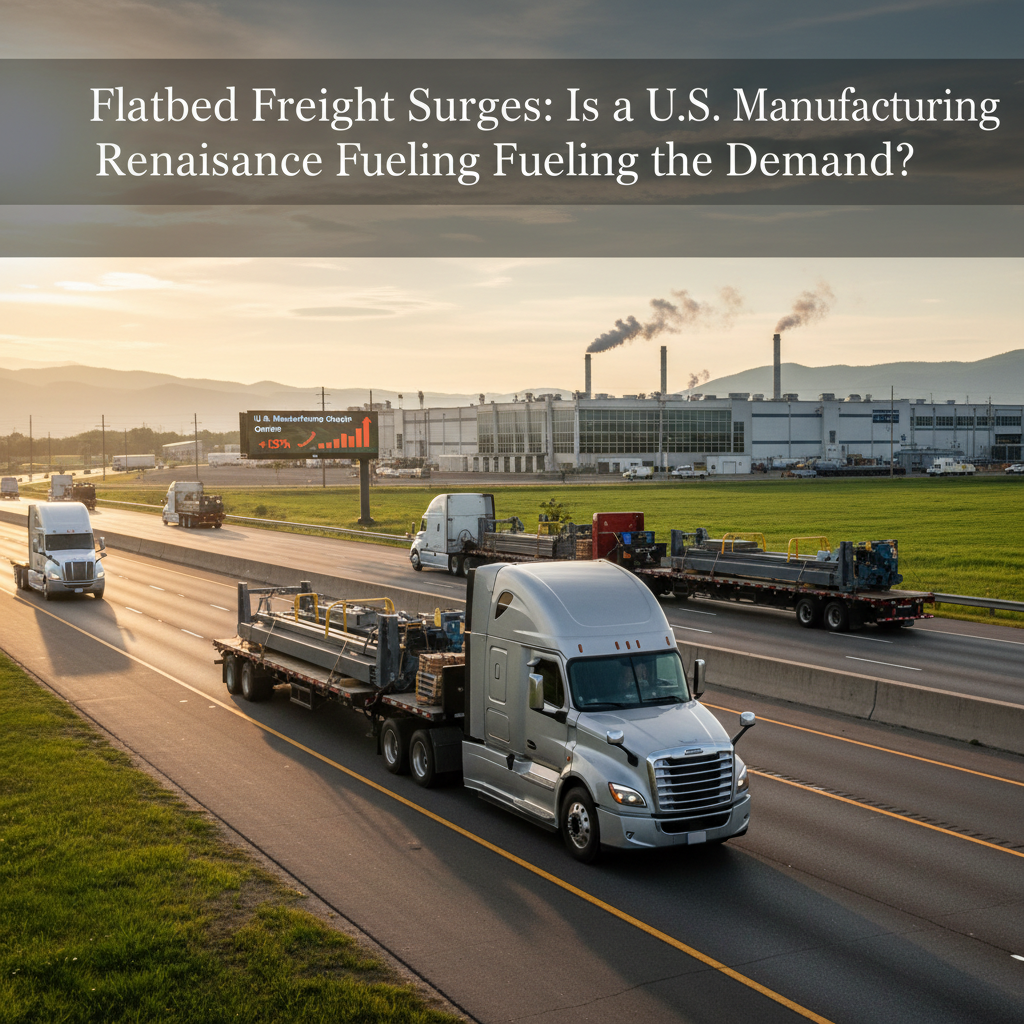
For CDL truck drivers and fleet managers across the nation, the hum of the open road is often accompanied by the subtle, yet significant, shifts in freight demand. These shifts are more than just numbers; they represent the lifeblood of our industry, dictating everything from load availability and rates to strategic planning and equipment investments. Recently, a particular segment of the trucking world – flatbed freight – has been sending strong signals that warrant close attention. With flatbed tender rejection rates soaring and spot rates climbing, many are asking: Is this an isolated surge, or are we witnessing the early stages of a genuine U.S. manufacturing renaissance?
Understanding these dynamics is crucial for every professional in the trucking sector. For drivers, it means anticipating where the next high-paying loads might be, understanding the types of freight that will dominate, and preparing for potentially tighter capacity. For fleet managers, it's about making informed decisions on fleet expansion, driver recruitment, equipment procurement, and optimizing operational efficiency to capitalize on emerging opportunities. This article will delve deep into the current flatbed market trends, connect them to broader economic indicators, and offer actionable insights for both drivers and fleet managers navigating this evolving landscape.
The Unmistakable Roar of Flatbed Demand: A Deep Dive into Current Trends
The most striking indicator of change in the flatbed sector has been the dramatic spike in tender rejection rates. According to the newly enhanced SONAR tender dataset, flatbed tender rejection rates (STRIF) recently surged above 32% – a level seen only once before in the past eight years. The previous instance occurred in March 2025, driven by a rush to stockpile parts and components ahead of impending tariffs on North American trading partners. This historical context suggests that such high rejection rates are not just a blip; they often signify a significant, underlying economic force at play.
For those unfamiliar, tender rejection rates measure the percentage of electronic load tenders that carriers decline. When these rates climb, it signals that carriers have more freight options than they can handle, indicating a tight capacity market and strong demand. This directly translates to higher rates for drivers and carriers, as shippers are willing to pay more to ensure their freight moves. The current surge in flatbed rejections is particularly noteworthy because it contrasts sharply with other segments of the trucking industry, especially dry van, which has seen more subdued activity.
Beyond rejections, other metrics reinforce this picture of robust demand. The SONAR Flatbed Truckload Volume Index has shown an average increase of approximately 18% year-over-year since the beginning of the year, with accepted tender volumes also up by more than 10%. This isn't merely a function of tightening capacity across the board; it points to a meaningful demand-side component specific to the flatbed market. Unlike dry van, which is heavily influenced by retail and consumer packaged goods (CPG) sectors and can often shift to intermodal rail, flatbed freight is inherently tied to industries that require specialized hauling – think machinery, building materials, steel, and other industrial goods. These goods are less susceptible to modal shifts and often represent foundational economic activity.
The upward trend in flatbed tenders is further corroborated by spot rate data. The Flatbed Truckload Index (FTI), which aggregates spot rates, has seen an 18% year-over-year increase, closely mirroring the trajectory of tender rejection rates. For owner-operators and small fleets, this means a stronger negotiating position and potentially higher per-mile earnings. For larger fleets, it indicates a favorable market for securing dedicated contracts and optimizing lane profitability.
Connecting the Dots: Flatbed's Link to Manufacturing, Construction, and Energy
The flatbed market is intrinsically linked to three primary economic pillars: manufacturing, construction, and energy. Any sustained uptick in flatbed demand is often a direct reflection of increased activity within these sectors. While isolating the exact impact of each can be complex, there are compelling signs of developing momentum that warrant close monitoring by both trucking professionals and economists.
Let's consider the manufacturing sector. For several years, U.S. manufacturing has been characterized by modest gains, struggling to achieve sustained expansion. The Institute for Supply Management's (ISM) Purchasing Managers' Index (PMI), a critical gauge of U.S. manufacturing activity, has shown a gradual improvement since June 2023. Although it has only indicated expansion (a reading above 50) in four months since October 2022, January's reading of 52.6 was the strongest in that period. This suggests a slow but steady recovery, and the flatbed market, being a bellwether for industrial production, is likely reflecting this nascent growth.
When manufacturing ramps up, it requires the transportation of raw materials – steel, lumber, machinery parts – to factories, and then the movement of finished goods that are often too large or irregularly shaped for standard dry vans. This is where flatbeds shine. The demand for specialized equipment, such as step decks, RGNs (Removable Gooseneck), and lowboys, also increases, indicating a need to move heavy equipment and oversized loads essential for industrial expansion and infrastructure projects.
Construction is another vital component. As interest rates stabilize and infrastructure spending continues, demand for construction materials – rebar, structural steel, pre-fabricated components, heavy machinery – will inevitably rise. These are all prime candidates for flatbed transportation. Similarly, the energy sector, particularly in regions with oil and gas exploration or renewable energy projects, generates significant flatbed freight, including pipes, drilling equipment, wind turbine components, and solar panels. The current flatbed surge could be a composite signal from all three of these sectors beginning to accelerate.
The Tariff Ruling and its Ripple Effects: A Headwind Removed?
A significant legal development that could further fuel demand across transportation modes, particularly flatbed and dry van, is the Supreme Court's ruling against the Trump administration's IEEPA (International Emergency Economic Powers Act) tariffs. While these tariffs were initially intended to reduce the trade deficit and encourage domestic production, their immediate effect was often a drag on freight flows, especially in trucking, as manufacturers struggled with sourcing components and supply chain uncertainties.
The ruling, though still subject to details regarding refunds and implementation, effectively removes a considerable headwind for goods demand. Many manufacturers had faced challenges in sourcing essential components due to these tariffs, leading to production delays and reduced output. With this uncertainty largely removed, there's potential for a significant boost in manufacturing activity, which directly translates to increased freight volume for flatbeds. Imagine a factory that delayed a major expansion or the production of a new line of machinery due to tariff-related component costs or availability. With this obstacle gone, those plans can now move forward, generating new loads for flatbed carriers.
It's important to note that while the ruling offers broad relief, some sectors, like the auto industry, might still be more influenced by specific trade agreements, such as the upcoming USMCA (United States-Mexico-Canada Agreement) review scheduled for July. However, for a wide array of manufacturing segments, the removal of tariff-related burdens is unequivocally positive.
Implications for CDL Truck Drivers: Seizing the Opportunity
For CDL truck drivers, especially those specializing in flatbed or considering a transition, the current market signals a period of heightened opportunity. Here's what this means and how to capitalize on it:
- Stronger Earning Potential: High rejection rates and rising spot rates translate directly to better pay. Drivers can expect more competitive per-mile rates and potentially higher accessorial charges for specialized services. This is an excellent time for owner-operators to negotiate better rates and for company drivers to see increased bonuses or mileage pay.
- Increased Load Availability: With demand outstripping capacity, finding loads should be less challenging. This can reduce deadhead miles and improve overall efficiency, allowing drivers to maximize their time on the road and earning potential.
- Specialization Pays Off: If the manufacturing and construction sectors continue to grow, demand for specialized flatbed services (e.g., oversized, overweight, hazmat) will also increase. Drivers with endorsements or experience in these areas will be in even higher demand and can command premium rates. Consider investing in training or certifications for specialized hauling.
- Strategic Lane Planning: Pay attention to regions with high manufacturing, construction, or energy activity. States like Texas, Ohio, Pennsylvania, the Carolinas, and parts of the Midwest are often hubs for these industries. Understanding these geographical hot spots can help drivers position themselves for lucrative loads.
- Networking and Relationships: Building strong relationships with brokers and shippers who specialize in flatbed freight can provide a steady stream of high-quality loads, even when market conditions fluctuate. Reliability and professionalism are key to securing repeat business.
Actionable Advice for Fleet Managers: Navigating Growth and Challenges
Fleet managers face a different set of challenges and opportunities. The current flatbed market requires strategic planning and proactive measures to leverage the growth while mitigating potential risks.
- Capacity Management and Expansion: This is a critical time to evaluate your fleet's capacity. Is it sufficient to meet the rising demand? Consider strategic fleet expansion, whether through new truck purchases, leasing, or recruiting more drivers. However, exercise caution and ensure any expansion is sustainable and supported by long-term contract opportunities, not just short-term spot market surges.
- Driver Recruitment and Retention: With increased demand, driver recruitment will become even more competitive. Fleet managers must offer attractive compensation packages, excellent equipment, a supportive work environment, and clear career paths to attract and retain top flatbed talent. Consider specialized training programs to upskill existing drivers or attract new ones to the flatbed segment.
- Rate Negotiation and Contract Strategy: High rejection rates empower carriers to negotiate more favorable rates. Review your current contracts and consider adjusting pricing strategies for new bids. For long-term stability, balance spot market opportunities with securing dedicated contracts that offer consistent volume and predictable revenue streams, especially with industrial shippers.
- Equipment Maintenance and Investment: Reliable equipment is paramount in flatbed hauling, especially for heavy and specialized loads. Prioritize preventative maintenance to minimize downtime. If expanding, invest in modern, fuel-efficient flatbed trailers and trucks that meet current regulations and can handle diverse freight types. Specialized equipment like extendable trailers or multi-axle configurations might be a wise investment.
- Technology Adoption: Leverage transportation management systems (TMS) and telematics to optimize dispatching, route planning, and driver communication. Data analytics from these systems can provide valuable insights into lane profitability, driver performance, and operational efficiencies, helping you make data-driven decisions in a dynamic market.
- Diversification of Services: While flatbed is strong, consider if there are opportunities to diversify within the flatbed segment (e.g., adding specialized equipment for oversized loads, hazmat certifications) or even explore complementary services if it aligns with your long-term strategy. This can create multiple revenue streams and resilience.
- Financial Planning and Risk Management: A booming market can lead to overextension. Maintain robust financial planning, manage cash flow effectively, and ensure you have adequate insurance coverage for the specialized freight you're hauling. Understand the economic indicators that influence your core customer base to anticipate future shifts.
Looking Ahead: Sustaining the Momentum
The question remains: Is this a true manufacturing renaissance, or a temporary surge? While no one has a crystal ball, several factors suggest that the current momentum in flatbed freight could be more than just a fleeting trend.
- Reshoring and Nearshoring Initiatives: Global supply chain disruptions during the pandemic highlighted the vulnerabilities of relying heavily on overseas manufacturing. Many companies are now actively pursuing strategies to bring production closer to home (reshoring) or to neighboring countries (nearshoring). This trend, if sustained, would significantly boost U.S. and North American manufacturing, directly impacting flatbed demand.
- Infrastructure Spending: Government initiatives to rebuild and upgrade infrastructure across the U.S. (roads, bridges, utilities, renewable energy projects) will continue to generate substantial flatbed freight for years to come. These projects require vast quantities of steel, concrete, heavy machinery, and specialized components.
- Energy Transition: The ongoing shift towards renewable energy sources (solar, wind) necessitates the transportation of massive components that are exclusively moved by flatbed or specialized trailers. As investment in these areas continues, so too will the demand for flatbed services.
- Technological Advancements in Manufacturing: Automation and advanced manufacturing techniques are making U.S. production more competitive. As factories modernize and expand, the need for new machinery and the transportation of specialized goods will increase.
However, fleet managers and drivers should also remain vigilant. Economic cycles are inevitable, and factors such as interest rate changes, global economic slowdowns, or shifts in consumer spending could influence demand. Monitoring key economic indicators like the PMI, construction spending reports, and energy sector investments will be crucial for anticipating future market conditions.
Conclusion: A Promising Horizon for Flatbed Professionals
The current surge in flatbed freight demand, characterized by soaring rejection rates and rising spot rates, is a powerful signal that the U.S. industrial landscape may be undergoing a significant transformation. While it's difficult to definitively declare a full-blown manufacturing renaissance, the confluence of improving manufacturing activity, robust construction, potential energy sector growth, and the removal of tariff-related headwinds paints a very optimistic picture for flatbed trucking professionals.
For CDL truck drivers, this translates to enhanced earning potential, greater load availability, and a strong market for specialized skills. For fleet managers, it presents an opportunity for strategic growth, optimized profitability, and the chance to solidify their position in a high-demand segment of the industry. By staying informed, adapting to market shifts, and making strategic investments in equipment and personnel, both drivers and fleet managers can effectively navigate this exciting period and capitalize on the promising horizon for flatbed freight.
Helpful Resources for CDL Drivers
Comments (0)
Sign in to join the conversation
Sign In to CommentNo comments yet. Be the first to share your thoughts!
Explore More
Driver Resources
Educational guides on CDL licensing, salary expectations, and route planning tips.
Browse CDL Jobs
Find your next driving opportunity. Search by location, route type, and CDL class.
CDL Salary Guide
Understand how pay varies by experience, route type, and location in the trucking industry.