
I-15 Commercial Vehicle Blitz: CHP Issues 352 Citations, Emphasizing Safety and Compliance for Truckers
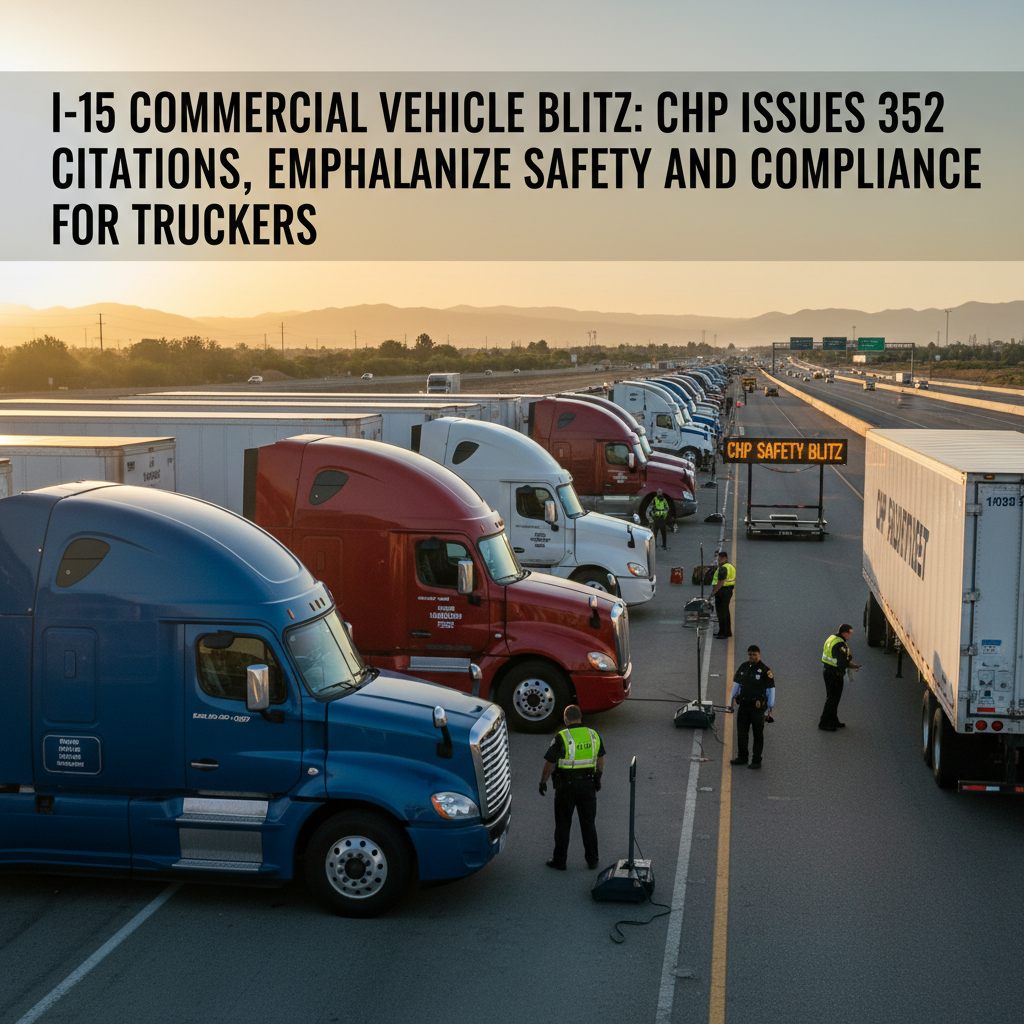
The California Highway Patrol (CHP) recently conducted a comprehensive, one-day commercial vehicle enforcement operation along the entire Interstate 15 corridor, stretching from San Diego all the way to the Nevada state line. This large-scale initiative, dubbed a "Commercial Strike Force operation," took place on February 26, 2026, and involved multiple CHP divisions working in a coordinated effort to enhance roadway safety and ensure compliance within the trucking industry. The results of this concentrated effort highlight the ongoing scrutiny commercial vehicles face and underscore the critical importance of adherence to all federal and state regulations for both CDL drivers and fleet managers.
Understanding the Scope of the I-15 Commercial Strike Force
This operation was not a localized checkpoint but a sweeping, corridor-wide enforcement action designed to maximize impact. The CHP's stated purpose was clear: to improve commercial vehicle safety and protect the motoring public. Such large-scale details serve as a powerful reminder that regulatory bodies are actively monitoring and enforcing trucking laws, especially on heavily trafficked freight routes like I-15, which is a vital artery for goods movement across California and beyond. For professional truck drivers, these operations mean a higher likelihood of inspection and potential citation if not fully compliant. For fleet managers, it emphasizes the need for robust safety programs, diligent vehicle maintenance, and thorough driver training.
Participating CHP divisions included San Diego, Oceanside, Temecula, Riverside, Rancho Cucamonga, San Bernardino, Victorville, Barstow, and Mountain Pass (JPOE). This extensive collaboration across numerous jurisdictions allowed for a broad and consistent application of enforcement, ensuring that commercial vehicles were subject to inspection and scrutiny regardless of where they entered or exited the I-15 corridor within California.
Key Findings: A Snapshot of Violations and Enforcement Actions
The results of the I-15 Commercial Strike Force operation provide valuable insights into common areas of non-compliance. During the one-day detail, officers conducted a total of 245 vehicle inspections, including two specialized HAZMAT inspections. The enforcement actions were significant:
- 18 drivers were placed out-of-service (OOS): This indicates serious violations that rendered the driver unable to continue operating their commercial vehicle, often related to hours-of-service, licensing, or medical certification.
- 40 vehicles were placed out-of-service (OOS): These vehicles had critical mechanical defects or other issues that made them unsafe to operate, requiring immediate repairs before they could proceed.
- 4 vehicles were impounded: Impoundment typically occurs for severe violations, such as operating without proper registration, insurance, or authority, or for repeated non-compliance.
Beyond OOS orders and impoundments, the CHP issued a substantial number of citations and warnings, totaling 352 commercial citations and 56 commercial warnings. Additionally, 43 citations were issued to non-commercial vehicles, and 11 verbal warnings were given, highlighting the comprehensive nature of the safety initiative for all road users.
Deeper Dive into Driver and Carrier Violations
The breakdown of violations offers a clear picture of the specific areas where drivers and carriers fell short. Understanding these categories is crucial for proactive compliance efforts:
- 20 driver license violations: This category can range from an expired CDL to operating with the wrong class of license, or even driving while suspended. Maintaining a valid and appropriate CDL is fundamental for every professional driver.
- 24 registration violations: Ensuring that vehicle registration is current and correctly displayed is a basic, yet often overlooked, requirement for all commercial vehicles.
- 27 operating authority violations: This pertains to carriers operating without the necessary federal or state operating authority, or operating outside the scope of their granted authority. This is a critical area for fleet managers to monitor closely.
- 39 hours-of-service/logbook violations: Hours-of-service (HOS) rules are designed to prevent driver fatigue. Violations in this area, whether from improper logging (ELD or paper) or exceeding driving limits, are consistently among the most common and can lead to significant penalties and OOS orders.
These numbers underscore the importance of meticulous record-keeping, regular checks of driver credentials, and strict adherence to HOS regulations. Fleet managers should implement robust systems to monitor these aspects, and drivers must remain vigilant about their own compliance.
Mechanical and Moving Violations: A Focus on Roadworthiness and Safe Driving
The majority of citations issued during the I-15 operation were related to mechanical issues and moving violations, emphasizing the CHP's focus on both vehicle roadworthiness and safe driving practices:
- 270 mechanical violations: This staggering number indicates a widespread issue with vehicle maintenance. Common mechanical violations include issues with brakes (out-of-adjustment, worn components), tires (tread depth, inflation, damage), lights (inoperative, improperly aimed), steering components, and coupling devices. Regular pre-trip and post-trip inspections are paramount, as is a comprehensive preventative maintenance program for fleets.
- 23 non-emergency stop violations: This refers to stopping in unauthorized locations, such as freeway shoulders, without a legitimate emergency. Such stops can create significant safety hazards for other motorists.
- 77 out-of-lane violations: Commercial vehicles are often restricted to specific lanes on multi-lane highways. Violating these lane restrictions can impede traffic flow, increase the risk of accidents, and is a common target for enforcement.
- 6 cell phone violations: Distracted driving, particularly using a handheld mobile device, is a serious offense for CDL holders and carries severe penalties. Even hands-free use can be scrutinized if it impairs driving ability.
- 107 unsafe speed violations: Speeding, especially for heavy commercial vehicles, significantly increases stopping distances and accident severity. Adhering to posted speed limits, and adjusting speed for conditions, is non-negotiable.
- 48 additional moving violations: This catch-all category can include a range of infractions such as unsafe lane changes, following too closely, or other actions that compromise road safety.
These statistics serve as a stark reminder that a well-maintained truck and a driver committed to safe driving practices are the cornerstones of compliance and accident prevention. Fleet managers must prioritize maintenance schedules and provide ongoing training on safe driving techniques, while drivers must consistently apply these principles on the road.
Actionable Takeaways for CDL Drivers
For professional truck drivers, the I-15 Commercial Strike Force operation offers several critical lessons and actionable advice:
- Master Your Pre-Trip and Post-Trip Inspections: The 270 mechanical violations are a clear indicator that many trucks are operating with preventable defects. Your pre-trip inspection is your first line of defense. Know your vehicle inside and out, check all critical components (brakes, tires, lights, steering, coupling), and address any issues before hitting the road. Document everything diligently.
- Maintain Impeccable Records: Ensure your CDL, medical card, and any required endorsements are current and readily accessible. Keep your logbook (ELD or paper) accurate and up-to-date. Any discrepancies in your HOS records can lead to OOS orders and fines.
- Know and Obey Traffic Laws: Pay close attention to lane restrictions for commercial vehicles, posted speed limits, and avoid distracted driving. Cell phone use is a major red flag for law enforcement. Drive defensively and be aware of your surroundings, especially on busy corridors like I-15.
- Understand Your Operating Authority: While primarily a carrier responsibility, being aware of your company's operating authority can help you identify potential issues. If something feels off with a load or route, communicate with your dispatcher.
- Stay Calm During Inspections: If pulled over, remain courteous and cooperative with law enforcement officers. Present your documents promptly and answer questions honestly. Arguing or being uncooperative can escalate the situation.
Actionable Takeaways for Fleet Managers
Fleet managers bear significant responsibility for compliance and safety. The CHP's operation provides a strong impetus for reviewing internal policies and procedures:
- Strengthen Preventative Maintenance Programs: The high number of mechanical violations points to a need for robust, scheduled preventative maintenance. Implement a system for tracking maintenance, repairs, and inspections. Ensure drivers are reporting defects promptly and that repairs are completed efficiently.
- Audit Driver Qualification Files and HOS Compliance: Regularly review driver qualification files to ensure all licenses, medical certifications, and endorsements are current. Implement strict policies and technology (like ELDs) to monitor HOS compliance and provide ongoing training to prevent violations.
- Provide Continuous Driver Training: Beyond initial onboarding, offer regular refresher training on defensive driving, lane discipline, distracted driving policies, and proper pre-trip inspection techniques. Emphasize the importance of safety and compliance as core company values.
- Verify Operating Authority and Registration: Ensure all vehicles are properly registered and that your company holds all necessary federal and state operating authorities for the routes and types of freight you haul. Keep these documents current and accessible.
- Foster a Culture of Safety: Encourage open communication where drivers feel comfortable reporting issues without fear of reprisal. A strong safety culture, from the top down, is the most effective way to prevent violations and ensure compliance.
The CHP's Commitment to Roadway Safety
In a statement following the operation, the CHP emphasized the collaborative effort and its positive impact: "The teamwork and commitment demonstrated by officers across both Divisions directly contributed to measurable enforcement results and improved roadway safety along one of California’s most heavily traveled freight corridors. Safety is a shared responsibility. The California Highway Patrol remains committed to proactive service through enforcement and education to keep California’s highways secure for everyone." This statement reinforces that such operations are not isolated incidents but part of an ongoing commitment to safety. For the trucking industry, this means that vigilance and adherence to regulations must be continuous.
Conclusion: Driving Towards a Safer Future
The I-15 Commercial Strike Force operation serves as a powerful reminder that safety and compliance are non-negotiable in the trucking industry. The significant number of citations and out-of-service orders issued by the CHP underscores the critical need for both CDL drivers and fleet managers to prioritize adherence to all regulations, from driver licensing and hours-of-service to vehicle maintenance and safe driving practices. By understanding the common areas of non-compliance highlighted by this enforcement detail and implementing proactive measures, the trucking community can contribute to safer roadways for everyone, avoid costly penalties, and maintain the integrity of their operations. Staying informed, committed to training, and dedicated to meticulous vehicle care are the keys to navigating these enforcement landscapes successfully and ensuring a compliant, efficient, and safe journey on America's highways.
Helpful Resources for CDL Drivers
Comments (0)
Sign in to join the conversation
Sign In to CommentNo comments yet. Be the first to share your thoughts!
Explore More
Driver Resources
Educational guides on CDL licensing, salary expectations, and route planning tips.
Browse CDL Jobs
Find your next driving opportunity. Search by location, route type, and CDL class.
CDL Salary Guide
Understand how pay varies by experience, route type, and location in the trucking industry.