
Indiana's New CDL Law: What Truck Drivers and Fleet Managers Need to Know About Immigration and Licensing
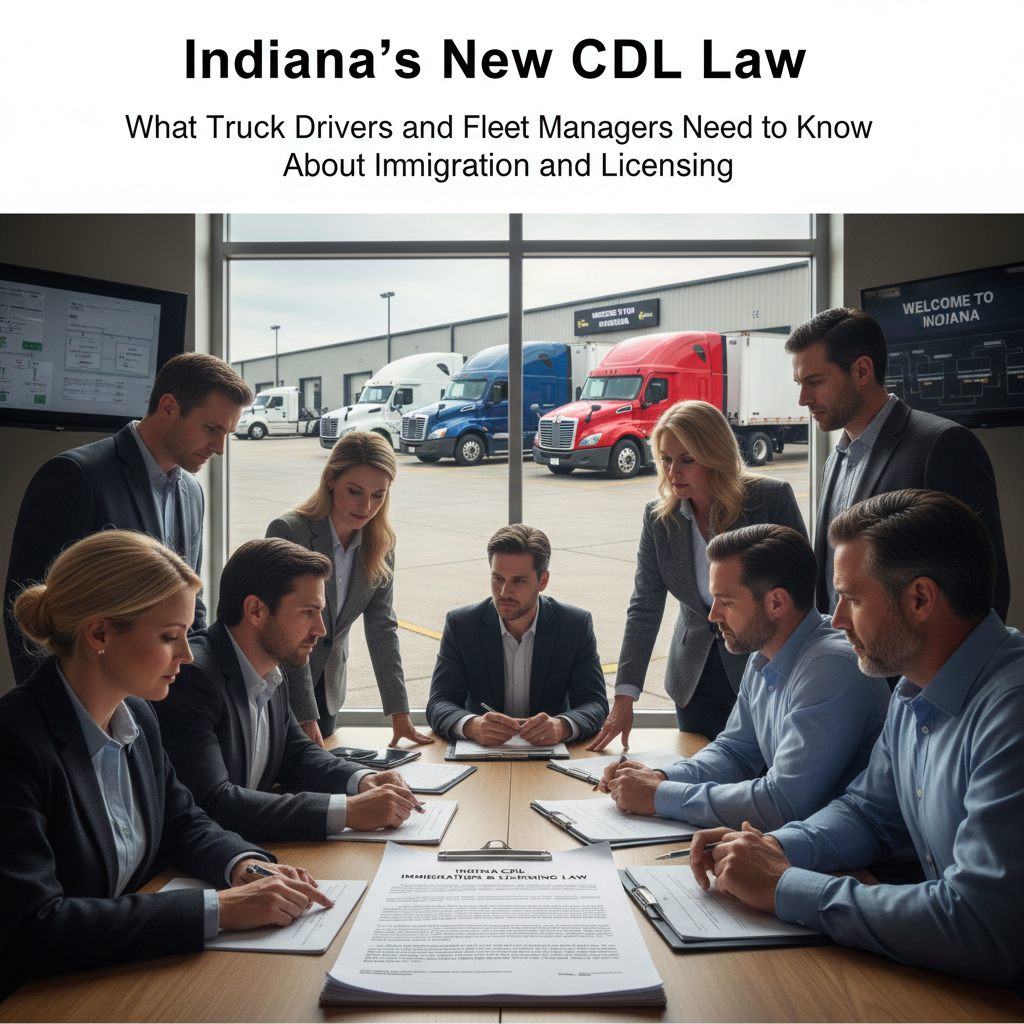
The landscape of commercial driver's licensing (CDL) is constantly evolving, influenced by a myriad of factors ranging from federal regulations to state-specific legislation. Recently, Indiana has introduced a significant new law that directly impacts CDL holders and the trucking industry at large, particularly concerning individuals residing in the United States without legal authorization. This legislation, which became effective on April 1st, aims to revoke the CDLs of undocumented immigrants and impose substantial penalties on trucking companies and CDL schools found in violation. For professional truck drivers and fleet managers, understanding the nuances of this law is not just about compliance; it's about navigating a complex regulatory environment that affects employment, operations, and the overall stability of the workforce.
Understanding Indiana's New CDL Revocation Law
Effective April 1st, Indiana began revoking the Commercial Driver's Licenses of individuals residing in the United States without legal immigration status. This move is a direct response to legislative efforts to tighten immigration controls within the state's licensing framework. The law is comprehensive, extending beyond mere revocation to include requirements for lawful residents and severe financial penalties for non-compliant entities within the trucking sector.
At its core, the new Indiana law mandates that any CDL holder found to be residing in the country illegally will have their license revoked. This immediate action underscores a stricter stance on verifying legal residency status for all commercial drivers operating within the state. For drivers, this means that their legal status is now inextricably linked to their ability to hold and maintain a CDL in Indiana, a critical credential for their livelihood.
Beyond the immediate revocation, the law also introduces a new English proficiency requirement for immigrants who are residing in the country lawfully but are applying for a CDL. This means that even those with legal status must demonstrate a sufficient command of the English language to be eligible for a commercial driver's license. This particular provision aims to enhance safety on the roads by ensuring that all CDL holders can effectively understand road signs, communicate with law enforcement, and comprehend safety instructions, which are predominantly in English.
Implications for Truck Drivers: Navigating the New Landscape
For individual truck drivers, especially those who might be impacted by these changes, the new law presents a series of critical considerations. The most immediate concern is the potential for CDL revocation. Drivers who believe they are eligible for a CDL despite a revocation notice are afforded an appeals process. This appeals mechanism is crucial, providing a pathway for individuals to present evidence of their legal residency and challenge any erroneous revocations.
Understanding the appeals process is paramount. It typically involves submitting documentation to the Indiana Bureau of Motor Vehicles (BMV) to prove legal residency and, if applicable, English proficiency. Drivers should be prepared to provide comprehensive legal documentation, such as valid visas, green cards, or other federal immigration documents, to substantiate their claims. Seeking legal counsel specializing in immigration and administrative law can be highly beneficial during this process to ensure all requirements are met and the appeal is presented effectively.
Furthermore, the English proficiency requirement for new CDL applicants, even those with legal status, highlights the importance of language skills in the trucking profession. While many drivers from diverse backgrounds already possess strong English skills, this formal requirement might necessitate additional language training or testing for some. This can be viewed as an opportunity for professional development, enhancing communication skills that are valuable not only for compliance but also for safety and career advancement.
Impact on Fleet Managers and Trucking Companies: Compliance and Workforce Management
Fleet managers and trucking companies operating in or through Indiana face significant new responsibilities and potential liabilities under this law. The most impactful provision for businesses is the imposition of a substantial $50,000 fine for any trucking company found hiring individuals residing in the United States illegally. This penalty is severe and underscores the state's intent to deter such employment practices.
To avoid these hefty fines, fleet managers must implement robust verification processes for all current and prospective drivers. This goes beyond standard I-9 verification and requires a more proactive approach to confirm legal residency status. Companies should review their hiring protocols to ensure they are compliant with both federal immigration laws and Indiana's specific requirements. This might involve:
- Enhanced Due Diligence: Going beyond basic documentation to verify the authenticity and validity of immigration documents.
- Regular Audits: Conducting internal audits of driver files to ensure ongoing compliance.
- Training for HR and Recruiting Staff: Ensuring that personnel involved in hiring are fully aware of the new legal requirements and how to properly vet candidates.
Moreover, the law also extends the $50,000 fine to CDL schools found issuing licenses to individuals residing in the country illegally. This provision aims to close potential loopholes and ensure that the foundational step of obtaining a CDL is also subject to strict immigration compliance. For fleet managers, this means that partnering with reputable CDL schools that adhere to these stringent requirements becomes even more critical, ensuring that newly licensed drivers are fully compliant from the outset.
The Role of the Indiana BMV and Department of Homeland Security
A key enforcement mechanism of Indiana's new law involves increased collaboration between the Indiana Bureau of Motor Vehicles (BMV) and the Department of Homeland Security (DHS). The law mandates that the BMV regularly communicate with DHS to identify and flag drivers who may be at risk of having their CDLs revoked due to their immigration status. This inter-agency cooperation signifies a more integrated approach to enforcement, making it more challenging for individuals without legal status to maintain their CDLs.
This continuous data sharing means that the BMV will have access to updated information regarding an individual's immigration status, allowing for timely identification and revocation of non-compliant CDLs. For drivers, this emphasizes the importance of maintaining legal status at all times. For fleet managers, it highlights the dynamic nature of compliance; a driver's status could change, and regular verification might become a necessary part of ongoing employment management.
Industry Reactions and Broader Context
Indiana's new law is part of a broader national conversation about immigration, labor, and state sovereignty. While proponents argue that such measures are necessary to uphold the rule of law and enhance public safety, critics often point to potential impacts on the labor force and the economy. The trucking industry, which heavily relies on a diverse workforce, is particularly sensitive to changes in immigration policy.
Attorney General Todd Rokita's statement,
Helpful Resources for CDL Drivers
Comments (0)
Sign in to join the conversation
Sign In to CommentNo comments yet. Be the first to share your thoughts!
Explore More
Driver Resources
Educational guides on CDL licensing, salary expectations, and route planning tips.
Browse CDL Jobs
Find your next driving opportunity. Search by location, route type, and CDL class.
CDL Salary Guide
Understand how pay varies by experience, route type, and location in the trucking industry.