Navigating Roadcheck 2026: A Comprehensive Guide to ELD Compliance and Cargo Securement for Truckers and Fleets
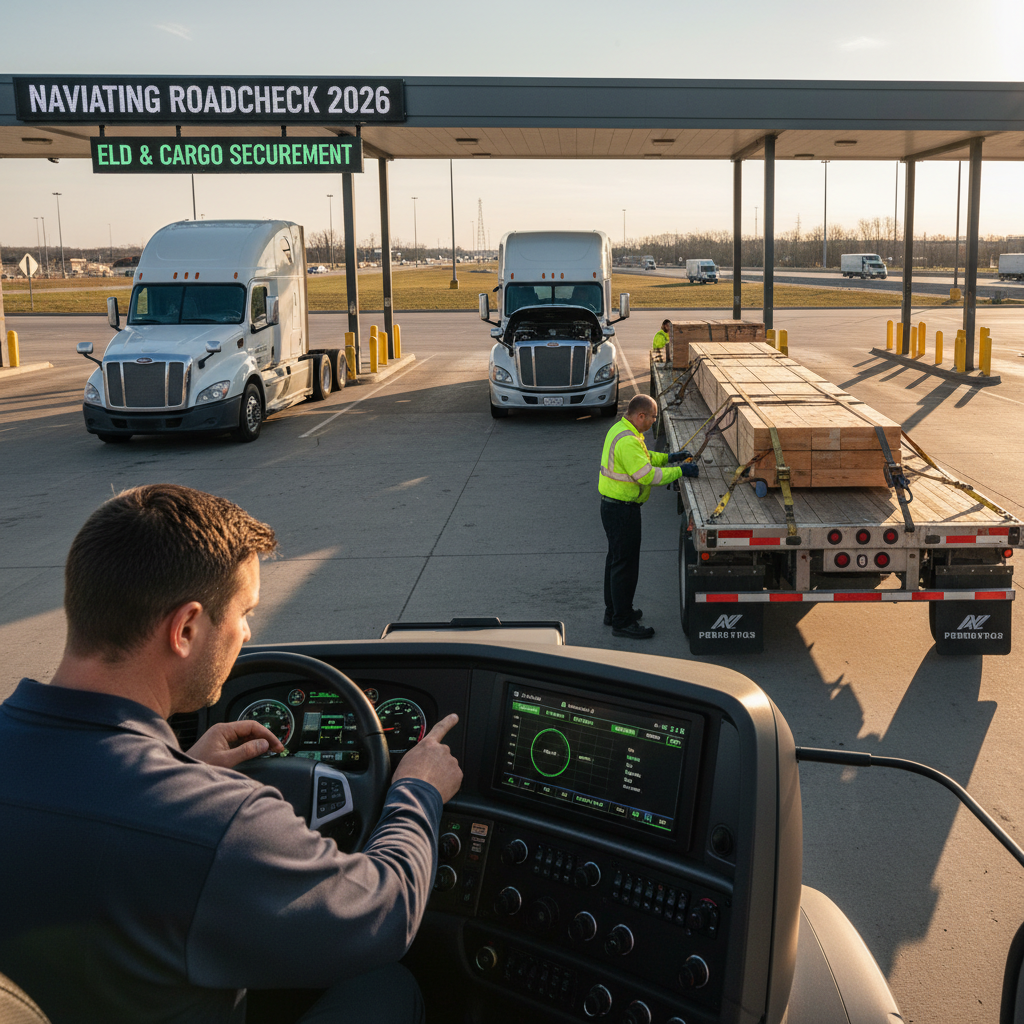
The Commercial Vehicle Safety Alliance (CVSA) International Roadcheck is an annual, high-stakes inspection and enforcement campaign that demands meticulous preparation from every professional truck driver and motor carrier across North America. For 2026, the CVSA has pinpointed two critical areas of focus: Electronic Logging Device (ELD) tampering/falsification for drivers and cargo securement for vehicles. Understanding these emphasis areas and proactively addressing potential issues is not just about avoiding violations; it's about upholding safety standards, maintaining operational efficiency, and protecting your livelihood.
This comprehensive guide will delve deep into the nuances of ELD compliance and cargo securement, offering practical advice, industry insights, and actionable strategies to ensure you and your fleet are fully prepared for Roadcheck 2026 and beyond. We'll explore the 'why' behind these focus areas, the 'what' inspectors will be looking for, and the 'how' to guarantee your operations are ironclad.
Understanding the CVSA International Roadcheck: More Than Just an Inspection
The CVSA International Roadcheck is the largest commercial motor vehicle inspection program in the world. Over a 72-hour period, certified inspectors conduct an average of 15 inspections per minute across Canada, Mexico, and the United States. These inspections range from Level I (the most comprehensive, covering both driver and vehicle) to Level III (driver-only) and Level II (walk-around driver/vehicle). The primary goal is to identify and remove unsafe commercial motor vehicles and drivers from roadways, thereby enhancing highway safety for everyone.
Each year, the CVSA selects specific categories for special emphasis. These focus areas are chosen based on data analysis of common violations and their impact on safety. For 2026, the spotlight on ELD tampering and cargo securement signals a clear message from regulatory bodies: these are critical safety concerns that require heightened attention. Failing an inspection can lead to costly citations, out-of-service orders, and negative impacts on a carrier's Compliance, Safety, Accountability (CSA) scores, which can have long-term financial and operational repercussions.
The ELD Mandate and the Scourge of Tampering: What Drivers and Fleets Need to Know
The ELD mandate, fully implemented in 2017, revolutionized hours-of-service (HOS) tracking, aiming to improve road safety by ensuring drivers comply with HOS rules. While the vast majority of drivers and carriers have embraced ELDs, a persistent issue of tampering and falsification continues to challenge the industry. This is precisely why it's a primary focus for Roadcheck 2026.
Why ELD Tampering is a Critical Concern:
ELDs are designed to accurately record driving time, ensuring drivers get adequate rest and don't operate while fatigued. Tampering with an ELD, or falsifying records, undermines the entire purpose of the mandate. It can lead to:
- Fatigued Driving: Drivers exceeding HOS limits are at a significantly higher risk of accidents, endangering themselves and other road users.
- Unfair Competition: Carriers and drivers who cheat the system gain an unfair advantage over those who comply, creating an uneven playing field.
- Regulatory Penalties: Falsification is a serious offense, leading to hefty fines, out-of-service orders, and potentially criminal charges.
- Erosion of Trust: Tampering erodes public and regulatory trust in the trucking industry's commitment to safety.
What Inspectors Will Be Looking For:
During Roadcheck 2026, inspectors will be particularly vigilant for signs of ELD tampering or falsification. This goes beyond simply checking if an ELD is present and functioning. They will scrutinize:
- Record of Duty Status (RODS) Review: Inspectors will carefully examine ELD records for inconsistencies, unusual patterns, or missing data. They'll compare ELD data with supporting documents like fuel receipts, toll records, and shipping papers to detect discrepancies.
- Unusual Driving Patterns: Irregular driving times, sudden jumps in location without corresponding driving activity, or extended periods of 'personal conveyance' that seem suspicious will raise red flags.
- ELD Malfunctions and Error Messages: While legitimate malfunctions occur, a history of frequent 'malfunction' or 'data diagnostic' events, especially if not properly documented and addressed, could indicate an attempt to circumvent the system.
- Edited Records: ELDs allow for edits, but these must be properly annotated and justified. Inspectors will look for unannotated edits, excessive edits, or edits that appear to conceal HOS violations.
- Unauthorized Devices or Software: Any external devices or software designed to interfere with ELD functionality are strictly prohibited and will result in severe penalties.
- Personal Conveyance and Yard Move Abuse: These special driving categories have specific rules. Misusing them to extend driving hours beyond legal limits will be scrutinized.
Actionable Advice for Drivers:
- Understand the Regulations: Know the HOS rules inside and out, including personal conveyance and yard move definitions. Ignorance is not an excuse.
- Operate Your ELD Correctly: Learn your specific ELD device thoroughly. Understand how to log in, log out, switch duty statuses, annotate edits, and transfer data.
- Be Honest and Transparent: If you make an error, correct it promptly and accurately, providing a clear annotation. Do not attempt to conceal violations.
- Maintain Supporting Documents: Keep all necessary paperwork (bill of lading, fuel receipts, permits) organized and readily accessible to corroborate your ELD data.
- Report Malfunctions: If your ELD malfunctions, follow the proper procedures for reporting it to your carrier and operating under paper logs for the allowed period.
Actionable Advice for Fleet Managers:
- Robust Training Programs: Implement comprehensive and ongoing training for all drivers on ELD operation, HOS rules, and company policies regarding compliance.
- Regular Auditing: Proactively audit ELD records for anomalies, unannotated edits, and potential HOS violations. Address issues immediately.
- Clear Policies: Establish clear, written policies on ELD usage, personal conveyance, yard moves, and malfunction reporting. Ensure drivers understand the severe consequences of tampering.
- Technology Investment: Invest in reliable, user-friendly ELD systems and ensure drivers are comfortable using them. Provide technical support.
- Foster a Culture of Compliance: Emphasize that safety and compliance are non-negotiable. Support drivers in adhering to HOS rules, even if it impacts delivery schedules.
- Data Analysis: Utilize ELD data to identify trends, potential training gaps, or drivers who might be struggling with compliance.
The Criticality of Cargo Securement: Preventing Roadway Hazards
Improper or inadequate cargo securement is a leading cause of preventable accidents, posing significant risks to drivers, other motorists, and infrastructure. When cargo shifts, falls, or spills, it can lead to catastrophic consequences, from minor damage to multi-vehicle pileups. This is why cargo securement is the vehicle-focused emphasis area for Roadcheck 2026.
Why Cargo Securement Matters Immensely:
- Safety of All Road Users: Unsecured cargo can become projectiles, cause drivers to swerve, or create debris fields, directly leading to accidents and injuries.
- Driver Safety: Shifting loads can destabilize a truck, especially during braking or cornering, leading to loss of control. Falling cargo can also injure drivers during loading/unloading or pre-trip inspections.
- Financial Costs: Accidents due to unsecured cargo result in costly repairs, insurance claims, potential lawsuits, and lost revenue from damaged goods and vehicle downtime.
- Regulatory Compliance and CSA Scores: Cargo securement violations directly impact a carrier's CSA scores, leading to increased scrutiny and potential operational restrictions.
- Reputation: A carrier known for cargo securement issues will suffer reputational damage, impacting client relationships and driver recruitment.
What Inspectors Will Be Looking For:
Inspectors will conduct thorough checks of cargo securement systems, looking for compliance with federal, provincial, and state regulations. Key areas of scrutiny include:
- General Containment and Immobilization: The fundamental principle is that cargo must be contained, immobilized, and secured so it cannot leak, spill, blow off, fall, or shift to an extent that affects the vehicle's balance or maneuverability.
- Bracing and Blocking: For cargo susceptible to movement, proper bracing and blocking against the vehicle structure or other cargo are essential. This prevents forward, backward, or lateral movement.
- Tie-Downs:
- Number and Strength: Are there enough tie-downs for the weight and type of cargo? Are they rated for the job? The aggregate working load limit (WLL) of the tie-downs must be at least 50% of the weight of the cargo.
- Condition: Inspectors will check for wear, cuts, abrasions, knots, twists, or damage to chains, straps, ropes, and webbing. Damaged tie-downs are out-of-service violations.
- Placement: Tie-downs must be properly positioned to provide effective restraint, typically over the cargo and anchored to appropriate points on the vehicle.
- Tension: Are tie-downs sufficiently taut? Loose tie-downs are ineffective.
- Front-End Structures: For flatbed trailers, cargo positioned against a front-end structure (headboard) must be adequately restrained to prevent forward movement. If not, additional tie-downs are required.
- Dunnage and Equipment Securement: All dunnage, tarps, spare tires, brooms, forklifts, pallet jacks, winches, ratchets, and other equipment carried on the vehicle must be properly secured to prevent falling or shifting.
- Specialized Cargo: Specific regulations apply to certain types of cargo, such as logs, metal coils, intermodal containers, vehicles, and heavy equipment. Inspectors will verify compliance with these specialized rules.
- Hazardous Materials (HazMat): For HazMat loads, additional securement requirements from the Pipeline and Hazardous Materials Safety Administration (PHMSA) or equivalent Canadian/Mexican regulations apply, focusing on preventing leaks or spills.
Actionable Advice for Drivers:
- Pre-Trip and En-Route Inspections: Make cargo securement a critical part of your pre-trip inspection. Check tie-downs, bracing, and the overall stability of the load. During your trip, stop periodically (especially after the first 50 miles) to re-check and re-tension tie-downs.
- Know Your Load: Understand the weight, dimensions, and characteristics of your cargo. This dictates the securement method and equipment needed.
- Use the Right Equipment: Ensure you have enough tie-downs, chains, straps, and blocking materials of the correct strength and type for your specific load.
- Inspect Securement Devices: Before each use, inspect all tie-downs, binders, and attachment points for damage or wear. Discard or repair anything compromised.
- Proper Technique: Learn and apply correct securement techniques, including proper tensioning, angle of tie-downs, and use of edge protectors to prevent strap damage.
- Secure All Loose Items: Don't forget to secure tarps, spare tires, tools, and any other equipment carried on the truck.
- Understand Regulations: Familiarize yourself with the specific cargo securement regulations relevant to your jurisdiction (FMCSA in the U.S., NSC in Canada, NOM in Mexico).
Actionable Advice for Fleet Managers:
- Comprehensive Training: Provide thorough and recurring training for drivers and loading personnel on cargo securement regulations, best practices, and the use of various securement devices.
- Equipment Provision and Maintenance: Ensure your fleet is equipped with an adequate supply of high-quality, properly rated securement devices. Implement a robust inspection and maintenance program for all securement equipment.
- Loading Procedures: Develop and enforce clear, standardized loading procedures that prioritize proper weight distribution and securement for different types of cargo.
- Pre-Load Checks: Implement a system for checking cargo securement before a truck departs, especially for new drivers or complex loads.
- Regular Audits: Conduct random cargo securement audits to identify non-compliance and areas for improvement. Use these audits as coaching opportunities.
- Driver Feedback: Encourage drivers to report issues with cargo securement, equipment, or loading practices. Create a culture where safety concerns are addressed proactively.
- Stay Updated: Keep abreast of changes in cargo securement regulations and adjust training and procedures accordingly.
The Interconnectedness of Compliance: Safety as a Holistic Approach
While Roadcheck 2026 highlights ELD tampering and cargo securement, it's crucial to remember that these are just two components of a much broader safety and compliance framework. Inspectors conduct a full Level I inspection, meaning they will check everything from brakes, tires, and lights to driver's licenses, medical cards, and vehicle registration. A deficiency in any area can lead to an out-of-service order.
For both drivers and fleet managers, adopting a holistic approach to safety is paramount. This means:
- Consistent Vehicle Maintenance: Regular preventative maintenance is key to avoiding vehicle-related out-of-service violations.
- Driver Qualification: Ensuring all drivers are properly licensed, medically certified, and have a clean driving record.
- Hours-of-Service Management: Beyond ELD compliance, actively managing driver schedules to prevent fatigue and ensure HOS adherence.
- Pre-Trip Vigilance: Instilling the habit of thorough pre-trip and post-trip inspections for every run.
- Documentation Readiness: Having all required documents (license, medical card, registration, insurance, permits, ELD user manual, malfunction instructions) readily available and in order.
Preparing for Roadcheck 2026: A Strategic Imperative
Roadcheck 2026 is not an event to be feared, but rather an opportunity to demonstrate your commitment to safety and compliance. For CDL truck drivers, it's about showcasing professionalism, diligence, and a thorough understanding of regulations. For fleet managers, it's about validating the effectiveness of your safety programs, training, and operational oversight.
By proactively addressing the specific emphasis areas of ELD tampering and cargo securement, and by maintaining a strong overall culture of safety and compliance, you can navigate Roadcheck 2026 with confidence. Remember, the goal of these inspections is not to penalize, but to ensure that every commercial motor vehicle operating on our roads is safe, and every driver is fit and compliant. Your preparedness directly contributes to safer highways for everyone, reinforcing the vital role the trucking industry plays in our economy and daily lives.
Start your preparations today. Review your ELD data, audit your cargo securement practices, and ensure every driver and vehicle in your fleet is ready to pass with flying colors. The safety of the roads, and the success of your operations, depend on it.
Helpful Resources for CDL Drivers
Comments (0)
Sign in to join the conversation
Sign In to CommentNo comments yet. Be the first to share your thoughts!
Explore More
Driver Resources
Educational guides on CDL licensing, salary expectations, and route planning tips.
Browse CDL Jobs
Find your next driving opportunity. Search by location, route type, and CDL class.
CDL Salary Guide
Understand how pay varies by experience, route type, and location in the trucking industry.