
Navigating the 2026 Freight Landscape: Why Intermodal Spot Rates Are Poised for a Surge After Trucking's Recovery
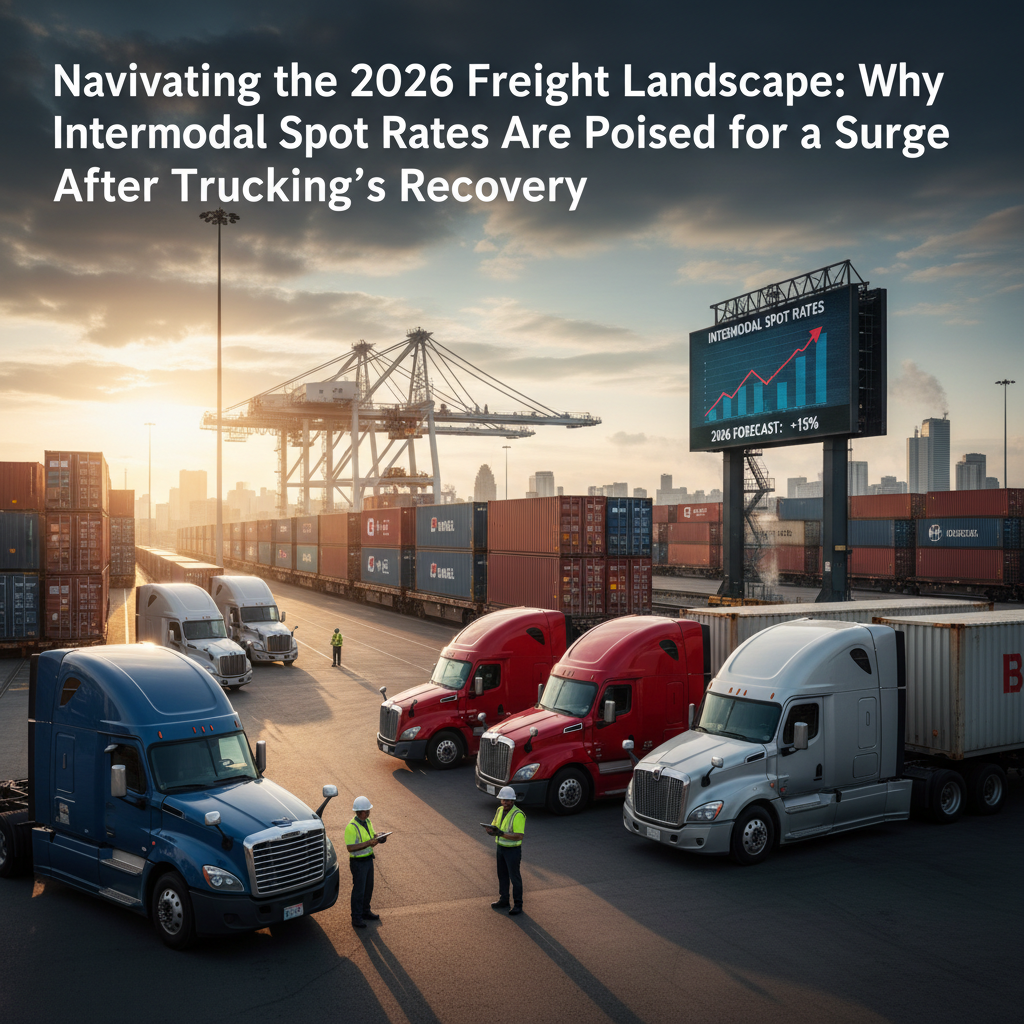
The freight market, a dynamic and often unpredictable beast, has been sending mixed signals to trucking professionals and logistics planners for months. As we push deeper into 2026, one trend has become unmistakably clear: the trucking spot market has staged a significant recovery, with rates climbing steadily, while intermodal rates have remained stubbornly low, anchored near their historical cycle lows. This divergence presents both challenges and opportunities for CDL truck drivers, owner-operators, and fleet managers across the nation.
For those on the front lines of freight movement, the numbers speak volumes. National truckload spot rates, inclusive of fuel surcharges, are holding strong around $2.80 per mile, according to recent SONAR data. This marks a substantial 23% increase from a year ago, when rates hovered around $2.33 per mile. More tellingly, tender rejections – a critical indicator of available capacity – are consistently near 14%. These levels haven't been seen with such regularity since the post-COVID market adjustments of 2022, and they significantly surpass anything observed in 2023, 2024, or 2025. What does this mean for you? It signifies that carriers are increasingly selective about the loads they accept, driving up spot pricing and creating genuine routing guide headaches for shippers. This tightening capacity translates directly into better rate opportunities for independent owner-operators and increased leverage for fleet managers negotiating contracts.
In stark contrast, the intermodal sector tells a different story entirely. Domestic intermodal spot rates, excluding fuel, are currently sitting at approximately $1.39 per mile. This represents a 5% decline from $1.48 per mile a year ago, placing them at levels eerily similar to those experienced during the initial COVID-19 shutdowns in March 2020. This significant disparity means intermodal spot rates are running at roughly half of their trucking counterparts. For many drivers who've seen the ups and downs of the market, this kind of imbalance often precedes a shift, and understanding why it's happening is crucial for strategic planning.
This divergence isn't a new phenomenon. For much of the past two years, shippers, always on the hunt for cost efficiencies, have actively shifted longer-haul freight to intermodal options. This was particularly true when truckload capacity was abundant and spot rates were soft. Railroads, in turn, capitalized on this trend by offering excellent service reliability, which has now been consistently strong for nearly two years. Coupled with ample container availability and aggressive pricing strategies, intermodal was highly effective in capturing market share. Even as truckload volumes experienced dips in various segments, intermodal volumes continued to grow, showcasing its attractiveness as a cost-effective alternative for certain types of freight.
However, the ground beneath our feet is shifting, and the market dynamics are evolving rapidly. Trucking capacity continues to tighten across the board, driven by several interconnected factors. We're seeing a sustained trend of carrier exits, particularly among smaller operations that struggled through the recent downturn. Regulatory pressures are also playing a significant role, including new English proficiency rules for drivers, restrictions on non-domiciled CDLs, and more stringent enforcement of Electronic Logging Device (ELD) mandates. These regulations, while aimed at safety and compliance, inevitably reduce the pool of available drivers. Adding to the immediate crunch are seasonal disruptions, such as severe winter weather events, which can quickly take trucks off the road and snarl supply chains. Perhaps most importantly, there are early but clear signs that domestic freight demand, especially in industrial heartlands like the Rust Belt, is making a robust return. This confluence of factors is creating a perfect storm for tightening capacity.
The impact of this tightening capacity is evident in the tender rejection rates, which remain at multi-year highs across the country, with particular intensity in the Midwest. This region, a critical hub for manufacturing and distribution, is experiencing incredibly tight capacity, making it challenging for shippers to find available trucks. Consequently, national spot rate averages are now exceeding typical seasonal norms, indicating a fundamental shift rather than a temporary fluctuation. The recent surge in trucking spot rates is no longer attributable solely to weather phenomena; it's a clear indication of a more profound market rebalancing. For owner-operators, this means more opportunities for higher-paying loads, and for fleet managers, it's a signal to reassess pricing strategies and driver retention efforts.
All indicators suggest that trucking is poised for a banner year. Both tightening capacity and increasing demand are moving in a direction that strongly favors motor carriers. Industry analysts are projecting that shippers could face multiple rounds of rate increases before the year is out, with some models even forecasting double-digit contract rate increases by December. This bullish outlook for trucking creates a ripple effect that will inevitably impact intermodal pricing. As truckload rates climb, the cost advantage of intermodal, which has been a primary driver of its volume growth, begins to diminish. The significant rate spread that made intermodal so attractive will narrow, forcing railroads to adjust their pricing strategy.
So, what does this mean for intermodal spot rates? The current low rates are simply unsustainable in a market where trucking capacity is shrinking and demand is rising. As the cost of moving freight by truck continues to escalate, shippers will eventually find that even with the perceived savings, the overall value proposition of intermodal needs to be re-evaluated. The pressure will mount on railroads to increase their rates to reflect the broader market conditions and the increased value they provide. We anticipate that intermodal spot rates will begin to catch up, experiencing a significant upward correction as 2026 progresses. This isn't just speculation; it's a logical response to the economic forces at play. For fleet managers who utilize intermodal for certain lanes, this means preparing for higher costs, while for drivers, it reinforces the value of truckload services.
For CDL truck drivers, these market shifts present a compelling landscape. The tightening truckload market means more leverage for negotiating rates, whether you're an independent owner-operator or a company driver looking for better compensation packages. The demand for skilled drivers is only going to intensify, making your expertise more valuable than ever. Focusing on efficient operations, maintaining a strong safety record, and being flexible with routes can help you capitalize on these favorable conditions. Consider specializing in lanes or freight types that are experiencing the highest demand and rate increases.
Fleet managers, on the other hand, face a dual challenge and opportunity. On one hand, the rising truckload rates mean increased revenue potential, but also potentially higher operating costs, especially if you rely on brokered loads or have older equipment. Strategic planning for equipment upgrades, driver recruitment and retention, and fuel efficiency will be paramount. Given the anticipated shift in intermodal rates, it's also crucial to re-evaluate your modal mix. While intermodal might still offer advantages on very long-haul lanes, the narrowing rate gap might make direct truckload more competitive for certain segments where it previously wasn't. Building strong relationships with reliable drivers and investing in their well-being will be key to maintaining capacity and service levels in a tight market.
Looking ahead, the freight market in 2026 is shaping up to be a year of significant adjustments. The recovery in trucking spot rates is robust and sustainable, driven by fundamental shifts in capacity and demand. This recovery will inevitably put upward pressure on intermodal rates, which have lagged behind for too long. For everyone in the trucking industry, from the individual driver to the largest fleet operator, understanding these dynamics is not just academic; it's essential for making informed decisions, optimizing operations, and securing a profitable future. Stay agile, monitor market trends closely, and be prepared to adapt your strategies to thrive in this evolving freight environment. The road ahead promises both challenges and substantial rewards for those who are ready.
Helpful Resources for CDL Drivers
Comments (0)
Sign in to join the conversation
Sign In to CommentNo comments yet. Be the first to share your thoughts!
Explore More
Driver Resources
Educational guides on CDL licensing, salary expectations, and route planning tips.
Browse CDL Jobs
Find your next driving opportunity. Search by location, route type, and CDL class.
CDL Salary Guide
Understand how pay varies by experience, route type, and location in the trucking industry.