
Navigating the Rails: How CSX's Efficiency Drive and Mega-Mergers Impact Trucking Operations
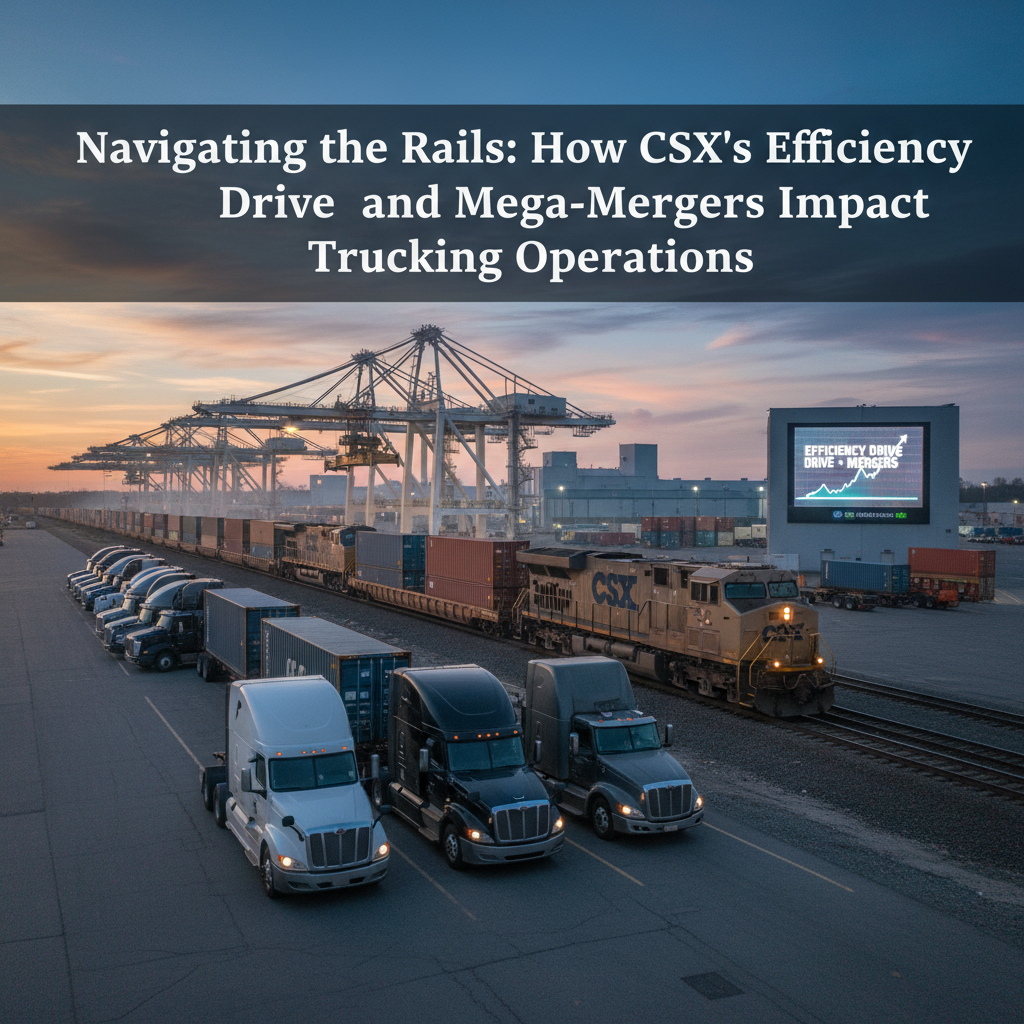
The intricate dance between freight rail and the trucking industry is a constant ballet of competition, collaboration, and strategic maneuvering. For CDL truck drivers and fleet managers, understanding the pulse of major rail operators like CSX isn't just about curiosity; it's about anticipating market shifts, optimizing logistics, and ensuring the continued profitability of their operations. As CSX Corp. embarks on a significant internal efficiency drive while its rivals eye massive consolidations, the ripple effects are poised to reshape the North American freight landscape.
At the heart of CSX's current strategy is a renewed focus on operational excellence and cost control, a directive spearheaded by its President and CEO, Steve Angel. In an industry where razor-thin margins can make or break a carrier, whether on rail or road, the pursuit of efficiency is paramount. Angel's approach, emphasizing 'trusting costs' over unbridled growth, signals a disciplined era for the Jacksonville, Fla.-based rail giant. This internal overhaul, while seemingly an isolated corporate strategy, holds profound implications for how freight moves across the country, directly influencing everything from intermodal availability to competitive pricing for trucking companies.
The Efficiency Imperative: What it Means for Trucking
CSX's drive for efficiency isn't merely about cutting corners; it's about streamlining operations, optimizing asset utilization, and enhancing service reliability. For fleet managers, this could translate into more predictable intermodal schedules, potentially reducing dwell times at rail yards and improving the overall flow of goods. When a rail carrier like CSX operates more efficiently, it can offer more competitive rates and reliable transit times for intermodal freight, which directly competes with or complements long-haul trucking.
Consider a scenario where CSX improves its train velocity and reduces terminal congestion. This directly benefits trucking companies that rely on intermodal services for specific lanes, allowing them to better plan their first-mile and last-mile deliveries. Drivers spend less time waiting, and equipment is utilized more effectively. Conversely, if rail efficiency falters, it can push more freight onto the roads, increasing demand for truck capacity and potentially driving up rates for shippers, which can be a double-edged sword for trucking companies – more freight but also more competition for drivers and equipment.
Angel's background, including his tenure at industrial gas firm Linde Plc, where he developed a reputation as a skilled operator, suggests a methodical approach to identifying and eliminating waste. Early changes at CSX, such as divesting non-core assets like its aerospace division and corporate jets, and cutting down on consultants, are clear indicators of this cost-conscious philosophy. These measures, while internal, free up capital and resources that can be reinvested into core rail operations, such as infrastructure improvements, technology upgrades, or enhanced maintenance programs – all of which contribute to a more robust and reliable freight network.
For CDL drivers, a more efficient rail system means less frustration at intermodal ramps. Imagine fewer instances of chassis shortages, quicker turnaround times for loading and unloading containers, and more accurate arrival estimations. These seemingly small improvements can significantly impact a driver's daily productivity, reduce their stress levels, and ultimately contribute to better earnings potential through more completed loads and less unproductive waiting time. Fleet managers can leverage these efficiencies to improve driver retention, a critical challenge in today's trucking industry.
The Shadow of Megamergers: Union Pacific and Norfolk Southern
While CSX focuses internally, the broader rail industry is abuzz with the prospect of monumental consolidation. The proposed $72 billion merger between Union Pacific Corp. and Norfolk Southern Corp. looms large, a potential game-changer that could redefine the competitive landscape. Angel openly acknowledges that such a megamerger would present both challenges and opportunities for CSX, hinting at the intricate strategic considerations at play.
From a trucking perspective, large-scale rail mergers are a mixed bag. On one hand, consolidation could lead to further rationalization of routes, potentially creating more direct and efficient rail corridors. This might benefit certain long-haul trucking operations by providing seamless intermodal options that reduce transit times and costs for specific lanes. A unified network could mean fewer handoffs between different rail carriers, leading to less complexity and improved service for intermodal freight.
However, the potential downsides are significant. Reduced competition among major rail carriers could lead to higher rates and less flexibility for shippers. If two major rivals merge, the remaining players, like CSX, might face increased pressure to compete on price or service, or conversely, could see an opportunity to raise their own rates in a less competitive market. For trucking companies that rely on rail for certain segments of their business, this could mean negotiating with fewer, larger entities, potentially diminishing their leverage.
Moreover, the regulatory hurdles for such a merger are immense. The Surface Transportation Board (STB) is known for its rigorous scrutiny of rail consolidations, often imposing conditions to ensure fair competition and protect shippers. Angel's observation that the STB's process seems designed to discourage consolidation underscores the complexity and political sensitivity of these deals. The outcome of such a merger approval process, which could take years, will undoubtedly shape the strategic decisions of all major freight players, including CSX and the trucking companies that interact with them.
Strategic Positioning: CSX's Openness to Deals
Despite his current focus on internal efficiency, Angel has made it clear that he remains 'open to any path that can create shareholder value,' including potential merger prospects. This statement, coupled with activist investor interest in CSX pursuing a merger, suggests that while internal improvements are the immediate priority, strategic acquisitions or mergers are not off the table. The question then becomes: who would be a suitable partner, and what would such a deal mean for the broader freight ecosystem?
For trucking companies, a potential CSX merger with another rail entity could have several implications. If CSX were to acquire a smaller regional railroad, it could expand its network, offering new intermodal lanes or improving service in existing ones. This could open up new opportunities for trucking companies to partner with CSX for drayage and last-mile delivery services in previously underserved areas. Conversely, if CSX were to merge with a larger, complementary Class I railroad, the resulting entity could offer an even more formidable intermodal network, potentially intensifying competition for long-haul truckload carriers.
Fleet managers must keep a close eye on these developments. Understanding the geographic reach and service offerings of a consolidated rail network can inform decisions about fleet deployment, lane optimization, and intermodal strategy. For example, if a merged rail entity creates a more efficient corridor for freight moving from the West Coast to the Southeast, a trucking company might adjust its long-haul operations to focus on regional distribution from intermodal hubs, rather than competing directly on those transcontinental lanes.
Cultivating Continuous Improvement: A Shared Philosophy
Angel's vision for CSX includes fostering a culture of 'continuous improvement' through incremental changes and collaboration with staff, including its multiple unions. This philosophy resonates deeply within the trucking industry, where continuous improvement is not just a buzzword but a necessity for survival. From optimizing fuel efficiency through driver training and aerodynamic equipment to implementing advanced telematics for route optimization and safety, trucking companies are constantly seeking marginal gains.
For CDL drivers, this focus on continuous improvement means that CSX is likely investing in technologies and processes that enhance the rail network's reliability and safety. This could include better track maintenance, advanced signaling systems, and improved communication protocols, all of which contribute to a smoother and safer environment for freight movement. When rail operations are more predictable, it reduces the likelihood of delays that can cascade down to trucking operations, impacting delivery schedules and driver hours of service.
Fleet managers can draw parallels from CSX's approach. Just as CSX is scrutinizing its operational costs and seeking efficiencies, trucking companies must continuously evaluate their own expenses, from maintenance and fuel to administrative overhead. Investing in driver training programs, adopting predictive maintenance technologies, and leveraging data analytics to optimize routes are all forms of continuous improvement that directly impact profitability and operational effectiveness.
Actionable Takeaways for Trucking Professionals
- Monitor Intermodal Trends: Keep a close watch on CSX's intermodal service offerings, transit times, and pricing. Improved rail efficiency could make intermodal a more attractive option for certain lanes, potentially freeing up long-haul truck capacity for more specialized or time-sensitive freight.
- Evaluate Partnership Opportunities: If CSX expands its network or improves service reliability, explore opportunities for drayage and first/last-mile partnerships. A strong relationship with a reliable rail partner can diversify a trucking company's service portfolio.
- Anticipate Market Shifts from Mergers: Stay informed about the progress of the Union Pacific-Norfolk Southern merger. Understand how a consolidated entity might alter competitive dynamics, pricing structures, and available rail corridors. This foresight can help fleet managers adjust their strategies proactively.
- Benchmark Efficiency: Use CSX's focus on cost control and operational excellence as a benchmark for your own fleet. Regularly review your operating costs, seek out areas for efficiency gains, and invest in technologies that improve productivity and reduce waste.
- Prioritize Driver Experience: Just as CSX aims for internal collaboration, focus on improving the daily experience for your CDL drivers. Reliable intermodal handoffs, reduced wait times, and predictable schedules contribute significantly to driver satisfaction and retention, which are critical in today's tight labor market.
- Leverage Data Analytics: Both rail and road operations are increasingly data-driven. Utilize telematics and logistics software to track your fleet's performance, identify bottlenecks, and make informed decisions that align with the broader freight market trends influenced by major rail players.
In conclusion, the strategic moves of major rail operators like CSX are not isolated events; they are integral components of the broader North American freight ecosystem. For CDL truck drivers, these developments impact their daily routes, wait times, and earning potential. For fleet managers, they dictate strategic planning, competitive positioning, and profitability. By staying informed, adapting proactively, and embracing a philosophy of continuous improvement, trucking professionals can effectively navigate the evolving landscape shaped by rail efficiency drives and the specter of megamergers, ensuring their operations remain robust and competitive in the years to come.
Helpful Resources for CDL Drivers
Comments (0)
Sign in to join the conversation
Sign In to CommentNo comments yet. Be the first to share your thoughts!
Explore More
Driver Resources
Educational guides on CDL licensing, salary expectations, and route planning tips.
Browse CDL Jobs
Find your next driving opportunity. Search by location, route type, and CDL class.
CDL Salary Guide
Understand how pay varies by experience, route type, and location in the trucking industry.