
Navigating the Shifting Tides: How Chinese Automakers in Mexico are Reshaping Cross-Border Freight for Truckers and Fleets
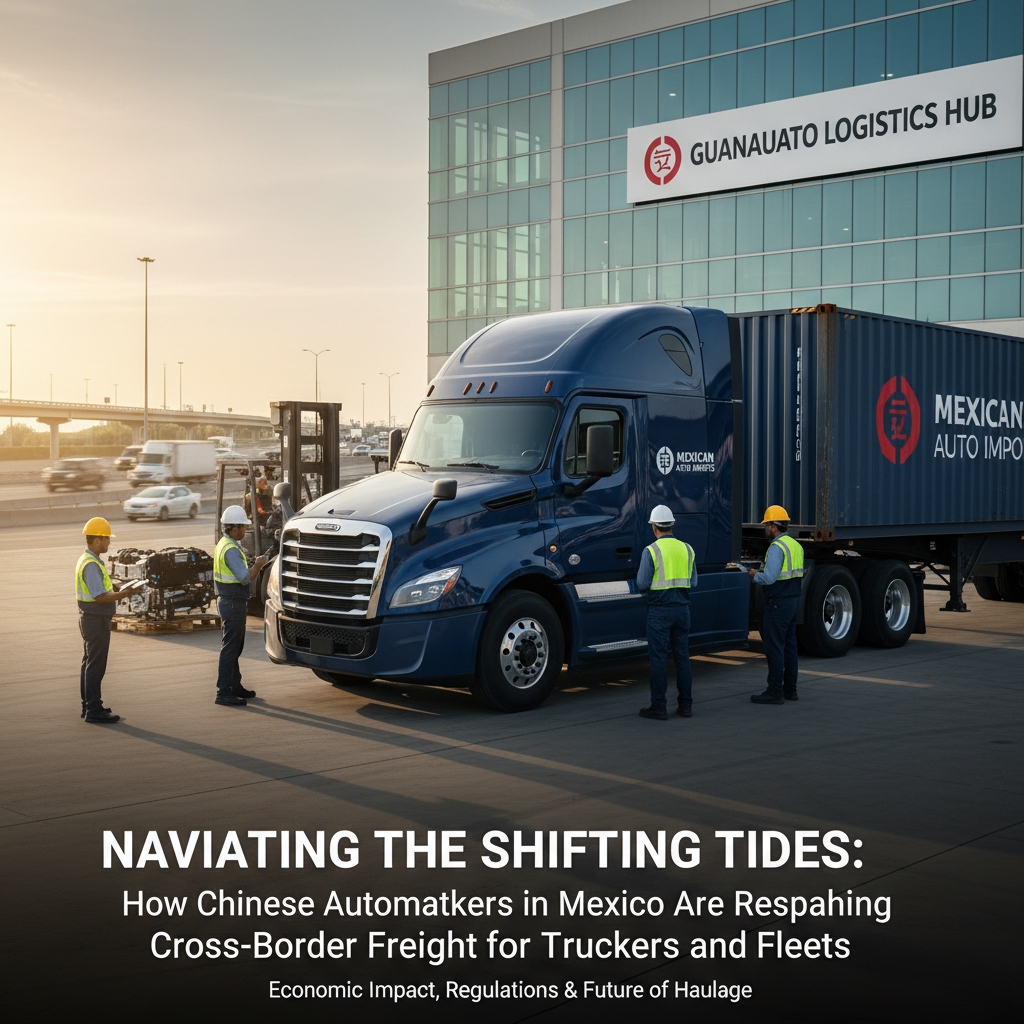
The landscape of North American freight is in constant flux, and a significant new development is emerging from south of the border: Chinese automakers are rapidly expanding their presence in Mexico. This shift is not just an economic headline; it's a critical trend that promises to reshape cross-border trucking routes, demand for specific types of freight, and the overall operational strategies for CDL truck drivers and fleet managers across the United States, Mexico, and Canada.
For decades, the automotive industry has been a cornerstone of cross-border trade, with a well-established flow of components and finished vehicles moving between the U.S. and Mexico. However, recent data indicates a softening in U.S. finished-vehicle exports to North America, coinciding with an aggressive push by Chinese automotive manufacturers into the Mexican market. This isn't merely about new players entering the arena; it's about a fundamental re-evaluation of supply chains, manufacturing hubs, and ultimately, the routes and loads that keep our trucks moving.
Mexico's Growing Automotive Hub: A Magnet for Global Players
Mexico has long been a vital production and export hub for the global automotive industry, a status reinforced by its strategic location, competitive labor costs, and robust trade agreements. In March alone, Mexico produced 343,520 light vehicles and exported 310,205 units, marking a 4.2% year-over-year increase in exports. The first quarter saw an impressive 795,631 vehicles exported, up 2.5% from the previous year. These figures underscore Mexico's enduring importance in the automotive supply chain, but the competitive dynamics are undeniably shifting.
Chinese automakers like BYD and Geely are leading this charge, drawn to Mexico by a combination of competitive pricing, a burgeoning domestic market, and fewer trade barriers compared to direct entry into the United States. Their strategy is multifaceted: initially focusing on importing vehicles to gain market share, and now aggressively pursuing manufacturing capabilities within Mexico itself. This strategic pivot from import to local production is a game-changer for freight logistics.
The Manufacturing Footprint: From Imports to Local Production
One of the most significant indicators of this deepening presence is the pursuit of existing manufacturing facilities. Both BYD and Geely are reportedly among the finalists vying to acquire a Nissan-Mercedes-Benz assembly plant in Aguascalientes. Such an acquisition would provide Chinese automakers with an immediate and substantial manufacturing foothold, complete with an established workforce and critical logistics infrastructure. This bypasses the lengthy and capital-intensive process of building a new plant from scratch, allowing for a much faster scaling of operations.
An existing plant with a capacity to produce approximately 230,000 vehicles annually represents a massive potential increase in locally manufactured vehicles. This translates directly into new freight opportunities for carriers. Instead of primarily moving finished vehicles from U.S. plants south, we could see a significant increase in the movement of components and raw materials into Mexican plants, and then finished vehicles moving both within Mexico and for export to other Latin American countries, and potentially even north to the U.S. and Canada.
Market Share and Regional Expansion: A Broader Impact
The impact of Chinese automakers is already evident in Mexico's domestic market. Industry estimates suggest that Chinese brands have surged from a negligible market share earlier in the decade to roughly 10% of Mexico's total vehicle market. This rapid growth is expected to continue as more models are introduced and local manufacturing ramps up. This isn't just about selling cars; it's about establishing a comprehensive automotive ecosystem.
Beyond Mexico, these companies are actively expanding their regional supply chains. For instance, BYD recently secured orders to export 100,000 vehicles from its Brazil plant to Argentina and Mexico. This illustrates a broader strategic vision that encompasses the entire Latin American market, creating a complex web of logistics requirements for parts, components, and finished vehicle transport across multiple borders and modes of transportation. For fleet managers, this means a need for greater flexibility, diverse equipment, and potentially new partnerships to handle these evolving regional flows.
Canada: The Next Frontier for Chinese Automotive Expansion
The ripple effects of this trend are not confined to Mexico. Canada is increasingly being eyed as the next significant opportunity for Chinese automotive expansion. BYD, for example, has publicly stated its interest in establishing a wholly-owned manufacturing plant in Canada and is open to acquiring an existing automaker to accelerate its market entry. This strategic move aligns with Canada's recent efforts to lower barriers to Chinese EV imports, creating a potentially lucrative market for electric vehicles.
Should Chinese automakers establish a significant manufacturing presence in Canada, it would create new north-south freight corridors, particularly for parts and finished vehicles. This could mean increased demand for specialized auto haulers, intermodal solutions, and general freight carriers moving components between the U.S., Canada, and Mexico. Fleet managers should monitor these developments closely, as they could necessitate adjustments to route planning, equipment acquisition, and driver recruitment strategies to capitalize on emerging opportunities.
Implications for CDL Truck Drivers: What You Need to Know
For CDL truck drivers, these shifts present both challenges and opportunities. Understanding these dynamics can help you position yourself for success in an evolving industry:
- Changing Freight Lanes: Expect to see a diversification of freight lanes. While traditional U.S.-Mexico automotive corridors will remain vital, there might be new or increased demand for routes supporting Mexican-based Chinese manufacturing, potentially involving different border crossings or inland distribution points. Familiarity with Mexican customs procedures and cross-border operations will become even more valuable.
- Specialized Loads: The rise of new vehicle models, particularly electric vehicles (EVs), could increase demand for specialized equipment. Auto haulers might need to adapt to different vehicle sizes and weights. Furthermore, the components for EV manufacturing (e.g., batteries, specialized electronics) often require specific handling, temperature control, or security protocols, creating niches for drivers with specialized certifications or experience.
- Increased Cross-Border Volume: Overall, the expansion of automotive manufacturing in Mexico and potentially Canada means more freight moving across borders. This could translate into more consistent work, but also potentially increased wait times at border crossings if infrastructure doesn't keep pace. Drivers should stay informed about border efficiency improvements and potential bottlenecks.
- Technological Adoption: New vehicles, especially EVs, come with advanced technology. Drivers transporting these vehicles or their components may need to be familiar with specific loading/unloading procedures, charging infrastructure considerations, or safety protocols related to battery transport.
- Demand for Skilled Drivers: The complexity of cross-border operations, coupled with the need for specialized handling, will likely increase the demand for highly skilled and experienced CDL drivers. Those with clean records, hazmat endorsements (for battery components), and experience navigating international logistics will be highly sought after.
Actionable Strategies for Fleet Managers: Staying Ahead of the Curve
Fleet managers are at the forefront of adapting to these macro-economic shifts. Proactive planning and strategic adjustments are crucial to remain competitive and profitable:
- Diversify Your Customer Base and Lanes: Relying too heavily on traditional U.S.-based automotive exports might become riskier. Actively seek out partnerships with new manufacturers, particularly those establishing operations in Mexico. Explore new lanes that connect Mexican production hubs with distribution centers in the U.S. and Canada, or with ports for international export.
- Invest in Specialized Equipment: Evaluate your fleet's capabilities. Do you have the right equipment to handle new vehicle types, including EVs? Are your trailers suitable for specialized components that might require specific environmental controls or security? Investing in adaptable or specialized equipment can open up new revenue streams.
- Optimize Cross-Border Operations: Review and refine your cross-border processes. This includes understanding Mexican customs regulations, optimizing routes to minimize border wait times, and leveraging technology for efficient communication and tracking. Building strong relationships with customs brokers and logistics partners in Mexico is paramount.
- Driver Training and Retention: The demand for qualified drivers will only intensify. Invest in training programs that equip your drivers with the skills needed for specialized loads, cross-border navigation, and familiarity with new technologies. Focus on retention strategies to keep your experienced drivers, as their expertise in these complex operations will be invaluable.
- Technology Integration: Implement advanced telematics, GPS tracking, and supply chain visibility tools. These technologies are essential for managing complex cross-border operations, optimizing routes, monitoring driver performance, and providing real-time updates to customers. Data analytics can help identify inefficiencies and new opportunities.
- Strategic Partnerships: Consider forming alliances or joint ventures with Mexican carriers or logistics providers. This can provide invaluable local expertise, access to local driver pools, and a smoother operational flow across the border. Collaboration can often mitigate risks and enhance capabilities.
- Monitor Policy and Trade Agreements: Stay informed about changes in trade policies, tariffs, and agreements between the U.S., Mexico, and Canada. These can have a direct impact on freight volumes, costs, and operational requirements. Being proactive in understanding these changes allows for quicker adaptation.
- Sustainability and EV Readiness: As Chinese automakers often prioritize EV production, consider the long-term implications for your fleet's sustainability initiatives. This might involve exploring alternative fuels, investing in charging infrastructure, or training mechanics for EV maintenance. Being 'EV-ready' can be a competitive advantage.
The Road Ahead: Adapting to a New Automotive Landscape
The rise of Chinese automakers in Mexico is more than just a regional phenomenon; it's a significant indicator of a broader restructuring within the global automotive industry. For the trucking sector, this translates into evolving freight patterns, new demands for specialized transport, and an increased emphasis on efficient cross-border logistics.
CDL truck drivers and fleet managers who understand these shifts and proactively adapt their strategies will be best positioned to thrive. This means embracing continuous learning, investing in the right equipment and technology, and fostering strong partnerships across borders. The road ahead promises to be dynamic and challenging, but also rich with new opportunities for those prepared to navigate its changing contours. Staying informed, flexible, and forward-thinking will be the keys to success in this exciting new chapter of North American freight.
Helpful Resources for CDL Drivers
Comments (0)
Sign in to join the conversation
Sign In to CommentNo comments yet. Be the first to share your thoughts!
Explore More
Driver Resources
Educational guides on CDL licensing, salary expectations, and route planning tips.
Browse CDL Jobs
Find your next driving opportunity. Search by location, route type, and CDL class.
CDL Salary Guide
Understand how pay varies by experience, route type, and location in the trucking industry.