
Navigating the Tariff Refund Landscape: What Truckers and Fleet Managers Need to Know About Recent Lawsuits Against FedEx, UPS, and Oakley
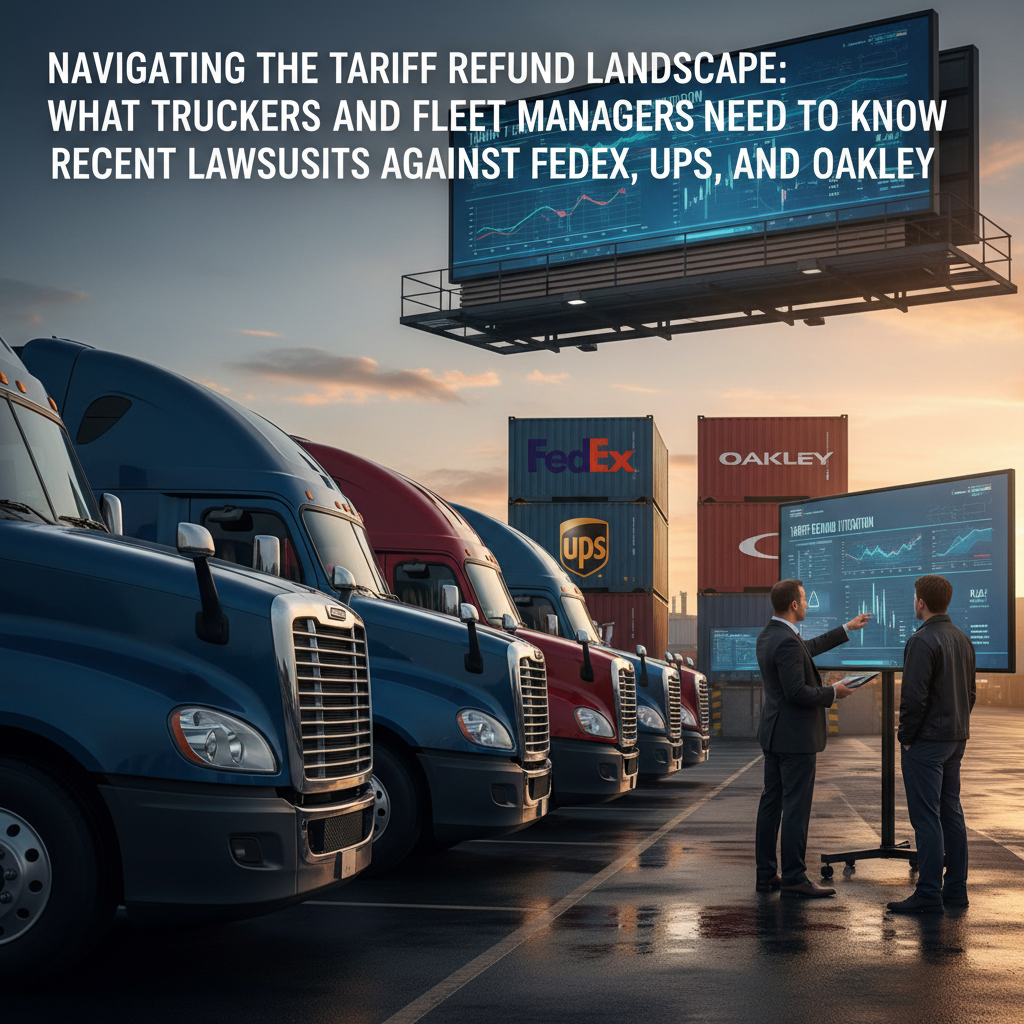
The intricate world of international trade and logistics often presents unexpected challenges and opportunities for the trucking industry. Recently, a significant legal development has emerged that could impact freight costs, operational strategies, and even the bottom line for many fleet managers and independent owner-operators. Major logistics giants like FedEx and UPS, along with consumer brands such as Oakley, are now facing class-action lawsuits demanding refunds for import duties and associated fees collected under the Trump administration's emergency tariffs, which were recently invalidated by the U.S. Supreme Court.
This situation isn't just about large corporations; it has direct implications for the entire supply chain, from the moment goods leave foreign ports to their final delivery by a CDL professional. Understanding the nuances of these lawsuits, the Supreme Court's ruling, and the potential for refunds is crucial for anyone involved in moving freight, especially those dealing with international shipments or managing fleets that transport imported goods.
The Core of the Legal Challenge: Invalidated Tariffs and Refund Demands
At the heart of these lawsuits is the U.S. Supreme Court's ruling that the International Emergency Economic Powers Act (IEEPA) does not authorize the President to impose broad-based tariffs. This decision effectively invalidated a significant portion of the tariffs levied by the Trump administration, often referred to as Section 232 or Section 301 tariffs, which targeted goods from specific countries, notably China, under national security or unfair trade practices pretexts. For years, these tariffs added substantial costs to imported goods, which were then passed down the supply chain to consumers and businesses.
Logistics providers like FedEx and UPS, acting as customs brokers and freight forwarders, collected these duties from their customers – importers, businesses, and even individual consumers – and remitted them to the U.S. government. They also often charged additional fees for processing these transactions. Now, with the tariffs deemed unlawful, the question arises: who is responsible for refunding these collected amounts, and to whom should they be returned?
The Plaintiffs' Stance: Why Lawsuits Are Emerging
Several proposed class-action lawsuits have been filed, aiming to compel these companies to refund the duties and fees. One notable case involves Matthew Reiser, who sued FedEx Logistics in U.S. District Court for Southern Florida. Reiser, who paid $36 in duty and fees on a pair of tennis shoes, argues that FedEx, as the entity with legal standing to seek refunds directly from the government, should be compelled to return these charges to consumers. The legal firm Morgan & Morgan, representing Reiser, emphasizes that their goal is to ensure "every penny they were improperly charged" is returned to American consumers.
Similarly, New Yorker Nathan Ward filed a class action against EssilorLuxottica S.A., the multinational maker of brands like Ray-Ban and Oakley. This lawsuit highlights that even if a company like EssilorLuxottica has already sued the U.S. government for a refund, any reimbursements received should be passed on to the customers who bore the initial cost. Ward's purchase, for instance, saw a 6% price increase due to these surcharges.
These cases are not isolated. Hali Anastopoulo, a freight forwarder and customs broker, has filed multiple lawsuits against FedEx and UPS in federal district courts across South Carolina, Georgia, and Tennessee. These complaints seek nationwide class-action status for all individuals and businesses who paid UPS for tariffs declared under the IEEPA, along with interest and related costs. The legal strategy is clear: hold the immediate intermediaries accountable for returning funds that were collected under an invalidated legal premise.
Impact on the Trucking Industry: More Than Just Tariffs
While the lawsuits directly target the logistics providers and importers, the ripple effects are significant for CDL truck drivers and fleet managers. Here's why:
1. Freight Volume and Stability: Tariffs, by increasing the cost of imported goods, can dampen consumer demand and business investment. The invalidation of these tariffs, and the potential for refunds, could theoretically stimulate import activity, leading to increased freight volumes. More goods moving means more opportunities for truck drivers and a more stable demand for trucking services.
2. Operational Costs and Planning: Fleet managers are constantly optimizing routes, managing fuel costs, and forecasting demand. Fluctuations in import volumes directly impact these decisions. A clearer, more stable tariff environment, or the absence of these specific tariffs, allows for more predictable planning. While the tariffs themselves weren't a direct cost to the trucking company (unless they were the importer), their impact on the overall economy and freight flow was undeniable.
3. Understanding Customer Needs: Many trucking companies serve clients who are importers, distributors, or retailers dealing with international goods. These clients are directly impacted by tariff policies and refund processes. A fleet manager who understands these challenges can better serve their clients, anticipate their needs, and even offer insights or support, strengthening business relationships.
4. The Role of Logistics Providers: FedEx and UPS are not just parcel carriers; they are massive logistics operations that rely heavily on CDL drivers, both their own and third-party contractors, to move freight across the country. Any financial impact on these giants, whether positive (from retaining some fees) or negative (from large-scale refunds), can indirectly affect their operational strategies, investment in their networks, and demand for trucking services.
5. Potential for Future Policy Changes: This Supreme Court ruling sets a precedent. It signals a more cautious approach to presidential authority in imposing tariffs. For the trucking industry, this could mean more predictable trade policies in the future, reducing the sudden shocks to the supply chain that tariffs often create. Predictability is a valuable commodity in logistics.
Actionable Takeaways for Fleet Managers and Drivers
For fleet managers, staying informed about these legal developments is not just academic; it's a strategic imperative. Here's what you can do:
-
Review Your Invoices: If your company or your clients frequently import goods and used services from FedEx, UPS, or other freight forwarders during the period these tariffs were in effect, it's prudent to review past invoices. Look for line items related to "duties," "tariffs," or "customs fees" that might have been passed on.
-
Communicate with Clients: Engage in conversations with your importing clients. They are likely aware of these lawsuits and may be exploring their options for seeking refunds. Understanding their situation can help you anticipate changes in their shipping patterns or financial health.
-
Consult Legal or Customs Experts: For businesses that directly paid these tariffs, consulting with a customs broker or legal expert specializing in international trade law is advisable. They can provide guidance on eligibility for refunds and the process for claiming them, whether through direct action against the government or by joining class-action lawsuits.
-
Monitor Industry News: Keep a close eye on industry publications and legal updates regarding these lawsuits. The outcomes could set precedents for how future trade disputes are handled and how refunds are processed, which could impact your clients and, by extension, your business.
-
Advocate for Predictable Trade Policies: As members of a critical industry, truckers and fleet managers have a vested interest in stable and predictable trade policies. Supporting industry associations that advocate for clear, consistent international trade rules can help foster a more reliable environment for freight movement.
The Broader Economic Context: Supply Chain Resilience
The COVID-19 pandemic and subsequent geopolitical events have highlighted the fragility of global supply chains. Tariffs, while intended to protect domestic industries or address trade imbalances, often add another layer of complexity and cost. The Supreme Court's decision, by reining in executive power on tariffs, could contribute to a more resilient and predictable supply chain environment.
For the trucking industry, resilience means consistent demand, fewer unexpected cost increases for clients (which can lead to payment delays or reduced shipping volumes), and a more stable operating environment. When importers face fewer arbitrary costs, they are better positioned to invest in their businesses, which often translates to more freight moving on the roads.
Conclusion: A Developing Story with Far-Reaching Implications
The lawsuits against FedEx, UPS, and Oakley over invalidated Trump-era tariffs represent a significant legal and economic development. While the direct financial implications are primarily for the logistics providers and importers, the ripple effects will undoubtedly touch every corner of the trucking industry. From influencing freight volumes and operational planning to shaping future trade policies, this situation underscores the interconnectedness of global trade and domestic transportation.
For CDL truck drivers, understanding the broader economic forces at play can provide valuable context for their daily work. For fleet managers, it's an opportunity to demonstrate leadership, provide informed guidance to clients, and strategically position their businesses in a dynamic and ever-evolving logistics landscape. As these cases unfold, staying informed and proactive will be key to navigating the complexities and capitalizing on any emerging opportunities.
Helpful Resources for CDL Drivers
Comments (0)
Sign in to join the conversation
Sign In to CommentNo comments yet. Be the first to share your thoughts!
Explore More
Driver Resources
Educational guides on CDL licensing, salary expectations, and route planning tips.
Browse CDL Jobs
Find your next driving opportunity. Search by location, route type, and CDL class.
CDL Salary Guide
Understand how pay varies by experience, route type, and location in the trucking industry.