
Navigating the Unexpected: Flatbed Driver's Evasive Maneuver Highlights Road Safety and Dash Cam Imperatives
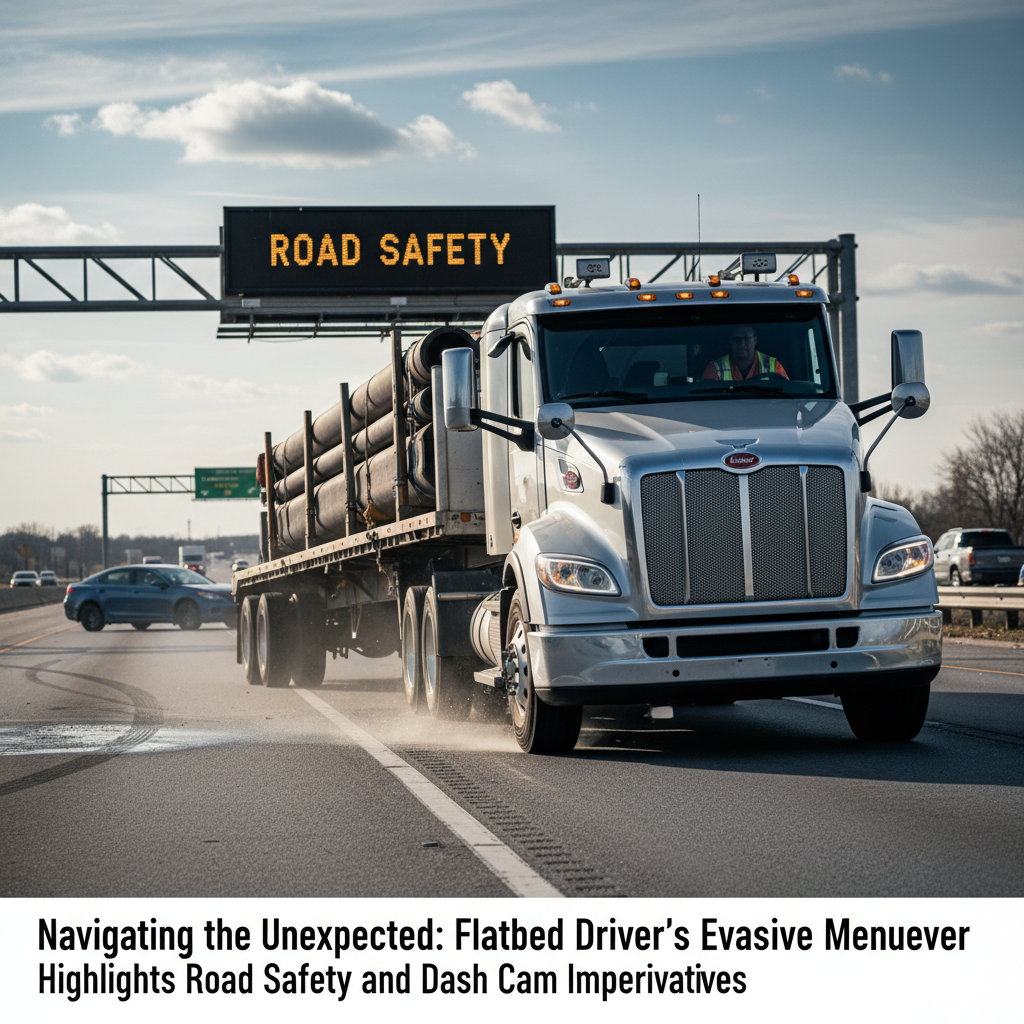
In the demanding world of commercial trucking, every mile presents a unique set of challenges and potential hazards. A recent incident in Taylor, Texas, captured on video, vividly illustrates the split-second decisions truck drivers must make to ensure safety on the road. The footage, which has since garnered significant attention within the trucking community, shows a flatbed truck driver skillfully reacting to a passenger vehicle that abruptly pulled out in front of his rig, underscoring the critical importance of defensive driving and advanced safety technologies like dash cameras.
The incident occurred around 10:30 a.m. and involved a flatbed truck, specifically a lowboy configuration, traveling along a Texas roadway. The rear-facing camera on the truck initially shows the driver maintaining his lane, when suddenly, the truck begins to subtly shift to the left. Moments later, a white sedan comes into view, having seemingly exited a nearby establishment (HEB) and driven directly into the path of the oncoming commercial vehicle. The sedan makes contact with one of the truck's fenders, resulting in significant damage to the car's front end, before it comes to a stop in the right lane. The flatbed driver, demonstrating remarkable composure and control, manages to slow down and pull over safely.
Further analysis of the video, particularly from the forward-facing dash cam, provides a clearer perspective. It unequivocally shows the flatbed truck operating well within its designated lane, proceeding normally, when the white sedan inexplicably merges into its path. The truck driver's immediate and decisive action to swerve and brake played a pivotal role in preventing what could have been a far more catastrophic collision. This incident serves as a powerful reminder of the unpredictable nature of road conditions and the constant vigilance required from professional truck drivers.
For CDL truck drivers, this scenario is all too familiar. The sheer size and weight of a commercial truck mean that stopping distances are significantly longer, and evasive maneuvers, while sometimes necessary, carry inherent risks. The ability to anticipate potential dangers, maintain adequate following distance, and react calmly under pressure are hallmarks of an experienced and responsible driver. In this particular case, the flatbed driver's quick thinking not only protected himself but also minimized harm to the occupants of the sedan, despite their error.
Fleet managers and trucking companies should view such incidents as valuable case studies for ongoing driver training and safety protocols. The presence of both forward and rear-facing cameras proved invaluable here, providing irrefutable evidence of fault and the driver's professional conduct. This footage can be crucial for insurance claims, legal proceedings, and exonerating drivers from baseless accusations. In an era where liability is a constant concern, equipping trucks with comprehensive camera systems is no longer a luxury but a fundamental necessity for protecting assets, reputation, and, most importantly, personnel.
The video's caption aptly summarized the situation, questioning whether the sedan driver was attempting to instigate an insurance claim, and emphatically stating, “Forward and rear facing cameras are a must to ensure your protection nowadays. Everyone is ok and Rilee did an outstanding job attempting to avoid this absolute idiot!” This sentiment resonates deeply within the trucking community, where drivers often face unfair blame or are targeted in staged accident scams. Dash cams act as an impartial witness, offering an objective account of events.
Beyond the immediate incident, this event highlights broader themes in road safety. Passenger vehicle drivers often underestimate the stopping power and maneuverability of large commercial trucks. Education campaigns aimed at the general public about sharing the road safely with big rigs are essential. Drivers of smaller vehicles must exercise extreme caution, especially when entering roadways from private drives or making turns in front of trucks. The blind spots of commercial vehicles are extensive, and assuming a truck driver sees you is a dangerous gamble.
For fleet managers, investing in advanced driver-assistance systems (ADAS) that include collision mitigation, lane departure warnings, and adaptive cruise control can further augment driver safety. While these technologies are not a substitute for skilled human judgment, they can provide an additional layer of protection and assist drivers in critical moments. Regular safety briefings, scenario-based training, and encouraging drivers to report near-misses can also contribute to a proactive safety culture.
Moreover, the incident underscores the psychological toll such events can take on truck drivers. Even when an accident is avoided, the stress of a near-miss can be significant. Fleet managers should ensure that drivers have access to support systems and that their well-being is prioritized. A driver who feels supported is more likely to maintain focus and perform optimally on the road.
In conclusion, the flatbed driver's expert handling of a dangerous situation in Taylor, Texas, serves as a powerful testament to the professionalism and skill required to operate a commercial truck safely. It reinforces the indispensable role of defensive driving techniques, the undeniable value of multi-directional dash camera systems for driver protection and liability management, and the ongoing need for all road users to exercise caution and respect for the unique challenges of commercial trucking. For both CDL drivers and fleet managers, this incident is a stark reminder that vigilance, preparation, and technology are paramount in navigating the complexities of our nation's highways.
Helpful Resources for CDL Drivers
Comments (0)
Sign in to join the conversation
Sign In to CommentNo comments yet. Be the first to share your thoughts!
Explore More
Driver Resources
Educational guides on CDL licensing, salary expectations, and route planning tips.
Browse CDL Jobs
Find your next driving opportunity. Search by location, route type, and CDL class.
CDL Salary Guide
Understand how pay varies by experience, route type, and location in the trucking industry.