
Rail Freight Shifts: Commodities Surge While Intermodal Stumbles – What It Means for Trucking
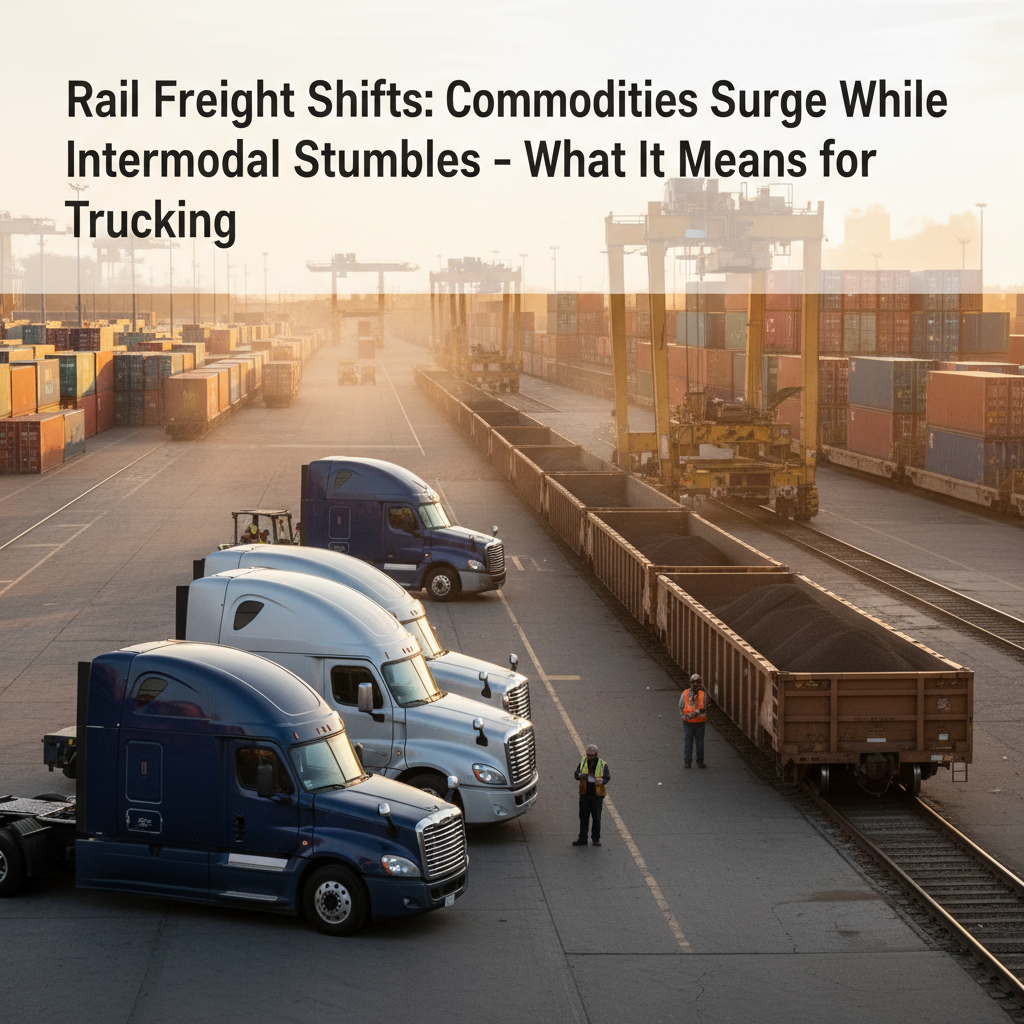
The latest rail freight data reveals a significant shift in the transportation landscape, with traditional commodity carloads experiencing a robust surge while intermodal traffic continues to lag. This trend, highlighted by recent figures from the Association of American Railroads (AAR), has profound implications for CDL truck drivers and fleet managers across North America. Understanding these dynamics is crucial for strategic planning, optimizing routes, and anticipating freight demands in the coming months.
For the week ending April 11, 2026, total U.S. rail traffic, encompassing both carloads and intermodal units, reached 500,040 units. This represents a modest but positive 1.7% increase compared to the same week last year. However, a deeper dive into the numbers reveals a tale of two distinct segments. Carload volumes, which primarily consist of bulk commodities, saw a strong 5.1% year-over-year jump, totaling 228,666 units. In stark contrast, U.S. weekly intermodal volume, comprising containers and trailers moved by rail, edged down by 1.1% to 271,374 units. This divergence is a key indicator that the types of goods moving through the supply chain are changing, directly affecting the demand for different trucking services.
The Commodity Comeback: Driving Demand for Specialized Trucking
The strength in carload traffic was largely driven by several key commodity groups. Coal, often seen as a bellwether for industrial activity, led the charge with an impressive 13% increase. Petroleum and related products followed closely with a 10.3% gain, while forest products also saw a healthy 8.4% rise. These aren't just abstract numbers; they represent tangible goods that need to be transported to and from railheads, creating significant opportunities for specific segments of the trucking industry.
For CDL drivers, this means a potential increase in demand for specialized hauling. Tanker drivers transporting petroleum products, flatbed operators moving lumber and other forest products, and dry van or hopper drivers handling agricultural goods like grain (which saw a substantial 15.4% year-to-date increase) could find themselves busier. Fleet managers should take note of these commodity uptrends when planning equipment acquisitions, driver recruitment, and regional operational strategies. Investing in the right trailer types and ensuring drivers have the necessary endorsements can position a fleet to capitalize on these growing freight lanes.
Intermodal's Lag: A Mixed Bag for Trucking
While the decline in intermodal volume might seem concerning, its impact on the trucking sector is nuanced. Intermodal freight typically involves the movement of goods in containers or trailers that are transported by rail for the long-haul portion and then picked up and delivered by trucks for the shorter drayage segments. A decrease in rail intermodal volume could mean one of two things for truckers: either overall freight demand for those goods is down, or more of that freight is shifting directly to over-the-road trucking for the entire journey.
Given the strength in overall economic indicators and the continued demand for consumer goods, it's more likely that some of the freight typically moved via intermodal is now being routed entirely by truck. This could be due to various factors, including rail service reliability issues, competitive trucking rates, or shippers prioritizing speed and flexibility. For truck drivers, this could translate into more long-haul opportunities that might have previously been handled by rail. For fleet managers, it's an opportunity to evaluate their intermodal drayage operations versus their over-the-road capabilities. If intermodal volumes remain subdued, fleets heavily reliant on drayage might need to diversify their service offerings or adjust their capacity allocations.
Year-to-Date Performance: A Broader Perspective
Looking at the year-to-date figures for the first 14 weeks of 2026 provides a more comprehensive picture. Cumulative carload volume stood at 3,142,017 units, marking a solid 4% improvement over the previous year. Meanwhile, intermodal units totaled 3,854,862, a slight 0.3% decrease. Combined, total traffic for the year-to-date reached 6,996,879 carloads and intermodal units, representing a 1.6% increase year-over-year.
Several commodity groups have shown impressive year-to-date growth, reinforcing the trend observed in weekly data. Grain shipments surged by 15.4%, petroleum and related products by 7.9%, and chemicals by 4.1%. These gains underscore the ongoing demand for raw materials and processed goods that form the backbone of various industries. On the other hand, forest products saw a 3.5% decline year-to-date, and motor vehicles and parts were down by a marginal 0.4%. While the weekly data showed a gain for forest products, the year-to-date figure indicates some volatility or regional differences in demand.
North American Context: Cross-Border Implications
Expanding the view to North American rail volume, which includes reporting lines from the U.S., Canada, and Mexico, further illustrates these trends. For the week in question, North American carloads were up by 5.3%, while intermodal units experienced a 0.7% decline. Total combined shipments increased by 2.1%. Year-to-date, North American volume showed a 1.8% increase. This broad consistency across the continent suggests that the shifts in freight patterns are not isolated to the U.S. but are part of a larger, regional trend.
For CDL drivers involved in cross-border operations, particularly those moving goods between the U.S., Canada, and Mexico, these figures are particularly relevant. An increase in commodity movements could mean more opportunities for specialized freight crossing international borders. Fleet managers operating in these corridors should monitor these trends closely, as they can influence demand for specific equipment types and driver availability in key border regions.
Actionable Takeaways for CDL Drivers and Fleet Managers
-
Diversify Skills and Equipment: For drivers, consider obtaining endorsements for hazmat, tankers, or flatbeds if you don't already have them. This will make you more versatile and in-demand as commodity freight increases. For fleets, evaluate your trailer mix. Is it optimized for bulk commodities, or are you too heavily weighted towards intermodal drayage or general dry van freight? Strategic investments in specialized equipment could yield significant returns.
-
Monitor Regional Demand: Commodity movements are often tied to specific industrial and agricultural regions. Fleet managers should analyze where these commodities are originating and terminating to identify high-demand lanes. Drivers can use this information to seek out opportunities in those areas.
-
Evaluate Intermodal vs. Over-the-Road: If intermodal volumes continue to lag, shippers may increasingly turn to over-the-road trucking for speed and reliability. This presents an opportunity for fleets to capture freight that might have previously gone by rail. Review your pricing strategies and service offerings to ensure you are competitive for these direct truckload movements.
-
Focus on Reliability and Service: In a shifting market, reliability becomes even more critical. Shippers are looking for partners who can consistently deliver, whether it's a specialized commodity or a general freight load. For drivers, this means maintaining excellent safety records and on-time performance. For fleets, it involves robust maintenance programs, efficient dispatch, and strong communication channels.
-
Stay Informed on Economic Indicators: The performance of commodities like coal, petroleum, and chemicals is often linked to broader industrial production and economic health. By keeping an eye on these macroeconomic indicators, both drivers and fleet managers can better anticipate future freight trends and adjust their strategies accordingly.
-
Leverage Technology for Efficiency: In any market, efficiency is key to profitability. Utilize route optimization software, telematics, and load boards to maximize mileage, minimize empty runs, and connect with available freight. This is especially important when adapting to changing freight patterns.
The Road Ahead: Adapting to Change
The current rail freight data underscores the dynamic nature of the transportation industry. While intermodal has been a growth engine for years, the resurgence of traditional commodity carloads signals a potential recalibration of freight flows. For CDL truck drivers, this means a need for adaptability, continuous skill development, and an awareness of where the freight is moving. For fleet managers, it calls for strategic foresight, flexible operational planning, and a willingness to diversify services and equipment to meet evolving market demands.
By understanding these trends and proactively adjusting strategies, trucking professionals can not only navigate these shifts but also position themselves for continued success in a constantly evolving freight landscape. The road ahead may present new challenges, but with informed decisions and strategic planning, the trucking industry is well-equipped to capitalize on the opportunities presented by these changing rail dynamics.
Helpful Resources for CDL Drivers
Comments (0)
Sign in to join the conversation
Sign In to CommentNo comments yet. Be the first to share your thoughts!
Explore More
Driver Resources
Educational guides on CDL licensing, salary expectations, and route planning tips.
Browse CDL Jobs
Find your next driving opportunity. Search by location, route type, and CDL class.
CDL Salary Guide
Understand how pay varies by experience, route type, and location in the trucking industry.