
TFI International's US LTL Operations Show Glimmers of Improvement Amidst Challenging Freight Market
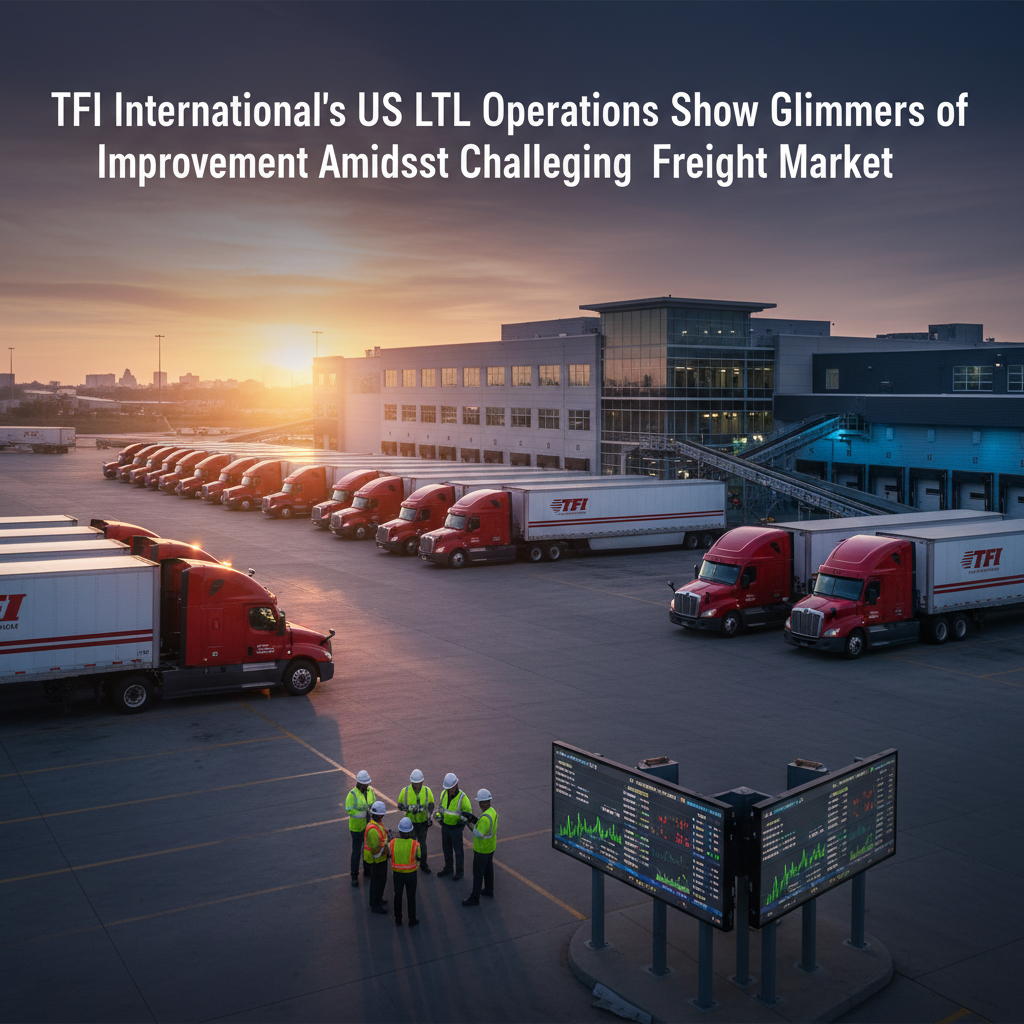
For CDL truck drivers and fleet managers navigating the dynamic landscape of the North American freight industry, understanding the financial health and operational shifts of major players like TFI International is crucial. Recent reports from TFI International for the fourth quarter of 2025 reveal a mixed bag of results, with some promising indicators emerging from their U.S. Less-Than-Truckload (LTL) division, even as the broader freight market continues to present significant headwinds. These insights offer valuable context for those on the road and those managing fleets, impacting everything from job security to strategic planning.
At the core of TFI's U.S. LTL operations is the business acquired from UPS Freight in 2021, a strategic move that significantly expanded their footprint. For drivers, this means being part of a larger network with potentially more stable routes and diverse freight opportunities. For fleet managers, it's about optimizing resources within a substantial and evolving network. The latest data suggests that TFI's management has been actively working to refine and improve this segment, and their efforts are starting to yield some positive, albeit cautious, results.
Key Operational Improvements in U.S. LTL
One of the most encouraging signs for TFI's U.S. LTL division was the improvement in its adjusted operating ratio (OR), a critical metric for profitability in the trucking industry. The OR improved year-over-year, moving from 97.3% to 95.3%. For drivers, a lower operating ratio often translates to a more financially stable company, which can mean better equipment, more consistent pay, and a stronger commitment to driver retention programs. For fleet managers, this signals more efficient operations, potentially freeing up capital for technology upgrades, maintenance, or driver training initiatives. A lower OR indicates that the company is spending less to generate each dollar of revenue, a clear sign of improved efficiency.
Another area where TFI demonstrated progress was in the average weight per shipment. This metric, which CEO Alain Bedard has specifically targeted for improvement, increased by 4.6%, rising from 1,227 pounds to 1,284 pounds. For LTL drivers, heavier shipments can sometimes mean more stable loads and potentially better utilization of trailer space, which contributes to overall efficiency. For fleet managers, optimizing weight per shipment is a direct path to maximizing revenue per trip and reducing empty miles, a constant battle in freight logistics. It suggests a more effective freight mix or improved loading strategies, both of which are beneficial for the bottom line.
However, the picture isn't entirely uniform. While the U.S. LTL segment showed improvements in OR and average weight, the average length of haul saw a decline of 6%, dropping from 1,194 miles to 1,122 miles. This contrasts with TFI's Canadian LTL operations, which, while posting a strong adjusted OR of 81.7%, experienced a slight deterioration of 170 basis points. The difference in haul lengths between the U.S. and Canadian operations has been a point of discussion for TFI's leadership, indicating ongoing efforts to optimize routing and network density in the U.S. For drivers, shorter average hauls in LTL can mean more frequent stops and potentially more local or regional work, which might appeal to those seeking more home time. For fleet managers, it highlights the continuous challenge of network optimization and balancing service levels with operational costs.
Navigating the Broader Freight Market Challenges
Despite these internal improvements, the broader freight market's softness continued to cast a shadow on some of TFI's overall financial performance. This is a reality that every CDL driver and fleet manager is acutely aware of, as fluctuating demand and pricing pressures directly impact daily operations and long-term planning. The report indicated that revenue per hundredweight, excluding fuel surcharges, decreased by 5.8%, falling from $27.73 to $26.13. This decline is a clear reflection of the competitive pricing environment and reduced demand that has characterized the freight market in recent times.
Total tonnage also saw a decline of 6.8%, dropping to 756 units. While a decrease in tonnage might typically be viewed negatively, TFI's improved operating ratio alongside this decline suggests a strategic focus on more profitable freight. For fleet managers, this reinforces the importance of yield management – prioritizing higher-margin loads even if it means carrying less overall volume. For drivers, it underscores that even in a softer market, companies are actively working to secure the best available freight, which can indirectly contribute to more stable work.
Looking at the consolidated LTL operations (both U.S. and Canadian), adjusted EBITDA fell to $115.1 million from $123.5 million. However, considering a 9.5% decline in total LTL revenue, the fact that operating income only dropped by 7.1% is noteworthy. This efficiency allowed the EBITDA margin to rise to 17.4% from 16.8% a year ago. A rising EBITDA margin, even with lower revenue, indicates that the company is managing its costs effectively, a positive sign for long-term sustainability and a factor that can influence a company's ability to invest in its workforce and equipment.
Bottom-Line Impact and Future Outlook
The challenging freight environment was also evident in TFI's bottom-line numbers. GAAP earnings per share (EPS) decreased to 87 cents from $1.03 a year prior. However, the adjusted non-GAAP EPS of $1.09 actually surpassed consensus forecasts by 24 cents per share, according to SeekingAlpha. This beat on adjusted earnings, coupled with revenue of $1.91 billion (just $10 million shy of consensus), suggests that while the market is tough, TFI is managing expectations and performing better than some analysts anticipated. For drivers and fleet managers, beating adjusted earnings estimates can instill confidence in the company's financial acumen and its ability to weather economic storms.
The adjusted OR for the entire company deteriorated slightly to 92.3% from 91.2% a year earlier, and the truckload segment's OR also worsened to 93.2% from 91.5%. These figures highlight that the pressures are not isolated to LTL but are systemic across the broader freight market. However, the specific improvements in the U.S. LTL segment indicate targeted operational successes that could serve as a model for other divisions as the market eventually recovers.
Actionable Takeaways for CDL Drivers and Fleet Managers
-
For CDL Drivers:
- Stability and Efficiency: TFI's focus on improving its operating ratio in the U.S. LTL division suggests a commitment to efficiency and profitability. This generally translates to a more stable employer, potentially offering consistent work and better resources for drivers. Keep an eye on companies that demonstrate strong financial management, as they are often better positioned to invest in driver pay, benefits, and equipment.
- Route Dynamics: The decline in average length of haul in U.S. LTL could indicate a shift towards more regional or localized routes. If you prefer more home time or specific types of LTL work, understanding these trends can help you identify suitable opportunities within large carriers like TFI.
- Freight Mix: The increase in average weight per shipment points to optimized freight loading. This can mean more consistent and potentially easier-to-handle loads, contributing to a smoother driving experience.
-
For Fleet Managers:
- Operational Optimization is Key: TFI's ability to improve its U.S. LTL operating ratio despite a challenging market underscores the critical importance of continuous operational optimization. Review your own fleet's OR, weight per shipment, and length of haul metrics. Are there areas where you can drive greater efficiency?
- Yield Management: The decline in revenue per hundredweight and total tonnage, coupled with an improved OR, highlights a strategic focus on profitable freight over sheer volume. Analyze your freight mix and pricing strategies. Are you prioritizing high-margin loads, even if it means turning down less profitable business?
- Network Density and Routing: The discussion around varying haul lengths between U.S. and Canadian operations points to the ongoing challenge of network optimization. Regularly assess your routing and network density to identify inefficiencies and opportunities for improvement. Technology solutions for route planning and load optimization can be invaluable here.
- Financial Health Indicators: Pay close attention to financial reports from major carriers. Metrics like adjusted OR and EBITDA margins provide insights into a company's resilience and ability to invest. Understanding these can inform your strategic partnerships, competitive analysis, and even your own business's financial planning.
The Road Ahead
The trucking industry is cyclical, and while the current freight market presents significant challenges, the signs of operational improvement within TFI's U.S. LTL segment offer a glimpse of resilience and strategic adaptation. For CDL drivers, this means working for companies that are actively refining their operations to ensure long-term stability. For fleet managers, it's a call to action to scrutinize every aspect of their business, from load acquisition to route optimization, to ensure they are positioned for success when the market inevitably turns. The ability to find efficiencies and manage costs effectively during downturns is what separates the thriving from the merely surviving in the competitive world of freight transportation. As the industry looks towards future quarters, all eyes will be on how these operational improvements translate into sustained financial growth and continued stability for the thousands of professionals who keep the wheels of commerce turning.
Helpful Resources for CDL Drivers
Comments (0)
Sign in to join the conversation
Sign In to CommentNo comments yet. Be the first to share your thoughts!
Explore More
Driver Resources
Educational guides on CDL licensing, salary expectations, and route planning tips.
Browse CDL Jobs
Find your next driving opportunity. Search by location, route type, and CDL class.
CDL Salary Guide
Understand how pay varies by experience, route type, and location in the trucking industry.