
Tragedy on I-80: Re-examining Parking Safety and Driver Vigilance After Fatal Wyoming Crash
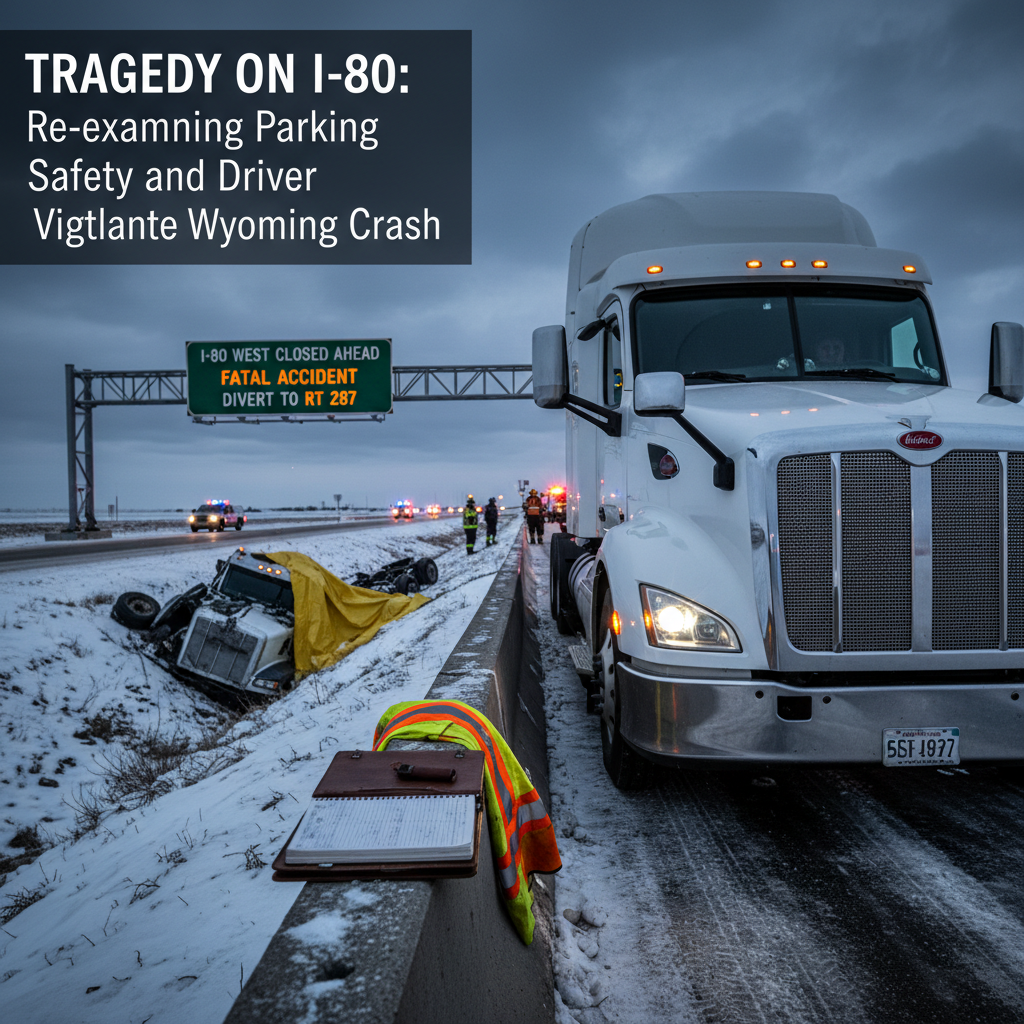
The open road, a lifeline for commerce and a daily workplace for millions of professional truck drivers, can also be a place of sudden, devastating tragedy. A recent incident on Interstate 80 in Wyoming serves as a stark, somber reminder of the critical importance of safe parking practices and unwavering driver vigilance. In the early hours of Sunday, February 8, 2026, two lives were tragically lost when a semi-truck collided with another big rig that was reportedly illegally parked on the shoulder of eastbound I-80 near Green River.
This incident, investigated by the Wyoming Highway Patrol (WHP), highlights a confluence of factors that can turn routine operations into catastrophic events. While the full scope of the investigation into why the moving truck drifted remains ongoing, the initial reports underscore the inherent dangers associated with unauthorized roadside parking and the absolute necessity for all drivers to maintain situational awareness, especially during low-visibility conditions or fatigue-prone hours. For every CDL holder and fleet manager, this tragedy is not just a news story; it's a call to action, a moment to re-evaluate safety protocols, training, and operational practices.
The Unfolding of a Catastrophe: What We Know
The Wyoming Highway Patrol responded to the crash at approximately 5:23 a.m. The preliminary findings, as reported by WHP Public Information Officer Aaron Brown, paint a grim picture: "A semi-truck was illegally parked on the right side of eastbound I-80. A second semi, in the left lane, drifted from the left lane into the right lane and continued drifting, striking the trailer of the parked semi. The second semi-truck exploded on impact and was fully engulfed in flames."
Both occupants of the moving truck, which subsequently exploded, perished at the scene. The driver of the parked semi-truck, fortunately, escaped injury. However, that driver was issued a summons for illegal parking, a charge that, while seemingly minor in comparison to the loss of life, points directly to a critical safety violation that contributed to the chain of events. The WHP continues its investigation to determine the exact reasons for the second semi-truck drifting, emphasizing that understanding the root cause is paramount to preventing similar future incidents.
The aftermath of the collision led to significant disruptions, with major semi-truck backups reported in the area. I-80, a vital cross-country artery, remained closed for several hours, reopening to traffic around 10 a.m. This closure not only impacted the immediate flow of goods but also underscored the broader economic and logistical consequences that even a single, severe accident can trigger across the trucking industry.
The Peril of Illegal Parking: A Fleet Manager's Nightmare, A Driver's Risk
For fleet managers, the mention of an "illegally parked" semi-truck immediately raises red flags. Parking a commercial vehicle on the shoulder of an interstate, especially without proper emergency signaling or in areas not designated for such stops, is a serious violation of traffic laws and, more importantly, a grave safety hazard. While drivers may face situations where they feel compelled to stop—due to mechanical issues, illness, or mandated rest breaks—the decision to park illegally carries immense risks.
Why is illegal parking so dangerous?
- Reduced Visibility: Parked vehicles, particularly large commercial trucks, can be difficult to see, especially at night, in adverse weather conditions, or around curves and hills. The sheer size of a big rig can create a blind spot for approaching traffic, and standard reflective tape and hazard lights, while helpful, are not always sufficient to prevent a collision.
- Unexpected Obstruction: Drivers on high-speed interstates expect a clear path. An unexpected, stationary object in a travel lane or on the shoulder can lead to sudden evasive maneuvers, loss of control, or, as tragically demonstrated, a direct impact.
- Lack of Emergency Infrastructure: Designated rest areas and truck stops are designed with safety in mind, offering wider shoulders, better lighting, and often emergency call boxes or services. Roadside shoulders lack these critical safety features.
- Driver Fatigue/Distraction: The driver of the moving truck might have been fatigued, distracted, or experiencing a medical event. While these factors are under investigation, the presence of an illegally parked vehicle exacerbates the danger of such scenarios, turning a potential lane departure into a fatal collision.
Fleet managers must continually reinforce the company's parking policies, emphasizing the importance of planning routes to include safe, legal rest stops. Training should cover emergency roadside procedures, including the proper deployment of reflective triangles, activation of hazard lights, and communication protocols. Drivers should be empowered and encouraged to seek out safe parking, even if it means adjusting their schedule slightly, rather than risking an illegal stop.
Driver Vigilance: The Unsung Hero of Road Safety
While the parked truck's status is a critical element, the incident also underscores the absolute necessity of unwavering driver vigilance for the moving vehicle. The report states the second semi-truck "drifted from the left lane into the right lane and continued drifting, striking the trailer of the parked semi." This description immediately brings to mind issues such as:
- Fatigue: Hours of service (HOS) regulations are designed to combat fatigue, but drivers sometimes push limits or experience unexpected exhaustion. Drowsiness significantly impairs reaction time, judgment, and the ability to maintain lane discipline.
- Distraction: Whether from a cell phone, in-cab technology, or other internal/external factors, distracted driving is a leading cause of accidents. Even a momentary lapse of attention can have devastating consequences, especially at highway speeds.
- Medical Event: Though less common, a sudden medical emergency can cause a driver to lose control of their vehicle.
- Mechanical Failure: While the report doesn't indicate a mechanical issue, a sudden tire blowout or steering malfunction could lead to a vehicle drifting.
- Adverse Conditions: While the report doesn't specify weather, low light conditions (pre-dawn) inherently reduce visibility and demand heightened driver awareness.
For CDL drivers, this incident is a stark reminder to prioritize rest, eliminate distractions, and always be prepared for the unexpected. Maintaining a safe following distance, constantly scanning the road ahead and surroundings, and being aware of potential hazards—even those on the shoulder—are non-negotiable aspects of professional driving. Advanced Driver-Assistance Systems (ADAS) such as Lane Departure Warning (LDW) and Automatic Emergency Braking (AEB) are becoming more common and can provide crucial alerts or interventions, but they are aids, not substitutes, for an alert and engaged driver.
Actionable Takeaways for Drivers and Fleet Managers
This tragic event on I-80 offers critical lessons for everyone in the trucking industry. Here are actionable steps to enhance safety and prevent future tragedies:
For CDL Truck Drivers:
- Prioritize Safe Parking: Never park on the shoulder of an interstate unless it's a dire emergency. Plan your route to include designated rest areas, truck stops, or safe pull-offs. If an emergency stop is unavoidable, activate hazard lights immediately, deploy reflective triangles at appropriate distances, and contact dispatch and emergency services. Ensure your vehicle is as far off the travel lane as possible.
- Manage Fatigue Proactively: Adhere strictly to HOS regulations. Get adequate sleep. If you feel drowsy, pull over at the nearest safe and legal location to rest, even if it means delaying your schedule. Your life, and the lives of others, depend on your alertness.
- Eliminate Distractions: Put away your phone. Avoid eating, grooming, or engaging in non-driving activities while the vehicle is in motion. Focus 100% on the road and your surroundings.
- Maintain Situational Awareness: Constantly scan the road ahead, behind, and to the sides. Be aware of traffic patterns, potential hazards, and the condition of the shoulder. Expect the unexpected.
- Perform Pre-Trip Inspections Diligently: Ensure all lights, brakes, tires, and steering components are in optimal working order. A mechanical failure can quickly turn dangerous.
- Utilize Technology Wisely: If your truck is equipped with ADAS features like Lane Departure Warning or Forward Collision Warning, understand how they work and use them as an additional layer of safety, not a replacement for your attention.
For Fleet Managers and Owners:
- Reinforce Safe Parking Policies: Clearly communicate and enforce strict policies regarding legal and safe parking. Provide drivers with resources (e.g., apps, maps) to locate approved truck stops and rest areas. Emphasize that safety always trumps schedule adherence.
- Invest in Driver Training and Education: Regularly conduct training sessions on defensive driving, fatigue management, distraction avoidance, and emergency roadside procedures. Use real-world incidents, like this one, as case studies to underscore the importance of these practices.
- Promote a Culture of Safety: Create an environment where drivers feel comfortable reporting fatigue, mechanical issues, or unsafe conditions without fear of reprisal. Encourage open communication about challenges faced on the road.
- Leverage Technology for Safety: Consider equipping your fleet with ADAS technologies such as Lane Departure Warning, Forward Collision Warning, and dash cameras. These tools can provide valuable data for coaching and accident reconstruction, as well as actively prevent incidents.
- Monitor HOS Compliance: Utilize Electronic Logging Devices (ELDs) not just for compliance, but as a tool to monitor and support drivers in managing their hours effectively, preventing fatigue-related incidents.
- Maintain Fleet Equipment: Ensure all vehicles are regularly inspected and maintained to prevent mechanical failures that could lead to roadside breakdowns or loss of control.
- Review Incident Protocols: Have clear, concise protocols for drivers to follow in the event of a breakdown or accident, including who to contact, how to secure the scene, and what information to gather.
The Broader Context: Industry Challenges and Solutions
The I-80 tragedy also brings into focus broader industry challenges. The persistent shortage of safe truck parking across the nation forces many drivers into difficult choices, sometimes leading to illegal parking. Advocacy groups and industry leaders continue to push for increased funding and development of more designated truck parking facilities. While this long-term solution is vital, it does not absolve drivers or fleets of the responsibility to make the safest possible choices with the existing infrastructure.
Furthermore, the increasing prevalence of technology in trucks, while generally a positive development, also introduces new considerations regarding driver distraction. Balancing the benefits of connectivity with the imperative of focused driving is an ongoing challenge for the industry.
This incident serves as a poignant reminder that every decision made on the road, from where to park to how to manage fatigue, carries profound implications. The trucking industry, built on the dedication of its drivers and the meticulous planning of its managers, must continually strive for the highest standards of safety. By learning from tragedies, reinforcing best practices, and fostering a culture of vigilance and responsibility, we can collectively work towards a future where such devastating losses are prevented.
As the Wyoming Highway Patrol continues its investigation, the lessons from this crash will undoubtedly contribute to a deeper understanding of accident causation. For now, the message is clear: safety is paramount. For every mile driven, for every load delivered, the commitment to safe operations must be unwavering, ensuring that every driver returns home safely and that the roads remain as safe as possible for all who travel them.
Helpful Resources for CDL Drivers
Comments (0)
Sign in to join the conversation
Sign In to CommentNo comments yet. Be the first to share your thoughts!
Explore More
Driver Resources
Educational guides on CDL licensing, salary expectations, and route planning tips.
Browse CDL Jobs
Find your next driving opportunity. Search by location, route type, and CDL class.
CDL Salary Guide
Understand how pay varies by experience, route type, and location in the trucking industry.