
Unpacking the $100 Million Truck Stop Heist: Security Failures, Legal Loopholes, and Critical Lessons for Fleet Managers and CDL Drivers
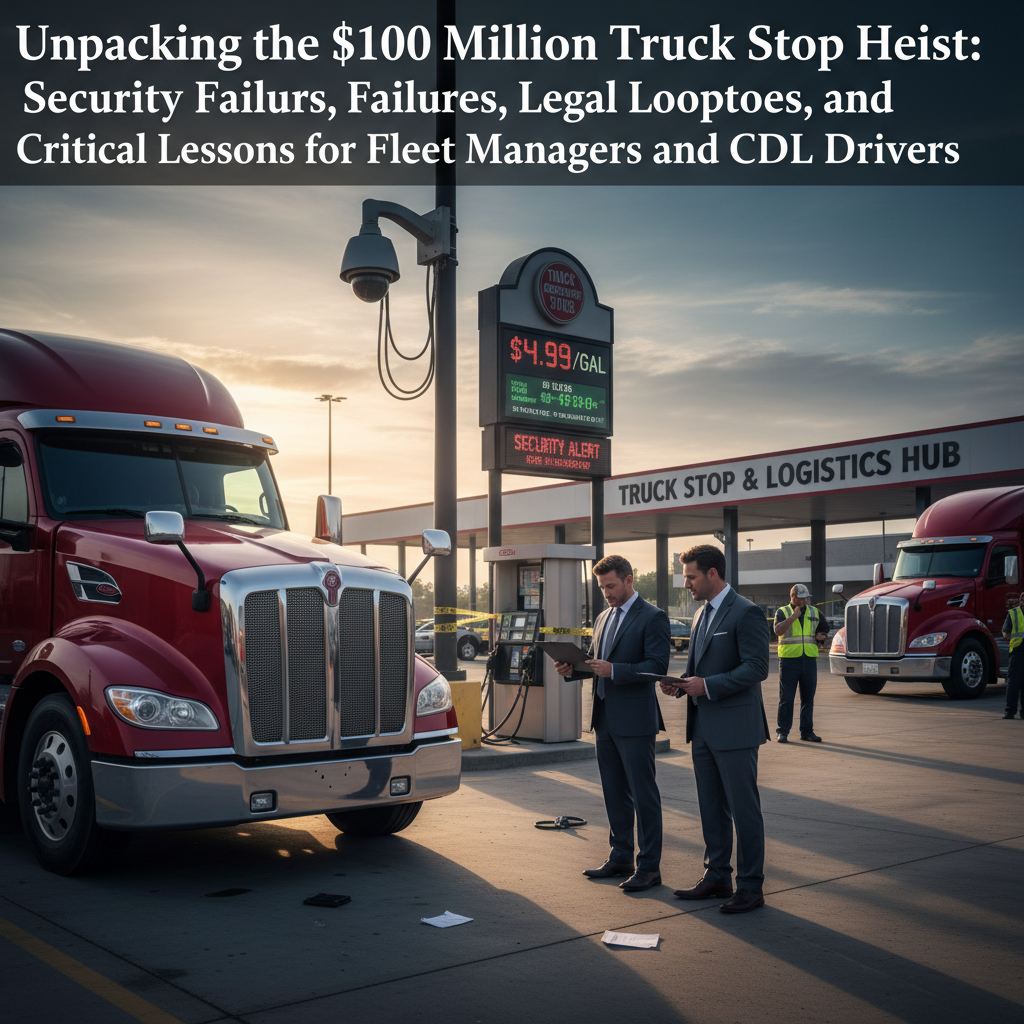
The trucking industry is the backbone of the nation's economy, moving trillions of dollars worth of goods annually. While most freight is standard dry van or refrigerated cargo, a significant segment involves high-value, high-security shipments like precious metals, currency, and jewelry. The infamous 2022 jewelry heist, where criminals targeted a Brinks tractor-trailer at a Flying J truck stop in Los Angeles, serves as a stark, multi-layered cautionary tale for every CDL driver and fleet manager responsible for securing loads.
This incident, which saw an estimated $100 million in gold, diamonds, and luxury watches stolen, recently took a surprising turn in the legal system. The prosecution of the seven men charged in the massive theft has been significantly complicated, if not temporarily halted, after one of the key defendants was deported, raising serious questions about judicial oversight, immigration procedures, and the vulnerability of high-value transport operations.
The Anatomy of a High-Value Target: What Happened at the Truck Stop?
The 2022 robbery was not a random smash-and-grab; it was a sophisticated, well-executed operation. The Brinks truck was reportedly transporting goods from a major jewelry show. The thieves allegedly began tailing the vehicle outside the show, demonstrating pre-meditation and detailed surveillance. The critical failure point, however, occurred when the driver parked the tractor-trailer at the Flying J truck stop and left the vehicle unguarded.
For professional CDL drivers, especially those hauling sensitive freight, the location and security posture during layovers are paramount. Truck stops, while necessary for rest and refueling, are known hotspots for cargo theft. The sheer value of the cargo—$100 million—makes the decision to leave the trailer unattended, even briefly, an extraordinary lapse in security protocol. This incident underscores a fundamental rule in high-value transport: the load is never truly secure unless it is moving or locked down in a certified, high-security facility.
The Legal Fallout and the Deportation Twist
Seven individuals were charged in connection with the crime. One of the defendants, Jeson Nelon Presilla Flores, faced serious federal charges, including conspiracy to commit theft from interstate and foreign shipment. He had initially pleaded not guilty and was facing up to 15 years in prison.
The legal proceedings hit a major roadblock when Flores, who had been in ICE custody since late 2025, chose to be deported to Ecuador. By assenting to deportation, he effectively avoided trial and further prosecution in the United States for the massive jewelry heist, unless he chooses to return. This decision blindsided prosecutors and the victims.
Prosecutors expressed frustration, noting that the deportation provided the defendant with an "unwitting benefit," allowing him to escape potential conviction and sentencing. The victims—the jewelry companies who lost their life's work—were left without closure or a verdict. An attorney representing some of the jewelers highlighted that this outcome exposes a significant "gap in the system" regarding how federal criminal cases intersect with immigration enforcement and detention policies.
Adding to the confusion, the Assistant Attorney General stated that the court and prosecutors were unaware of any immigration detainer on Flores when he was initially released on bail. While prosecutors agreed to bail for the lawful permanent resident, they had "no role in ICE’s decisions," nor were they aware of the defendant's decision to assent to deportation beforehand. This complex interplay between federal criminal court and immigration enforcement illustrates how procedural gaps can inadvertently derail major criminal prosecutions, impacting justice for victims and undermining efforts to combat organized cargo theft rings.
Critical Security Takeaways for Fleet Managers
For fleet managers overseeing high-value transport operations, this case provides a harsh lesson in risk mitigation and driver training. The focus must be on eliminating opportunities for theft, particularly during vulnerable periods like mandated rest breaks and fueling stops.
1. Mandate Secure Parking Protocols:
Fleet policies must strictly define acceptable parking locations for high-value loads. Truck stops, especially those lacking dedicated, monitored security, should be avoided entirely. Managers should utilize secure yards, drop lots with high fences, CCTV monitoring, and armed guards, or utilize facilities certified by organizations like the Transported Asset Protection Association (TAPA).
2. Implement Team Driving for Continuous Movement:
For extremely high-value shipments, team driving is often the only viable solution. This ensures that the vehicle is almost constantly in motion, significantly reducing the window of opportunity for surveillance and theft. If a stop is absolutely necessary, one driver must remain awake and vigilant inside the cab while the other rests.
3. Enhance Technology and Monitoring:
Invest in advanced GPS tracking systems that include geofencing capabilities and immediate alerts for unauthorized stops or deviations from planned routes. High-security trailers should be equipped with multiple layers of physical security, including hardened padlocks, kingpin locks, and covert tracking devices hidden within the cargo itself. Consider remote disabling capabilities in case of theft.
4. Conduct Comprehensive Background Checks and Training:
Drivers handling high-value freight must undergo rigorous background checks beyond standard CDL requirements. Training should emphasize situational awareness, recognizing surveillance (like being followed from the pickup point), and strict adherence to security protocols regarding unattended vehicles. Drivers must understand that violating these protocols can lead to immediate termination and potentially jeopardize the entire company's security standing.
Practical Advice for CDL Drivers Hauling Valuable Freight
For the professional truck driver, personal vigilance is the most effective defense against cargo theft. The criminals who targeted the Brinks truck were clearly tracking the movement, waiting for the moment of vulnerability.
1. Never Leave the Vehicle Unattended:
If you are hauling a high-value load, the trailer should never be left alone. If you need to use the restroom, refuel, or grab food, utilize facilities that allow you to keep the truck within immediate sight, or ideally, use a team driver system. If you must stop alone, minimize the time spent outside the cab to mere minutes.
2. Vary Your Routine and Routes:
Avoid predictable patterns. If you frequently haul the same route, vary your stop times, fueling locations, and rest areas. Predictability is a thief's best friend. If you suspect you are being followed, immediately contact law enforcement and your fleet manager, and drive to a well-lit, populated area, like a police station or a busy, highly visible commercial zone.
3. Inspect Seals and Locks Religiously:
Before departing and after every stop, physically inspect the trailer seals and locks. Thieves often use sophisticated methods to tamper with or replace seals to conceal their entry. If a seal looks suspicious, document it immediately and do not proceed until the issue is resolved with your dispatcher.
4. Secure the Cab:
Even if you are sleeping in the sleeper berth, ensure the cab doors are locked and secured. Utilize steering wheel locks or other anti-theft devices to deter opportunistic thieves who might attempt to steal the entire tractor-trailer unit.
The Broader Impact on the Trucking Industry
The $100 million heist and the subsequent legal complications highlight the persistent threat of organized cargo theft. When such massive losses occur, the costs are ultimately borne by the insurance industry, shippers, and eventually, consumers. Insurance premiums rise, security requirements become stricter, and the reputation of the trucking sector suffers.
Furthermore, the legal loophole exploited by the defendant's deportation emphasizes the need for better communication and coordination between federal law enforcement agencies (like the FBI and U.S. Attorneys) and immigration enforcement (ICE). When a defendant in a major federal theft case can simply choose to leave the country and avoid facing justice, it emboldens criminal enterprises and undermines the efforts of law enforcement to dismantle these theft rings.
Fleet managers must view this incident not as an isolated event involving a competitor, but as a critical data point in risk management. The security failures—the unattended truck at a public location—are replicable vulnerabilities in any fleet operation. By adopting the highest standards of security protocol, investing in driver training, and utilizing advanced technology, the industry can collectively reduce its exposure to sophisticated cargo theft operations and ensure that valuable freight reaches its destination securely. The price of vigilance is small compared to the cost of a $100 million mistake.
Helpful Resources for CDL Drivers
Comments (0)
Sign in to join the conversation
Sign In to CommentNo comments yet. Be the first to share your thoughts!
Explore More
Driver Resources
Educational guides on CDL licensing, salary expectations, and route planning tips.
Browse CDL Jobs
Find your next driving opportunity. Search by location, route type, and CDL class.
CDL Salary Guide
Understand how pay varies by experience, route type, and location in the trucking industry.