
Unpacking the Diesel Dilemma: How Fuel Prices Truly Impact Truckload Rates and Your Bottom Line
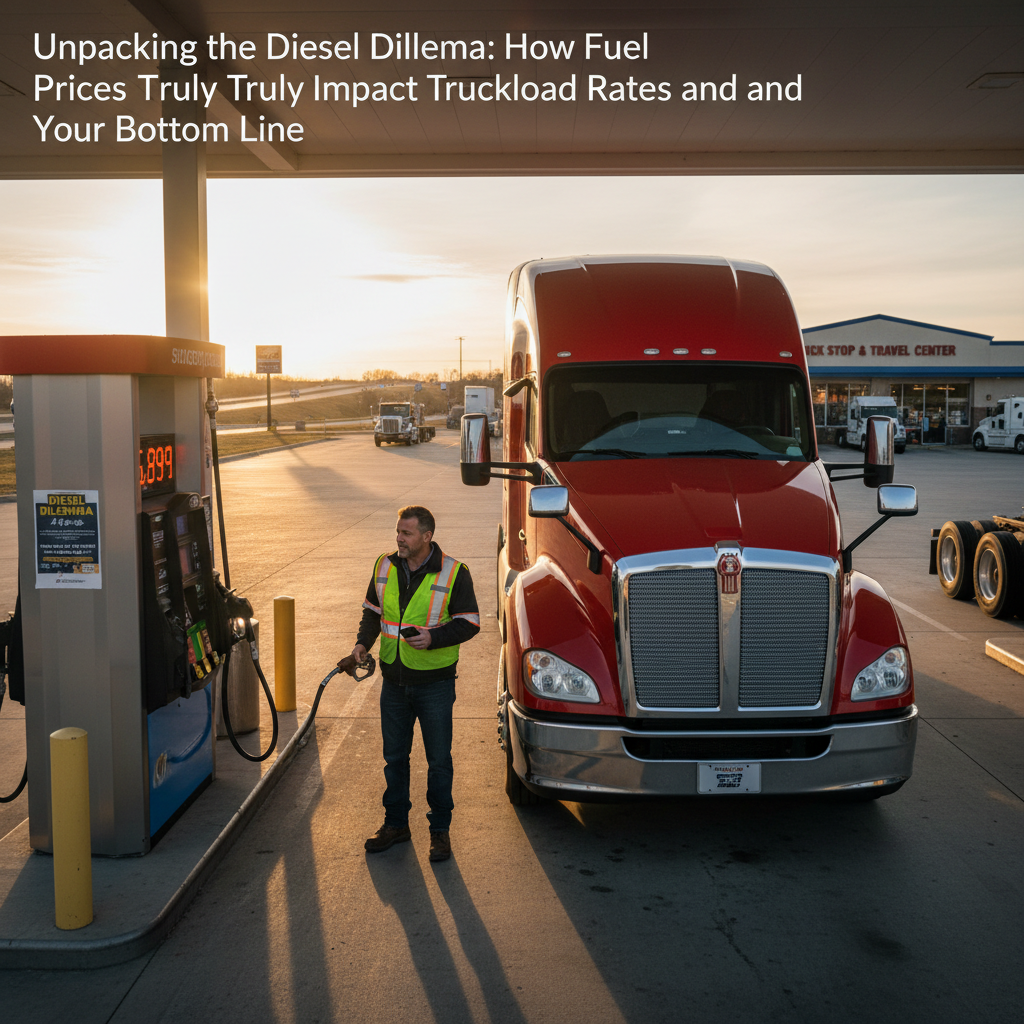
For every CDL truck driver and fleet manager, the price at the pump is a daily reality that dictates a significant portion of operating costs. Diesel fuel, the lifeblood of the trucking industry, often feels like the primary lever controlling truckload rates. When fuel prices spike, the immediate assumption is that freight rates must follow suit, allowing carriers to cover their increased expenses. However, the relationship between diesel prices and truckload rates is far more nuanced and complex than a simple direct correlation, influenced by a myriad of market forces that every professional in the industry needs to understand.
This comprehensive guide will delve into the intricate dynamics at play, exploring how fuel costs are factored into both contract and spot markets, the role of supply and demand, and the broader economic indicators that ultimately determine a carrier's ability to pass on rising expenses. We'll provide actionable insights for owner-operators, company drivers, and fleet managers to navigate these fluctuations, optimize their operations, and protect their profitability in an ever-changing landscape.
The Direct Cost: Fuel's Significant Share of Operating Expenses
There's no denying that fuel constitutes a substantial portion of a trucking operation's budget. Historically, and currently, it ranks as one of the top two or three largest expenses for any trucking company, often competing with driver wages for the top spot. While the exact percentage can fluctuate based on market conditions, equipment efficiency, and operational strategies, it typically hovers around 20-30% of total operating costs. For instance, data from the American Transportation Research Institute (ATRI) has shown fuel costs ranging from 21% to 28% of total operating costs in recent years. This means that a significant swing in diesel prices can have an immediate and dramatic impact on a carrier's profitability.
Consider an owner-operator running 100,000 miles annually, averaging 6 miles per gallon. If diesel prices increase by just $0.50 per gallon, that's an additional $8,333 in annual fuel expenses. For a fleet of 50 trucks, that same increase translates to over $415,000 in added costs. These figures underscore why fuel price volatility is a constant concern and a critical factor in financial planning for every trucking business, regardless of size. Understanding this baseline impact is the first step in appreciating the larger market dynamics.
Dissecting the Correlation: Why It's Not Always a Straight Line
While intuition suggests a strong positive correlation between diesel prices and truckload rates – meaning they should move in the same direction – real-world data often tells a more complex story. For example, recent periods have shown a fairly strong positive correlation, where a rise in diesel prices coincided with an increase in average spot rates. This makes sense from a cost-recovery perspective. However, there have also been times, such as in early 2022, where this correlation was inverted, with fuel prices soaring while spot rates declined. This counterintuitive movement highlights that other, more powerful market forces can override the direct cost impact of fuel.
The common statistical adage, "correlation does not imply causation," is particularly relevant here. While fuel is a major cost component, its price alone does not unilaterally dictate the market value of trucking services. The market's overall supply and demand equilibrium for freight capacity is often the dominant factor. When demand for freight is high and capacity is tight, carriers have greater leverage to pass on increased costs, including fuel. Conversely, when freight demand softens and capacity is abundant, carriers face intense competition, making it difficult to raise rates, even in the face of rising fuel expenses. This is where the concept of "market value" truly comes into play: what the market is willing to bear at a given moment.
Contract vs. Spot Market: Different Approaches to Fuel Cost Recovery
The way fuel costs are managed and recovered differs significantly between the contract and spot markets, a distinction crucial for both drivers and fleet managers.
Contract Market: Fuel Surcharges as a Buffer
In the contract market, where long-term agreements are established between shippers and carriers, fuel costs are typically handled through a separate mechanism: the fuel surcharge. These surcharges are designed to insulate carriers from the volatility of diesel prices and ensure a fair recovery of fuel expenses. A fuel surcharge is usually tied to a publicly available index, such as the weekly U.S. Department of Energy (DOE) national average diesel price. As the DOE average fluctuates, the fuel surcharge component of the freight rate adjusts accordingly.
For example, a contract might specify a base rate plus a fuel surcharge that kicks in when the DOE national average exceeds a certain threshold, or it might be a sliding scale where the surcharge percentage increases with every increment in the DOE price. This system ensures that short-term fuel price changes do not directly impact the agreed-upon base contract rate. Instead, the variable fuel cost is passed along separately and transparently. This provides predictability for both shippers and carriers, allowing carriers to budget more effectively and shippers to understand the variable component of their transportation costs. Fleet managers often negotiate these surcharge tables carefully, ensuring they accurately reflect their operational fuel efficiency and regional pricing variations.
Spot Market: All-Inclusive Pricing and Market Dynamics
In contrast, the spot market operates on an all-inclusive pricing model. When a load is posted on a load board or quoted for immediate transport, the rate provided is typically a single, comprehensive figure. There are no separate line items for fuel surcharges; the quoted price is simply what the market will bear for that particular lane, at that specific time, considering all current conditions. This includes the prevailing diesel price, but also the availability of trucks, the urgency of the shipment, the type of freight, and the overall supply-demand balance.
For owner-operators and carriers heavily reliant on the spot market, this means that rising fuel prices don't automatically translate into higher rates. Instead, the market's willingness to pay for capacity becomes the ultimate determinant. If there's an abundance of available trucks, even with high fuel prices, competition can drive spot rates down, forcing carriers to absorb a larger portion of the fuel cost or decline loads that don't meet their profitability thresholds. Conversely, in periods of tight capacity, spot rates can surge, allowing carriers to more easily cover their fuel expenses and achieve higher margins. This dynamic requires drivers and fleet managers to be acutely aware of real-time market conditions and to make swift, informed decisions on which loads to accept.
The Overarching Influence of Supply and Demand
Beyond fuel prices, the fundamental economic principles of supply and demand are the most powerful drivers of truckload rates. The market value of trucking services is ultimately determined by the balance between available freight (demand) and available trucks (supply).
Demand-Side Factors
Freight demand is influenced by a multitude of economic indicators:
- Consumer Spending: A robust economy with high consumer confidence typically translates to increased purchases of goods, which then need to be transported. Conversely, economic slowdowns or shifts in consumer behavior (e.g., from goods to services) can reduce freight volumes.
- Industrial Production: Manufacturing output, construction activity, and agricultural harvests all generate freight. Strong industrial sectors drive demand for raw materials and finished goods transportation.
- Inventory Levels: When businesses are building up inventories, freight demand increases. When they are drawing down inventories, demand can temporarily decrease.
- E-commerce Growth: The continuous growth of online retail has created consistent demand for last-mile and regional freight, impacting capacity needs across various segments.
- Seasonal Fluctuations: Peak seasons like holiday shopping, harvest seasons, and back-to-school periods predictably increase freight demand, often leading to higher rates.
Supply-Side Factors
Trucking capacity, or supply, is equally dynamic and influenced by:
- Driver Availability: The ongoing driver shortage is a perennial concern. A scarcity of qualified CDL drivers directly limits the number of trucks that can be on the road, tightening capacity and pushing rates up. Conversely, an influx of new drivers could ease capacity constraints.
- Equipment Availability: The number of active trucks, trailers, and their operational status (maintenance, breakdowns) impacts available capacity. New truck orders, manufacturing delays, and equipment utilization rates all play a role.
- New Carrier Entrants/Exits: Periods of high profitability can attract new carriers to the market, increasing supply. Conversely, sustained periods of low rates and high costs can force carriers out of business, reducing supply.
- Regulatory Changes: New regulations regarding hours of service, emissions, or equipment standards can impact operational efficiency and capacity utilization.
- Weather and Disruptions: Severe weather events, natural disasters, or infrastructure issues (e.g., bridge closures) can temporarily reduce effective capacity in affected regions, causing localized rate spikes.
The 2022 Anomaly: A Case Study in Market Imbalance
The events of 2022 provide a compelling illustration of how market forces can overshadow fuel price movements. In early 2022, diesel prices surged dramatically, yet spot truckload rates began to decline. This seemingly contradictory trend can be explained by a severe imbalance in supply and demand.
During the pandemic-driven boom of 2020-2021, freight demand reached unprecedented levels, fueled by massive consumer spending on goods and supply chain disruptions. This led to record-high truckload rates and significant profitability for carriers. In response to these favorable conditions, a massive influx of new motor carriers entered the market. Data shows that over 131,000 new operating authorities were created between June 2020 and October 2022, a staggering number compared to the previous decade.
However, by early 2022, the market began to shift. Consumer spending started to normalize, moving away from goods and back towards services as pandemic-era restrictions eased. Shippers, who had over-ordered to mitigate supply chain uncertainties, found themselves with bloated inventories. As a result, freight demand began to fall rapidly. The market was suddenly flooded with capacity from the newly established carriers, coinciding with a sharp decline in available freight. This created a perfect storm: an oversupply of trucks chasing dwindling loads. In such a competitive environment, even with soaring diesel prices, carriers were unable to command higher rates, as the market simply wouldn't bear it. The value of their service had diminished due to the imbalance, leaving many struggling to cover their rising fuel costs.
Actionable Strategies for Drivers and Fleet Managers
Navigating the complex interplay of fuel prices and truckload rates requires proactive strategies and a keen understanding of market dynamics. Here are some actionable takeaways:
For CDL Truck Drivers (Especially Owner-Operators):
- Monitor Fuel Prices Relentlessly: Use apps and loyalty programs to find the best fuel prices along your route. Even a few cents per gallon can add up significantly over time. Consider fuel cards that offer discounts.
- Optimize Fuel Efficiency: Practice defensive driving, maintain consistent speeds, avoid excessive idling, and ensure your truck is properly maintained (tire pressure, engine tuning). Invest in aerodynamic add-ons if feasible. Every MPG improvement directly impacts your bottom line.
- Understand Fuel Surcharges: If you're working with brokers or directly with shippers on contract, understand how their fuel surcharge is calculated. Ensure it adequately covers your costs. Don't assume it's always fair; verify the index used and the calculation method.
- Know Your All-In Costs: For spot market loads, calculate your true cost per mile, including fuel, before accepting a load. Don't chase cheap freight just to keep the wheels turning if it means losing money after fuel. Utilize tools that provide real-time rate data to make informed decisions.
- Leverage Technology: GPS and routing software can help you plan the most fuel-efficient routes, avoiding unnecessary mileage and traffic delays.
- Diversify Your Freight: Don't put all your eggs in one basket. Explore different lanes and freight types to reduce reliance on a single market segment that might be experiencing a downturn.
For Fleet Managers:
- Implement Robust Fuel Management Programs: This includes bulk purchasing, negotiating favorable terms with fuel suppliers, utilizing fuel cards with discounts, and implementing strict policies for driver fueling behavior.
- Invest in Fuel-Efficient Equipment: When purchasing new trucks, prioritize models with advanced aerodynamics, efficient powertrains, and telematics systems that provide data on fuel consumption. Consider alternative fuels or electric vehicles for suitable applications as technology evolves.
- Negotiate Smart Contracts: Ensure your contract negotiations include robust and transparent fuel surcharge mechanisms that accurately reflect your operational costs and protect your margins during periods of high fuel volatility. Regularly review and update these clauses.
- Utilize Data Analytics: Leverage telematics and freight market intelligence platforms (like SONAR) to track fuel consumption, monitor market rates, and analyze trends. This data is invaluable for making strategic decisions on pricing, lane selection, and capacity deployment.
- Optimize Network and Routing: Continuously analyze your freight network to identify opportunities for backhauls, reduced deadhead miles, and optimized routing. Efficient planning directly translates to lower fuel consumption.
- Driver Training and Incentives: Train drivers on fuel-efficient driving techniques and consider incentive programs that reward them for achieving fuel economy targets. Engaged drivers are a key asset in managing fuel costs.
- Maintain a Flexible Capacity Strategy: Be prepared to adjust your fleet size or operational footprint in response to significant shifts in freight demand or supply. This might involve scaling up or down through owner-operators or temporary leases.
- Educate Shippers: Foster open communication with your shipping partners. Help them understand the impact of fuel costs and market dynamics on your operations, building stronger, more collaborative relationships.
The Road Ahead: Staying Agile in a Volatile Market
The trucking industry will always be susceptible to the fluctuations of diesel prices and the broader economic climate. While fuel is an undeniable and significant cost, its relationship with truckload rates is mediated by the powerful forces of supply and demand for freight capacity. A period of high fuel prices doesn't automatically guarantee higher rates if there's an oversupply of trucks, just as low fuel prices won't necessarily depress rates if capacity is extremely tight.
For CDL drivers and fleet managers, success hinges on a comprehensive understanding of these dynamics. It requires a commitment to operational efficiency, strategic financial planning, and a continuous pulse on market conditions. By focusing on smart fuel management, optimizing operations, and making informed decisions based on real-time market intelligence, trucking professionals can better navigate the diesel dilemma and ensure the sustained profitability and resilience of their businesses, no matter which way the fuel pump or the freight market turns.
Helpful Resources for CDL Drivers
Comments (0)
Sign in to join the conversation
Sign In to CommentNo comments yet. Be the first to share your thoughts!
Explore More
Driver Resources
Educational guides on CDL licensing, salary expectations, and route planning tips.
Browse CDL Jobs
Find your next driving opportunity. Search by location, route type, and CDL class.
CDL Salary Guide
Understand how pay varies by experience, route type, and location in the trucking industry.