
Unpacking the 'No-Hire' Allegations: A Deep Dive for CDL Drivers and Fleet Managers on the Quickway Lawsuit
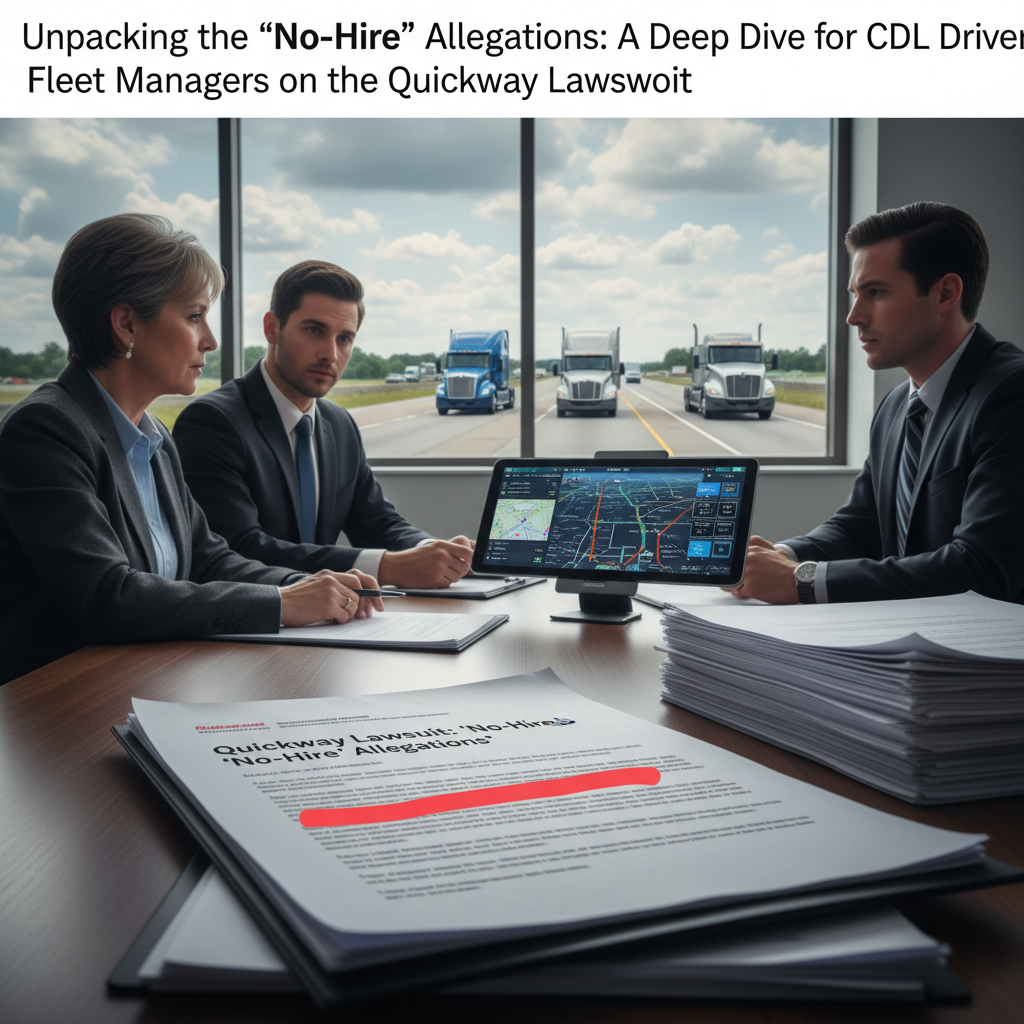
The trucking industry, a bedrock of the national economy, is no stranger to complex legal and labor issues. From regulatory compliance to driver retention, the challenges are myriad. Recently, a significant lawsuit has emerged that casts a spotlight on alleged hiring practices and potential anti-competitive behavior, directly impacting the livelihoods of commercial truck drivers and raising critical questions for fleet managers. This case, involving major players like The Kroger Co., Knight-Swift Transportation, U.S. Xpress, and Werner Enterprises, centers on allegations that former drivers of the now-defunct Quickway Transportation were systematically blocked from employment due to an alleged 'gentlemen's agreement' orchestrated by the shipper. For CDL professionals and those managing trucking operations, understanding the nuances of this case is crucial, as it touches upon driver rights, employment mobility, and the ethical responsibilities within the supply chain.
The Core Allegations: A 'No-Hire' Pact?
The lawsuit, filed in the U.S. District Court for the Southern District of Ohio, brings forth serious accusations from three former Quickway drivers: Dan Cheatham, Brian Kuhn, and Eric Cabler. These drivers, seeking class-action certification, claim that after Quickway Transportation ceased operations, they, along with potentially over 100 other former Quickway drivers, were effectively blackballed from securing new employment with the aforementioned carriers. The crux of their argument is that Kroger, a dominant force in the grocery retail sector, allegedly instructed Knight-Swift (including its Swift Transportation Services and U.S. Xpress units) and Werner Enterprises not to hire any former Quickway drivers. The drivers assert that representatives from these carriers explicitly acknowledged these instructions, even referring to them as a 'gentlemen's agreement' that 'came from the top.'
This alleged directive, according to the plaintiffs, stemmed from Quickway's status as a unionized carrier. While the other defendant carriers are largely non-unionized, the lawsuit implies that Kroger's motivation was to avoid dealing with drivers who had a history of union affiliation. This raises profound questions about fair hiring practices, the right to association, and the potential for large shippers to exert undue influence over carrier employment decisions. For CDL drivers, this scenario paints a concerning picture where their past employment, particularly with a unionized company, could become a barrier to future opportunities, regardless of their qualifications or experience. For fleet managers, it highlights the intricate web of relationships between shippers and carriers and the potential for external pressures to impact internal hiring policies.
The Sherman Act and Antitrust Implications
Central to the legal arguments in this lawsuit are allegations of violations of the Sherman Act, a foundational piece of U.S. antitrust legislation. The Sherman Act prohibits agreements that restrain trade or commerce. In this context, the plaintiffs argue that an alleged 'overarching agreement' among Kroger, Knight-Swift, U.S. Xpress, and Werner Enterprises to collectively refuse to hire former Quickway drivers constitutes an illegal restraint of trade. Such a pact, if proven, would be a direct attack on the competitive labor market, preventing drivers from freely seeking employment and potentially suppressing wages and earning potential.
For CDL drivers, the implications of such an antitrust violation are significant. It suggests that their labor, a critical asset in the supply chain, might have been devalued or restricted by collusive practices. This goes beyond individual discrimination; it points to a systemic issue that could affect an entire segment of the workforce. Drivers rely on a competitive job market to negotiate fair wages, benefits, and working conditions. If large companies can conspire to limit employment opportunities for specific groups of drivers, it undermines the very principles of a free market and driver mobility.
Fleet managers must also pay close attention to the antitrust aspects. Engaging in or being perceived as engaging in anti-competitive hiring practices carries severe legal risks, including substantial fines and reputational damage. This case serves as a stark reminder that even informal agreements or understandings between companies regarding labor can fall under the scrutiny of antitrust laws. It underscores the importance of independent hiring decisions based solely on merit and business needs, free from external pressures that could be construed as collusive.
Impact on Driver Mobility and Career Progression
One of the most immediate and tangible impacts of the alleged 'no-hire' policy is on driver mobility and career progression. The plaintiffs claim they 'met all necessary qualifications and, in fact, had been performing identical or near identical jobs for Quickway.' Despite their experience and suitability, they were allegedly denied employment. This scenario is deeply troubling for CDL drivers who invest significant time, effort, and resources into obtaining and maintaining their licenses and skills.
Imagine a highly experienced driver, with a clean safety record and years of dedicated service, suddenly finding themselves unable to secure a new position simply because of their previous employer's status or affiliations. This can lead to prolonged unemployment, financial hardship, and a sense of injustice. The trucking industry already faces challenges with driver retention and recruitment, and practices that unfairly restrict employment opportunities only exacerbate these issues. Drivers need to feel confident that their skills and experience are valued and that their career paths are not arbitrarily blocked by external factors.
For fleet managers, this case highlights the importance of fair and transparent hiring processes. Restricting the talent pool based on factors unrelated to a driver's competence or safety record can be detrimental to a fleet's operational efficiency and reputation. It can also lead to a perception of unfairness that discourages top talent from applying. In a competitive labor market, fleets that prioritize merit-based hiring and offer clear pathways for career growth are more likely to attract and retain the best CDL professionals.
The Role of Shippers in Carrier Employment Practices
This lawsuit brings to the forefront the often-understated influence that large shippers like Kroger can wield over their carrier partners. While shippers are customers of trucking companies, the alleged 'gentlemen's agreement' suggests a level of control that extends beyond typical contractual relationships into the realm of human resources and employment policy. This raises ethical questions about the boundaries of shipper influence and the responsibilities that come with such power.
For CDL drivers, understanding this dynamic is crucial. It means that their employment prospects might not solely depend on their qualifications or the hiring policies of the carriers they apply to, but also on the preferences and directives of the shippers those carriers serve. This creates an additional layer of complexity and potential vulnerability for drivers. It underscores the need for greater transparency and accountability in the relationships between shippers and carriers, particularly when those relationships impact driver livelihoods.
Fleet managers must critically evaluate their relationships with major shippers. While maintaining strong client relationships is vital for business success, it should not come at the expense of ethical hiring practices or compliance with labor and antitrust laws. Fleet managers need to be prepared to push back against any demands from shippers that could compromise their legal standing or their commitment to fair employment. Establishing clear boundaries and understanding the legal implications of shipper requests is paramount to protecting both the company and its drivers.
Unionization and its Perceived Impact
The lawsuit explicitly links the alleged 'no-hire' policy to the fact that Quickway drivers were unionized. This aspect of the case is particularly sensitive and has broad implications for labor relations within the trucking industry. Unionization efforts, while historically challenging in the fragmented trucking sector, continue to emerge as drivers seek better wages, benefits, and working conditions. If the allegations are true, it suggests that some powerful entities might be actively working to circumvent or penalize drivers associated with unions.
For CDL drivers, this aspect of the lawsuit reinforces the ongoing struggle for collective bargaining rights and fair treatment. It highlights the potential for employers and shippers to view union affiliation as a negative factor, even if it is a legally protected right. This can create an environment of fear or discouragement for drivers considering union membership, undermining their ability to advocate for their interests collectively. It's a reminder that the fight for fair labor practices is continuous and often involves navigating complex legal and corporate landscapes.
Fleet managers, regardless of their stance on unionization, must be acutely aware of labor laws and the rights of their employees. Actions that are perceived as retaliatory or discriminatory against union members or those attempting to organize can lead to significant legal challenges, fines, and negative publicity. This case underscores the importance of treating all employees fairly, irrespective of their union status, and ensuring that hiring decisions are made on objective, job-related criteria. Understanding the legal protections afforded to unionized workers and those engaging in protected concerted activities is essential for any fleet operating in today's regulatory environment.
Actionable Takeaways for CDL Drivers
- Document Everything: In an industry where disputes can arise, maintaining meticulous records is crucial. Keep copies of all job applications, rejection letters, communications with recruiters or hiring managers, and any notes from conversations where hiring policies were discussed. This documentation can be invaluable if you ever need to challenge a hiring decision or pursue legal action.
- Understand Your Rights: Familiarize yourself with labor laws, including those related to fair employment practices, anti-discrimination, and antitrust. Knowing your rights empowers you to identify potential violations and seek appropriate recourse. Organizations like the Department of Labor or legal aid services can provide guidance.
- Network Strategically: While this case highlights potential external barriers, networking within the trucking community remains vital. Connect with other drivers, industry professionals, and recruiters. Sometimes, personal referrals or insights from trusted contacts can open doors that might otherwise seem closed.
- Maintain a Strong Professional Record: Focus on building an impeccable driving record, maintaining your CDL, and pursuing any relevant certifications or training. A strong professional profile makes you a more attractive candidate and can help counter any unfair biases.
- Seek Legal Counsel if Suspect Unfair Practices: If you believe you have been unfairly denied employment due to reasons unrelated to your qualifications or performance, do not hesitate to consult with an attorney specializing in employment law. They can assess your situation and advise on the best course of action.
Actionable Takeaways for Fleet Managers
- Review and Reinforce Hiring Policies: Ensure your company's hiring policies are clear, objective, and consistently applied. They should be based solely on qualifications, experience, and safety records, free from any external influence that could be deemed anti-competitive or discriminatory. Regularly train your HR and hiring teams on these policies.
- Scrutinize Shipper Demands: Be cautious of any requests or directives from shippers that could impact your independent hiring decisions. Understand the legal boundaries of shipper-carrier relationships. If a shipper suggests avoiding certain groups of drivers, seek legal advice immediately to ensure compliance with antitrust and labor laws.
- Promote a Culture of Fair Employment: Foster an internal culture that values diversity, inclusion, and fair treatment for all employees. This not only protects your company legally but also enhances your reputation as an employer of choice, helping you attract and retain top talent.
- Stay Informed on Labor and Antitrust Laws: The legal landscape is constantly evolving. Fleet managers must stay updated on relevant labor laws, antitrust regulations, and significant court cases that could impact their operations. Membership in industry associations can provide valuable resources and updates.
- Document All Communications: Maintain thorough records of all communications, especially those concerning hiring decisions and interactions with shippers regarding employment practices. This documentation can be critical in defending against potential lawsuits or regulatory inquiries.
The Road Ahead: Navigating a Complex Landscape
The Quickway lawsuit serves as a powerful reminder of the intricate and often challenging environment in which the trucking industry operates. For CDL drivers, it underscores the need for vigilance, self-advocacy, and a deep understanding of their rights. For fleet managers, it highlights the critical importance of ethical leadership, legal compliance, and the unwavering commitment to fair employment practices. The outcome of this case could set significant precedents for how shippers interact with carriers and how labor is treated within the supply chain.
As the legal proceedings unfold, all stakeholders in the trucking industry will be watching closely. The pursuit of justice for the former Quickway drivers is not just about individual livelihoods; it's about upholding the principles of fair competition, protecting worker rights, and ensuring the integrity of an industry that literally drives the nation forward. By staying informed and proactive, both CDL drivers and fleet managers can better navigate these complexities and contribute to a more just and equitable future for all involved in commercial transportation.
Helpful Resources for CDL Drivers
Comments (0)
Sign in to join the conversation
Sign In to CommentNo comments yet. Be the first to share your thoughts!
Explore More
Driver Resources
Educational guides on CDL licensing, salary expectations, and route planning tips.
Browse CDL Jobs
Find your next driving opportunity. Search by location, route type, and CDL class.
CDL Salary Guide
Understand how pay varies by experience, route type, and location in the trucking industry.