
Unpacking the Port of Savannah Fraud: Lessons for Truckers and Fleet Managers on Supply Chain Security
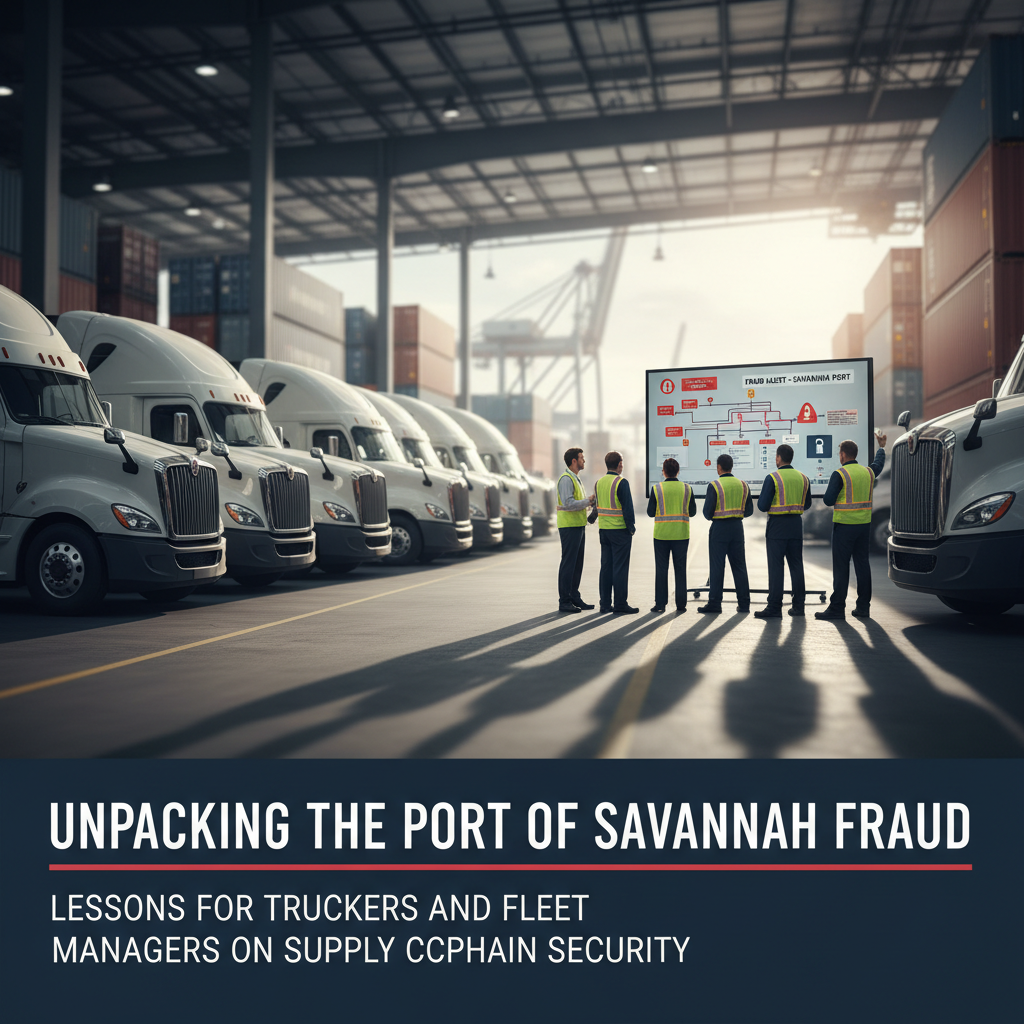
The intricate web of the modern supply chain is a marvel of logistics, connecting producers to consumers across vast distances. At its heart, the trucking industry serves as the lifeblood, ensuring goods move efficiently from ports to warehouses and ultimately to their final destinations. However, this complex system, while robust, is not immune to exploitation. A recent case at the bustling Port of Savannah has cast a spotlight on vulnerabilities within transportation operations, revealing a sophisticated scheme that defrauded a national logistics company of over $821,000. This incident serves as a critical wake-up call for every CDL truck driver, owner-operator, and fleet manager, underscoring the paramount importance of vigilance, integrity, and robust security protocols in safeguarding our industry.
The Anatomy of a Deception: A Deep Dive into the Savannah Fraud Case
In a development that has sent ripples through the trucking and logistics sectors, two individuals, Philip Charles Smith and Antonio J. Evans Sr., were recently sentenced to prison for their involvement in a substantial wire fraud scheme. The plot, which unfolded over three years between July 2021 and August 2024, meticulously targeted a national logistics and transportation company operating at the Port of Savannah, a critical gateway for international trade on the East Coast. Smith, leveraging his position within the logistics company, was entrusted with the significant responsibility of awarding contracts to third-party carriers for freight movement from the port. This role, which demands utmost trust and discretion, became the pivot point for his illicit activities.
Authorities revealed that Smith systematically devised a scheme where he created fictitious freight-hauling jobs. These non-existent assignments were then 'awarded' to Evans, who, in turn, would receive payments from the unsuspecting logistics company for work that was never performed. The fraudulent payments totaled a staggering $821,899, money that was then partially funneled back to Smith, completing the cycle of deception. Both men ultimately pleaded guilty to wire fraud charges, leading to Smith's sentence of 27 months in prison and three years of supervised release, and Evans' sentence of 13 months in prison followed by three years of supervised release. Additionally, they were ordered to pay full restitution for the funds they stole. This case, investigated by the FBI, highlights a disturbing trend of internal exploitation that can severely impact the financial health and operational integrity of transportation businesses.
Why This Matters to Every CDL Driver and Fleet Manager
The immediate reaction to such news might be to view it as an isolated incident of corporate fraud, far removed from the daily grind of a truck driver or the strategic concerns of a fleet manager. However, this perspective would be a significant oversight. The implications of schemes like the one at the Port of Savannah extend far beyond the defrauded company's balance sheet. They touch upon the very fabric of trust within the supply chain, impact operational costs, and can even influence the availability and fairness of legitimate trucking opportunities.
For CDL drivers, especially owner-operators and those working for smaller carriers, such fraud can indirectly affect freight rates, contract availability, and the overall economic landscape. When a major logistics company incurs significant losses due to fraud, these costs are often absorbed or passed down, potentially leading to tighter margins for carriers, delayed payments, or increased scrutiny on legitimate invoices. Furthermore, the existence of 'fake' jobs can distort the market, making it harder for honest drivers and carriers to secure real, profitable loads. It also erodes confidence in the system, fostering an environment of suspicion that can complicate business relationships.
Fleet managers, on the other hand, bear the direct responsibility of ensuring their operations are efficient, profitable, and secure. This incident serves as a stark reminder that vulnerabilities can exist within their own partner networks or even within the systems of their clients. Understanding how such schemes operate is crucial for implementing preventative measures, safeguarding their company's assets, and protecting their drivers from inadvertently becoming entangled in or affected by fraudulent activities. The integrity of their supply chain partners directly impacts their own company's reputation and financial stability.
Understanding the Modus Operandi: How Such Schemes Take Root
The Savannah case provides a textbook example of how internal access and a lack of robust oversight can be exploited. Philip Smith's position as an employee responsible for awarding contracts was key. This role inherently involves a degree of trust and autonomy, which, when unchecked, becomes a dangerous vulnerability. The scheme relied on several critical elements:
- Insider Access and Authority: Smith's ability to create and assign freight jobs was central. Without this internal access, the scheme could not have been initiated. This highlights the risk associated with granting broad authority without commensurate checks and balances.
- Creation of Fictitious Work: The fraud wasn't about overbilling for existing work but inventing work entirely. This makes detection harder, as there's no tangible service or product to verify against the invoice.
- Collusion with an External Party: Evans' role was to act as the 'fake' third-party carrier, providing a seemingly legitimate entity for the fraudulent payments to flow through. This external component adds a layer of complexity and makes the scheme appear as a regular business transaction.
- Kickbacks and Personal Gain: The motivation was purely financial, with Evans kicking back a portion of the illicit gains to Smith. This classic fraud dynamic underscores the importance of monitoring financial transactions and relationships.
- Lack of Robust Verification: The logistics company unwittingly paid for work that didn’t exist, indicating a lapse in their verification processes for third-party carrier services and invoices.
Brad Snider, Senior Supervisory Resident Agent of FBI Georgia’s Savannah office, aptly stated, “Schemes like this exploit positions of trust and undermine the integrity of critical supply chain operations supporting the Port of Savannah.” This sentiment resonates deeply within the trucking industry, where trust is often the cornerstone of business relationships. When that trust is betrayed, the entire ecosystem suffers.
Proactive Measures for Fleet Managers: Building a Fortress Against Fraud
For fleet managers, the Savannah fraud case presents an invaluable opportunity to review and strengthen internal controls and partner vetting processes. Protecting your fleet and your business from similar threats requires a multi-faceted approach:
- Implement Strong Internal Controls and Segregation of Duties: No single employee should have complete control over the entire process of vendor selection, contract approval, and payment authorization. Separate these functions among different individuals or departments. For example, the person who approves a carrier should not be the same person who processes their invoices for payment.
- Robust Vendor Vetting and Due Diligence: Before onboarding any new third-party carrier or logistics partner, conduct thorough background checks. Verify their operating authority, insurance, safety record (CSA scores), and references. Look for red flags such as newly established companies with little operational history or those with unusual ownership structures.
- Automated Systems and Digital Tracking: Leverage transportation management systems (TMS) and other digital tools to track loads, verify deliveries, and process invoices. These systems can provide an auditable trail and flag discrepancies. GPS tracking, electronic logging devices (ELDs), and digital proof of delivery (POD) can help confirm that a load was actually moved.
- Regular Audits and Reconciliation: Conduct periodic, unannounced audits of your freight bills, carrier payments, and contract awards. Reconcile invoices against actual services rendered, cross-referencing with dispatch records, driver logs, and customer confirmations. Look for patterns of payments to specific carriers, especially if they seem disproportionate to the volume of work.
- Data Analytics for Anomaly Detection: Utilize data analytics tools to identify unusual patterns in spending, carrier performance, or payment requests. Sudden spikes in payments to a particular carrier, invoices for non-standard services, or frequent changes in payment instructions should trigger an investigation.
- Employee Training and Whistleblower Policies: Educate your team, from dispatchers to accounting staff, on common fraud schemes and the importance of reporting suspicious activities. Establish clear, anonymous channels for employees to report concerns without fear of retaliation. A strong ethical culture can be your first line of defense.
- Contractual Safeguards: Ensure your contracts with third-party carriers include clear terms regarding service delivery, invoicing procedures, and audit rights. Include clauses that allow for immediate termination and legal action in cases of fraud.
- Cybersecurity Measures: While this case was not a cyberattack, many fraud schemes now involve phishing or business email compromise (BEC) to manipulate payment instructions. Ensure your systems are protected, and employees are trained to recognize and report suspicious communications.
Actionable Advice for CDL Drivers: Your Role in Upholding Integrity
While drivers might not be directly involved in contract awarding, their vigilance is crucial. You are the eyes and ears on the ground, and your integrity is paramount. Here's how you can contribute to a more secure and honest industry:
- Verify Your Loads: Always ensure that the load you are assigned corresponds to the documentation provided. If something feels off – an unusual pickup location, a vague description of goods, or a lack of proper paperwork – question it. Report any discrepancies to your dispatcher or fleet manager immediately.
- Be Wary of Unsolicited Offers: If you are an owner-operator, be cautious of unsolicited, too-good-to-be-true load offers, especially from unknown brokers or companies. Always verify the legitimacy of the broker and the load before committing.
- Secure Your Documentation: Treat all load-related documents – bills of lading, proof of delivery, dispatch instructions – as critical. Ensure they are accurately completed and securely stored. These documents are vital for verifying legitimate work and disputing fraudulent claims.
- Report Suspicious Activities: If you encounter anything that seems fraudulent or highly irregular – whether it's an attempt to manipulate paperwork, an unusual request from a shipper or receiver, or pressure to cut corners – report it to your company or, if necessary, to law enforcement. Your honesty protects the entire industry.
- Understand Your Company's Policies: Familiarize yourself with your fleet's procedures for load assignments, invoicing, and reporting discrepancies. Knowing the proper channels and protocols can help you identify when something is amiss.
- Maintain Professionalism and Ethics: Uphold the highest standards of professionalism and ethics in all your interactions. Your reputation is your most valuable asset, and it contributes to the overall trustworthiness of the trucking profession.
The Broader Impact: Trust, Reputation, and the Future of Logistics
U.S. Attorney Heap's statement, “Private companies that serve the transportation needs for the Port of Savannah, like all companies, deserve to expect honesty and integrity from their employees and service providers,” encapsulates the core issue. Trust is the bedrock of commerce, especially in an industry as interconnected as trucking. When that trust is violated through fraud, the ripple effects can be profound.
Firstly, there's the financial loss, which can be substantial, as seen in the $821,899 in this case. Such losses can lead to increased operating costs, higher insurance premiums, and ultimately, higher prices for consumers. Secondly, there's the damage to reputation. A company that falls victim to fraud, even if internally, can face scrutiny from clients, partners, and the public, potentially impacting future business opportunities.
More broadly, these incidents can lead to increased regulatory oversight and more stringent compliance requirements, adding administrative burdens for all legitimate trucking businesses. The goal, however, is not to create an atmosphere of distrust but to foster an environment where robust security measures become standard practice, protecting both the companies and the dedicated individuals who keep the wheels of commerce turning.
Conclusion: A Call for Collective Vigilance
The Port of Savannah fraud case serves as a powerful reminder that vigilance against financial crime is a shared responsibility within the trucking industry. For fleet managers, it's a call to action to fortify internal controls, enhance vetting processes, and leverage technology to detect and prevent fraud. For CDL drivers, it's an affirmation of their critical role as frontline observers and guardians of integrity. By working together, embracing best practices, and maintaining an unwavering commitment to ethical conduct, the trucking industry can continue to thrive as a secure, reliable, and indispensable pillar of the global supply chain. The lessons learned from Savannah must translate into stronger defenses, ensuring that the trust placed in our industry is always honored and protected.
Helpful Resources for CDL Drivers
Comments (0)
Sign in to join the conversation
Sign In to CommentNo comments yet. Be the first to share your thoughts!
Explore More
Driver Resources
Educational guides on CDL licensing, salary expectations, and route planning tips.
Browse CDL Jobs
Find your next driving opportunity. Search by location, route type, and CDL class.
CDL Salary Guide
Understand how pay varies by experience, route type, and location in the trucking industry.