
Walmart's $330 Million Robotics Overhaul in Louisiana: What It Means for Truck Drivers and Fleet Managers
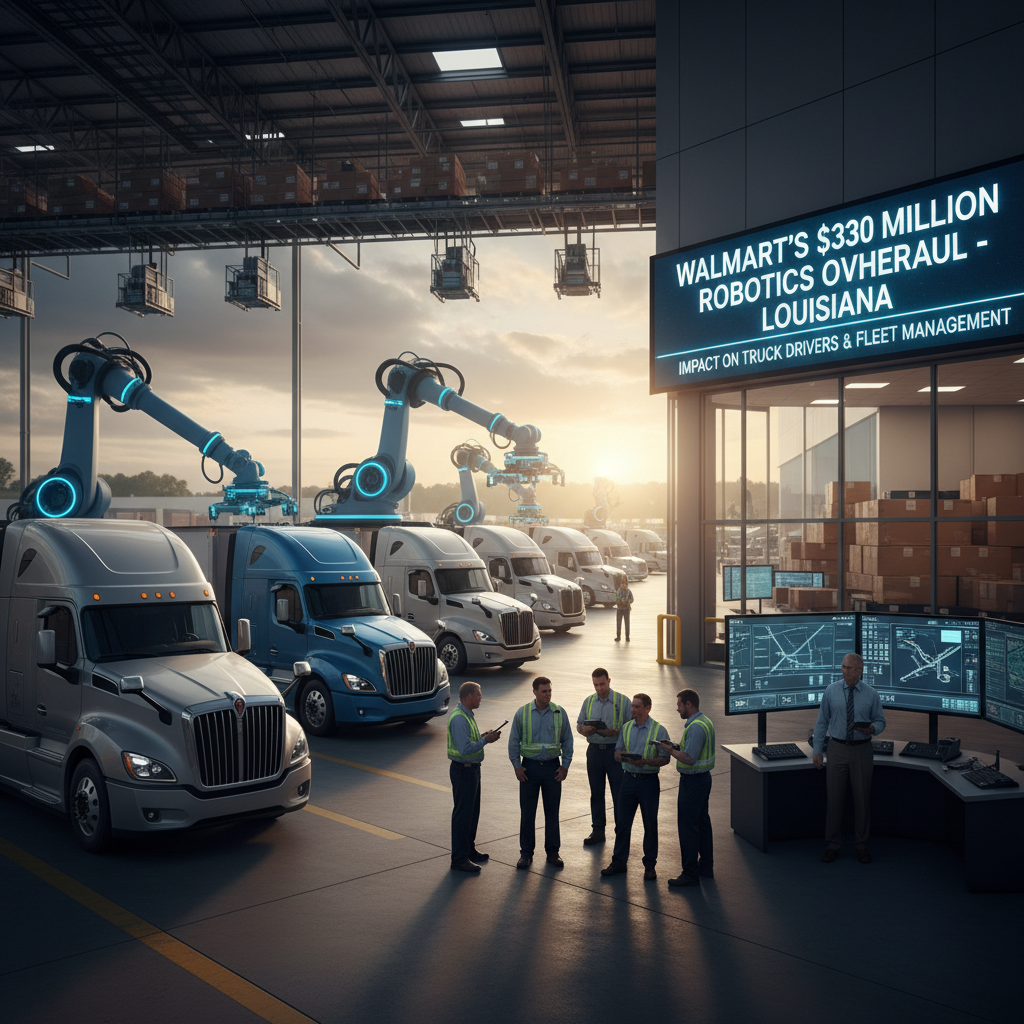
In a significant move poised to reshape logistics operations in the Gulf South, retail giant Walmart has announced a substantial $330 million investment to modernize its Opelousas, Louisiana distribution center. This massive upgrade, focusing on advanced robotics and automation, isn't just about internal efficiency for Walmart; it carries profound implications for the entire trucking industry, from independent owner-operators to large fleet managers and the dedicated CDL truck drivers who keep America moving.
For CDL truck drivers, this modernization signals a future where the loading and unloading processes at distribution centers like Opelousas could become significantly faster and more predictable. Automated systems are designed to streamline the flow of goods, potentially reducing dwell times and improving turnaround efficiency. This means less waiting at the dock, more time on the road, and ultimately, a more productive and potentially more profitable day for drivers. Faster turnarounds can also translate into better hours-of-service management, a critical factor for driver well-being and regulatory compliance. Moreover, the integration of robotics often leads to safer working environments, minimizing manual handling and reducing the risk of injuries during freight operations.
Fleet managers, on the other hand, should view this investment as a clear indicator of evolving supply chain demands. Walmart's commitment to doubling traditional shipment capacity through automation at this key Gulf South logistics hub suggests an increased volume of freight moving through the region. This presents both opportunities and challenges. On the opportunity side, it could mean more consistent freight lanes and higher demand for reliable carrier partners. Fleets that can adapt to the faster pace of automated facilities, perhaps by investing in technology that integrates with these systems or by optimizing their scheduling, will be well-positioned to capitalize on this growth. The challenge lies in ensuring that their operations can match the heightened efficiency of these modernized centers. This might involve re-evaluating route planning, driver scheduling, and even trailer specifications to ensure seamless integration with automated loading and unloading processes.
The Strategic Importance of the Opelousas Investment
The Opelousas distribution center, strategically located near Interstate 49 and U.S. Route 190, approximately 60 miles west of Baton Rouge, serves as a critical nexus for Walmart's operations in the Gulf South. This region is vital for connecting consumer markets with agricultural and industrial production. By enhancing this specific facility, Walmart aims to bolster its entire supply chain network, ensuring faster and more reliable delivery of goods to its stores and, by extension, to its customers. Louisiana state officials, including Susan Bourgeois, secretary of the Louisiana Economic Development Department, have lauded the project, highlighting its role in strengthening the state's logistics capabilities and securing local jobs. This public-private partnership, with Louisiana providing economic development assistance like a $10 million performance-based grant, underscores the broader economic impact and strategic importance of such infrastructure upgrades.
For the trucking industry, this translates into a reinforcement of existing freight corridors and potentially the creation of new, high-volume lanes. Truck drivers traversing the I-49 and U.S. 190 corridors can anticipate a sustained, if not increased, flow of freight originating from or destined for this modernized hub. This stability in freight volume is a welcome prospect for carriers looking to establish consistent routes and maximize truck utilization.
Automation and Robotics: A Glimpse into the Future of Freight
The core of Walmart's $330 million investment lies in the integration of advanced robotics and automation. This isn't just about replacing human labor; it's about augmenting human capabilities and optimizing processes that were previously labor-intensive and time-consuming. These systems can handle repetitive tasks with greater speed and accuracy, from sorting and stacking to loading and unloading. For drivers, this means less time spent waiting for manual processes to complete, leading to quicker turnarounds and improved efficiency.
Consider the impact on dock operations: automated guided vehicles (AGVs) or robotic arms can precisely move pallets and packages, reducing the likelihood of errors and damage. This precision benefits drivers by ensuring that loads are correctly configured and secured, minimizing issues during transit. For fleet managers, understanding these technological advancements is crucial. It's not enough to simply deliver freight; increasingly, carriers will need to understand how their operations interface with automated systems at shipper and receiver facilities. This might involve adopting new communication protocols, scheduling software, or even specific trailer configurations that are optimized for robotic handling.
Impact on Driver Experience and Job Roles
While some drivers might express concerns about automation impacting job security, the reality in the trucking industry, particularly with the ongoing driver shortage, is that automation in distribution centers is more likely to enhance existing roles rather than eliminate them. The demand for skilled CDL drivers to transport goods remains high. Instead, drivers may find their roles evolving to focus more on the critical task of transportation, with less time spent on manual handling at the docks.
Faster loading and unloading times mean drivers can complete more runs, potentially increasing their earning potential through mileage-based pay. It also contributes to a better quality of life by reducing unproductive waiting periods. For fleet managers, this means more efficient utilization of their most valuable asset – their drivers. By minimizing dwell time, fleets can improve driver satisfaction, reduce turnover, and attract new talent by offering more predictable schedules and higher earning opportunities.
Furthermore, the integration of advanced technology within the supply chain can lead to new skill requirements for drivers. While the core driving skills remain paramount, an understanding of how to interact with automated systems, interpret digital dispatch instructions, and utilize in-cab technology to optimize routes and schedules will become increasingly important. Training programs that address these evolving technological interfaces will be beneficial for both drivers and carriers.
Strengthening the Gulf South Logistics Hub
St. Landry Parish President Jessie Bellard emphasized that this reinvestment is a "tremendous win" for the parish, securing existing jobs and strengthening the local economy. This local impact has broader regional implications. By enhancing the efficiency and capacity of a major distribution center, Walmart is effectively strengthening the entire logistics infrastructure of the Gulf South. This makes the region more attractive for other businesses and industries, potentially leading to further economic development and, consequently, more freight opportunities for the trucking sector.
For carriers operating in or considering expansion into the Gulf South, this investment signals a robust and growing market. The increased capacity and efficiency at the Opelousas hub will likely lead to a ripple effect, improving the flow of goods across state lines and into neighboring regions. Fleet managers should analyze their current routes and consider how they can best integrate with this strengthened logistics network, perhaps by establishing new terminals or optimizing existing ones to serve the enhanced distribution capabilities.
Actionable Takeaways for CDL Drivers and Fleet Managers
- Embrace Technology: For drivers, familiarize yourself with in-cab technology and digital communication tools. For fleet managers, invest in modern TMS (Transportation Management Systems) and telematics that can integrate with advanced shipper systems. Understanding how your operations interface with automated facilities will be key.
- Optimize Turnaround Times: Drivers should be prepared for faster loading/unloading processes. Fleet managers should proactively communicate with shippers about expected dwell times at automated facilities and adjust scheduling accordingly to maximize driver hours and truck utilization.
- Focus on Efficiency and Communication: Clear and timely communication between drivers, dispatch, and the distribution center will be even more critical. Automated systems thrive on precise data and schedules. Any delays or miscommunications can disrupt the entire flow.
- Explore New Freight Opportunities: The increased capacity at the Opelousas hub suggests a potential rise in freight volume in the Gulf South. Fleet managers should research new lanes and partnerships that align with Walmart's expanded distribution capabilities.
- Prioritize Driver Training and Well-being: With faster turnarounds, drivers might experience less downtime. Fleet managers should ensure drivers are well-rested and adhere to HOS regulations, leveraging the efficiency gains to improve quality of life rather than overworking drivers. Training drivers on new dock procedures or technology interfaces will also be beneficial.
- Strategic Planning for Growth: This investment is part of Walmart's national initiative to modernize all 42 regional distribution centers. This indicates a broader trend. Fleet managers should view this as a blueprint for future logistics operations across the country and begin strategizing how to adapt their businesses to an increasingly automated and efficient supply chain landscape.
Walmart's $330 million investment in its Opelousas distribution center is more than just a corporate upgrade; it's a significant development that will ripple through the trucking industry. By understanding and adapting to these changes, CDL truck drivers can anticipate more efficient workdays, and fleet managers can position their businesses for sustained growth and profitability in an evolving logistics environment. The future of freight is here, and it's increasingly automated, efficient, and interconnected.
Helpful Resources for CDL Drivers
Comments (0)
Sign in to join the conversation
Sign In to CommentNo comments yet. Be the first to share your thoughts!
Explore More
Driver Resources
Educational guides on CDL licensing, salary expectations, and route planning tips.
Browse CDL Jobs
Find your next driving opportunity. Search by location, route type, and CDL class.
CDL Salary Guide
Understand how pay varies by experience, route type, and location in the trucking industry.